
“Why you can trust Digital Trends – We have a 20-year history of testing, reviewing, and rating products, services and apps to help you make a sound buying decision. Find out more about how we test and score products.“
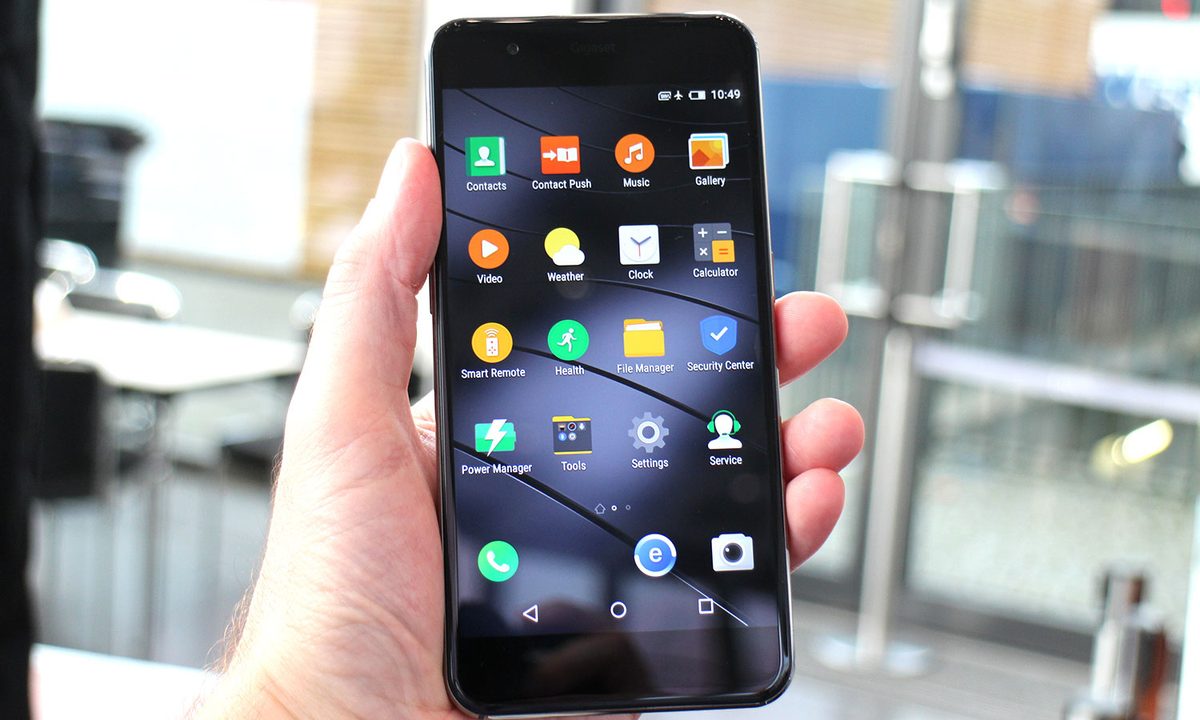
Gigaset’s a new name in Android phones, and rather than tentatively dip its toe into the shark-infested waters, it’s taking things seriously with the release of three brand-new smartphones, all of which have one particular feature in common. It’s not that clear from the pictures, but look closely and you’ll see the Gigaset devices have no speaker grills, microphone holes, or anything to break up the 2.5D glass covering the front panel.
Does this mean they don’t make calls at all? No, Gigaset has taken them away because it they’re not needed. Instead of a speaker, Gigaset’s phones use something it calls Surface Conduction to produce the audio during a call. It’s essentially the same technology as bone conduction, as seen on AfterShokz headphones and Google Glass, and turns the screen into a speaker.


It’s not only about making the front of the phones all pretty either. There’s no more messing around trying to find the sweet spot where you can hear the caller perfectly, after lining the speaker up against your ear. Just lift the Gigaset phone up, hold it vaguely against your ear, and you can hear the other person perfectly.
We gave it a try, and sure enough the top two thirds of the screen produces a consistent call experience, regardless of where it’s placed on the ear. The final third is less successful, and volume tails off considerably, but this won’t be a problem for most people — unless you go out of your way to hold the phone awkwardly. The short call wasn’t enough to judge quality, but every word was legible in the crowded, noisy convention hall where we met Gigaset.
The rest of the specs are great, but the phones aren’t memorable
Gigaset’s off to a good start by using tech that actually does something useful, while also having an aesthetically pleasing side effect. How does the rest of the spec do? There are three phones: The Me Pure, the Me, and the Me Pro. The latter is the flagship, and it’s about the same size as the iPhone 6 Plus, but weighs considerably more at 195 grams. It’s covered in fingerprint-loving 2.5D glass on the front and back, and has a stainless steel frame.
The 1080p screen is 5.5-inches, the processor is a Snapdragon 810, there’s 3GB of RAM, and almost Android 5.1.1 onboard. A 20-megapixel camera produced by Sony is on the back, an 8-megapixel cam on the front, and there are dual microphones hidden away on the shell. The UI is quick, but the phone’s weight makes it slightly ungainly.
Dropping down to the Gigaset Me and you still get a Snapdragon 810 processor and 3GB of RAM, but the rear camera is 16 megapixels, the selfie cam has 8 megapixels, and the screen measures 5-inches with a 1080p resolution. Finally, the Me Pure has a Snapdragon 615 chip, 2GB of RAM, and a 13-megapixel rear camera. All have USB-Type C charging ports, a fingerprint sensor, and dual-SIM slots that can also accommodate a MicroSD card. Unconnected prices range from £250 for the Me Pure, £350 for the Me, and £400 for the Me Pro.
The Gigaset range covers all the expected bases, are attractive if prone to fingerprints, and the phones appear to be solid and well made. However, outside of the surface conduction speaker, there isn’t a compelling reason to buy one over a OnePlus 2, a Nexus phone, or a Moto X Style. A few days after using them, I tried to recall anything else about the Gigaset range, and it wasn’t easy. They just aren’t memorable enough otherwise, and that’s a problem in today’s crowded market.
Highs
- Well built
- Unusual screen conductive speaker system
- High specs
Lows
- Fingerprint magnets
- Don’t do enough to standout
- Unfamiliar brand name