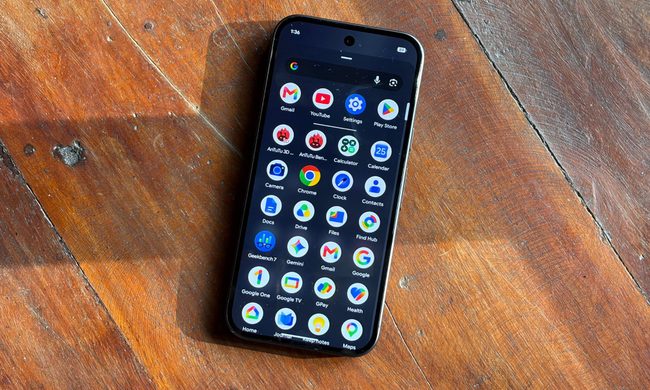
Apple has finally taken the wraps off its latest-and-greatest iPhone lineup, including the much-hyped iPhone X and the new iPhone 8 and iPhone 8 Plus, which are the two phones aimed at continuing the standard iPhone succession. Of course, the new phones have some competition from another tech giant in Silicon Valley — namely Google, which is still selling its Google Pixel and Pixel XL phones. There are a few reasons why bigger is better in the case of the iPhone 8 Plus and Pixel XL. Which one should you buy, though? Here, we pitted the two phones against one another to find out.
Specs
Apple iPhone 8 Plus
 |
Google Pixel XL
 |
|
| Size | 6.24 x 3.07 x 0.30-inches (158.4 x 78.1 x 7.5mm) | 6.09 x 2.98 x 0.33-inches (154.7 x 75.7 x 8.5mm) |
| Weight | 202g (7.13oz) | 168g (5.93oz) |
| Screen | 5.5-inch IPS LCD | 5.5-inch AMOLED |
| Resolution | 1,080 x 1,920 (401ppi) | 1,440 x 2,560 pixels (534ppi) |
| OS | iOS 11 | Android 7.1 Nougat |
| Storage | 64/256GB | 32/128GB |
| MicroSD card slot | No | No |
| NFC support | Yes | Yes |
| Processor | A11 Bionic | Qualcomm Snapdragon 821 |
| RAM | 3GB | 4GB |
| Connectivity | GSM / CDMA / HSPA / EVDO / LTE | GSM / CDMA / HSPA / LTE |
| Camera | Dual 12MP rear, 7MP front | 12MP rear, 8MP front |
| Video | 4K at 60fps | 4K at 30fps |
| Bluetooth | Yes, version 5.0 | Yes, version 4.2 |
| Fingerprint sensor | Yes | Yes |
| Other sensors | Accelerometer, gyroscope, proximity, compass, barometer | Accelerometer, gyroscope, barometer |
| Water resistant | IP67 rating | No |
| Battery | 2,675mAh | 3,450mAh |
| Ports | Lightning | USB-C, headphone jack |
| Marketplace | App Store | Google Play |
| Color offerings | Gold, Space Grey, Silver | Very Silver, Quite Black, Really Blue |
| Availability | Apple, AT&T, Sprint, T-Mobile, Verizon | Google Play, Verizon |
| Price | Starts at $799 | Starts at $770 |
| DT review | Hands-on | 4.5 stars |
The first thing to compare is how the phones perform under the hood, though, we may have to wait until benchmarks come out to get any hard data on that. Still, it’s pretty safe to assume that the iPhone 8 Plus will perform better than the Google Pixel XL — after all its predecessor, the iPhone 7 Plus, with its last-gen processor, beat out phones with the Qualcomm Snapdragon 821. The A11 Bionic chip should do even better. This is despite the fact that the iPhone 8 Plus has only 3GB of RAM, compared to the Pixel’s 4GB.
When it comes to storage, the iPhone 8 Plus has the Pixel beat. The former comes in both 64 and 256GB configurations, while the Pixel comes in either a 32 or 128GB configuration. Unfortunately, neither of the phones offer a MicroSD card slot. The iPhone 8 Plus also features Bluetooth 5.0, whereas the Pixel comes equipped with Bluetooth 4.2.
There’s really not much competition here — the iPhone 8 Plus is a far better performer.
Winner: Apple iPhone 8 Plus
Display, design, and durability

Apple paved the way for great displays back when it first announced its Retina display, but other manufacturers have sped ahead in the time since. Not only that, but it seems like Apple is not offering the same display advancements on the iPhone 8 and 8 Plus as it is on the iPhone X. Instead, it’s sticking with LCD technology and a 1,920 x 1,080-pixel resolution. The Pixel XL, on the other hand, offers an AMOLED display with a resolution of 2,560 x 1,440 pixels.
When it comes to design, we’re not going to award a winner. Both phones offer excellent builds, and while they’re starting to seem a little dated given the current trend toward edge-to-edge displays, they’re both in the same boat. One differentiating factor is the headphone jack — the Pixel XL actually has one.
On paper, it looks like the iPhone might be more durable than the Pixel. The iPhone offers IP67 water-resistance, but it is glass front and back, making it potentially more prone to cracks when dropped. The Pixel uses much more metal in its build, so it’s more likely to withstand a drop. Both smartphones, however, make use of a fingerprint sensor, which allows you to unlock your phone, authorize purchases, and make use of certain apps.
The Google Pixel offers a better display, and that’s enough to give it the edge here.
Winner: Google Pixel XL
Battery life and charging

Android phones have traditionally offered more charging and battery options than iPhones, but it looks like that’s about to change. The Google Pixel XL offers a battery capacity of 3,450mAh, which is far more than the iPhone’s 2,675mAh battery, and will net you 32 hours of talk time. The iPhone 8 Plus, on the other hand, will only provide 21 hours of talk time. The Pixel XL also offers fast charging, which will land you 7 hours of use after a mere 15 minutes of charging. The 8 Plus reportedly has the same feature, but it will take some additional accessories to harness it.
Still, the iPhone does offer one additional feature that makes it unique: Wireless charging. That’s a feature that the Google Pixel XL does not have, though, it’s not quite enough to give the iPhone the win in this category.
Winner: Google Pixel XL
Camera

Apple has always outfitted the iPhone with an excellent camera, but when Google first launched the Pixel XL, the device was hailed for its superb shooter.
The camera on the Google Pixel XL sits in at 12-megapixels with an f/2.0 aperture, phase detection autofocus, and laser detection autofocus. The iPhone 8 Plus’ camera, on the other hand, offers two 12-megapixel sensors — one wide-angle and one telephoto — with an f/1.8 aperture on the main lens, phase detection autofocus, and optical image stabilization. On paper, this makes the iPhone’s camera quite a bit better than the Pixel’s.
The front-facing camera on the iPhone is a 7-megapixel shooter, whereas the front-facing camera on the Pixel measures 8 megapixels. The iPhone 8 Plus also offers a refined Portrait Mode, which allows you to easily blur the background of an image. Currently, neither of Google’s smartphones offer such a feature.
Winner: Apple iPhone 8 Plus
Software
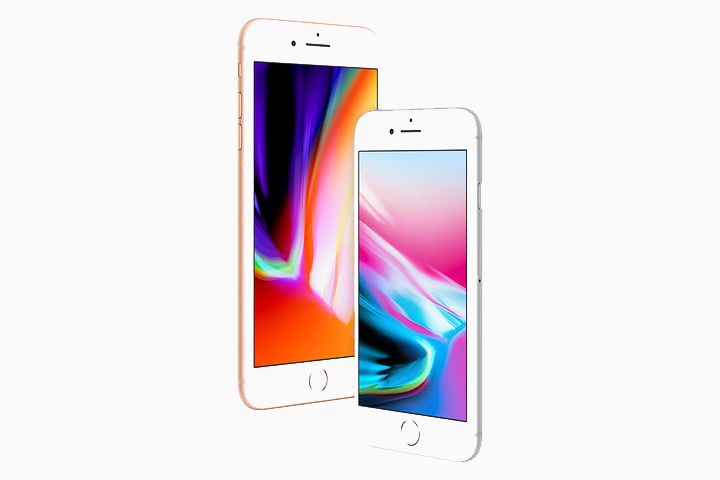
Spoiler alert: We will not be awarding a winner here. It’s a classic case of iOS vs. Android, with each operating system offering its own set of advantages.
Although we don’t intend to declare a winner here, we can still talk about the differences between the two phones. Generally speaking, Android offers far more ways to customize your software experience, thanks to things like widgets. The version of Android included in the Google Pixel XL is stock Android — a vanilla version of Android that many users like because of its lack of promotional apps and bloatware. In that sense, the Android experience on the Pixel XL is probably as close to iOS as you’re going to get on an Android device.
Apple’s iOS, on the other hand, limits customization, though this often results in software that “just works.” That’s not an exaggeration — iOS is straightforward and works seamlessly.
Winner: Tie
Price and availability
The price of these two phones is actually pretty similar. The iPhone 8 Plus starts at $799, while the Google Pixel XL will cost $770 at the very least. Although the Google Pixel XL is cheaper, it’s also a little more limited in terms of availability — you can currently only get it from the Google Store, Verizon, and Best Buy, not through other carriers such as Sprint, AT&T, or T-Mobile, like the iPhone. That’s not to say the handset won’t work on those carriers — you just can’t buy it from them.
The iPhone 8 Plus was made available for pre-order starting September 15, and ships on September 22.
Winner: Tie
Overall winner: Tie
Both of these phones have their advantages and disadvantages. If you’re trying to find the most powerful phone or the phone with the best camera, then the Apple iPhone 8 Plus is probably the better option. But if you want a phone with better battery life and a better display, then the Google Pixel XL is the phone for you.