An interesting report from The Elec suggests that Samsung could be pulling back on the number of cameras found in its midrange smartphones, preferring to focus on improving the quality of what’s there rather than continuing to play the numbers game.
This year’s midrange Galaxy A series phones all sport four cameras on the rear: a main shooter ranging from 48 megapixels (MP) in the Galaxy A33, to 64MP in the Galaxy A53, to 108MP in the Galaxy A73. Joining those primary cameras are ultrawide, macro, and depth cameras of various specs.
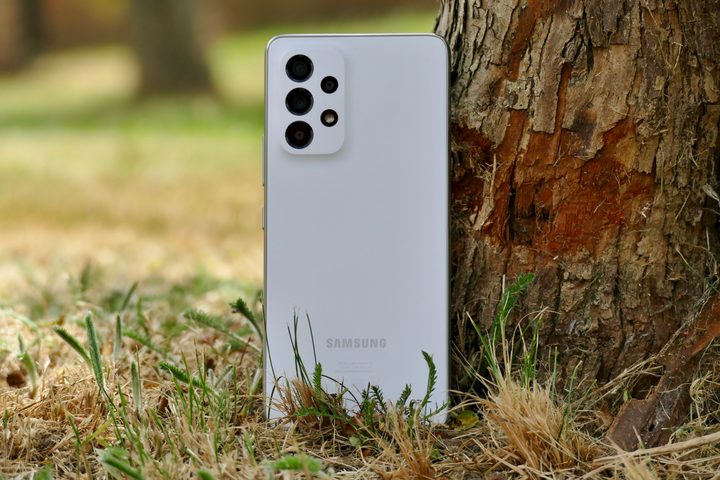
However, that could change with next year’s Galaxy A series lineup. This early report should be taken with skepticism at this point, but if it’s accurate, Samsung’s 2023 Galaxy A24, A34, and A54 will sport only three cameras each. Samsung has apparently deemed the depth camera as having little use on its midrange phones and instead plans to work on improving the specs on the three camera modules that will remain.
The report makes no mention of the Galaxy A73’s successor, which would presumably be the A74, but that’s not a surprising omission. The A73 was little more than a footnote during Samsung’s March Galaxy A event, and like its predecessor, it launched in a limited number of markets.
Improving the main cameras
While depth cameras are arguably valuable for high-end flagship smartphones, they’re of dubious value in midrange handsets, where they typically haven’t been put to good use. Instead, many smartphone manufacturers have added these extra cameras as gimmicks to keep up with their competitors. This focus on putting in as many extra lenses and sensors as possible often means the main cameras suffer.
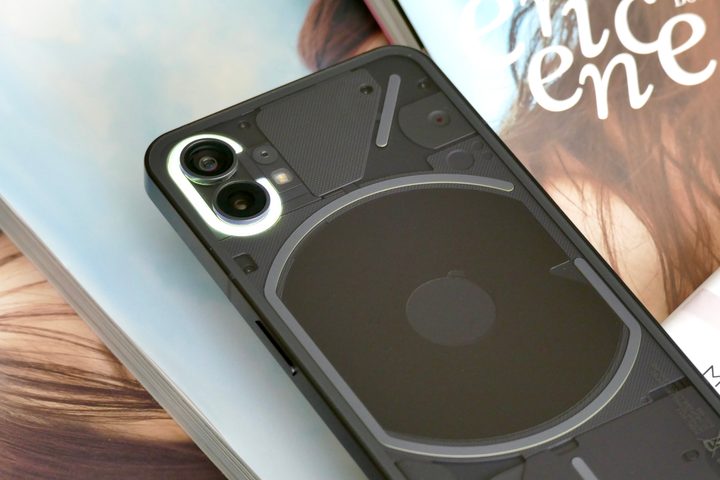
The most salient counter-example of this is the Nothing Phone 1. The new Carl Pei-led project took the “brave” approach of releasing a smartphone with much hype, midrange specs, and a stunningly modest two-lens camera system. It was a move that clearly swam against the tide, but Nothing’s bold choice to go with a relatively minimalist camera design appears to have paid off; the Phone 1 takes surprisingly great photos, and it seems clear that Nothing made the right choice by focusing on building two great cameras rather than five mediocre ones.
This latest rumor suggests that Samsung may at least partly follow Nothing’s lead. However, it’s ultimately more about reducing costs as the South Korean smartphone maker faces more competition from Chinese competitors. By cutting the depth camera, Samsung can put its money and engineering efforts into improving the considerably more important wide, ultrawide, and macro camera sensors.
However, while the report notes that the Galaxy A34 will include the same 48MP wide and 8MP ultrawide sensors as the Galaxy A33, it oddly suggests that next year’s Galaxy A54 will feature 50MP wide and 5MP ultrawide sensors, which would be a drop from the 64MP and 12MP sensors found on the Galaxy A53. That would be an unusual regression for Samsung, so treat that with a healthy dose of skepticism, though it may be tied to Samsung’s plans to expand optical image stabilization (OIS) on its midrange Galaxy smartphones. The Galaxy A33 and Galaxy A53 introduced OIS on the primary camera this year, a feature that was previously the exclusive domain of the pricier Galaxy S and Note series phones.