  1. Home
  2. Phones
  3. Mobile
  4. News

T-Mobile’s controversial price increases have gotten it in trouble

Add as a preferred source on Google
The T-Mobile logo on a smartphone.
NurPhoto / Getty Images

In May, T-Mobile, the nation’s third-largest carrier, revealed its intention to raise rates on some of its older plans by $2 to $5 per line or up to $20 per account per month. Many of those customers aren’t happy and, according to Phone Arena, are bringing a class action lawsuit against the company.

As we previously noted, the price hikes affect users of legacy Simple Choice, ONE, and Magenta plans. Some users say those increases go against the company’s Price Lock and Un-Contract obligations. The move to see T-Mobile in court comes after thousands of customers filed complaints with the U.S. FCC and FTC.

Recommended Videos

The class action lawsuit against T-Mobile represents customers in four states: Georgia, New Jersey, Nevada, and Pennsylvania. These folks have ONE, Simple-Choice, Magenta, Magenta Max, Magenta 55+, Magenta Amplifed, or Magenta Military plans.

According to Android Authority, the company is accused of violating the Consumer Protection Law, New Jersey’s Consumer Fraud Act, and the Pennsylvania Unfair Trade Practices Law.
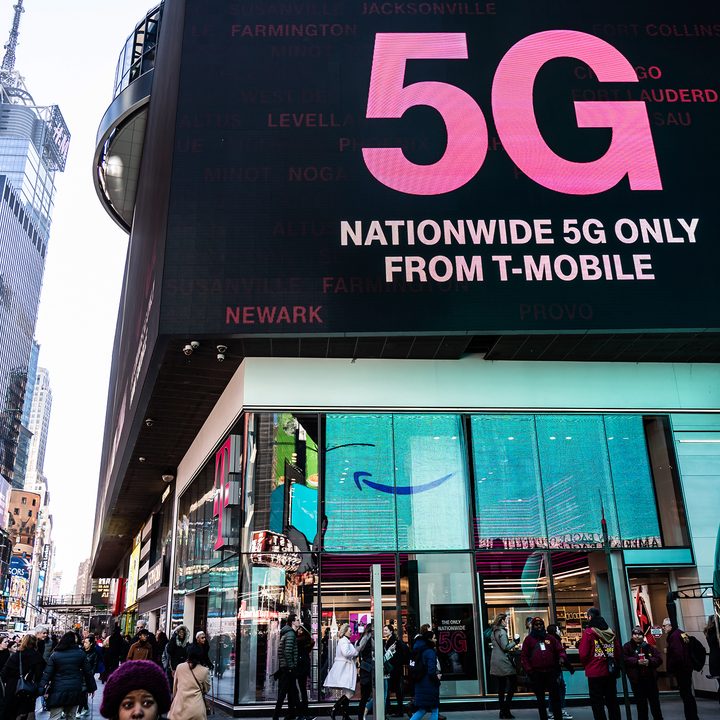
T-Mobile 5G nationwide network advertisement.
Alex Tai / Getty Images

The National Advertising Division (NAD), a self-regulatory, non-profit organization, has criticized T-Mobile over the price hike. As such, it requests that the company no longer advertise its “Price Lock” policy.

When it announced the price hike two months ago, T-Mobile noted that it was “committed to offering the best value in wireless with low prices and a best-in-class 5G network, and we have no intention of ever changing that. As costs continue to rise, for the first time in nearly a decade we’re making small adjustments to the prices of some of our oldest rate plans. The majority of our customers are not included.”

At this early stage, it’s impossible to predict whether T-Mobile customers or the company will have the final say. It’s likely that it will take years before a court or jury reaches a decision on this issue.

T-Mobile’s price hikes came after other companies, including Verizon and AT&T, also raised rates recently.

Bryan M. Wolfe
Former Mobile and A/V Freelancer
Bryan M. Wolfe has over a decade of experience as a technology writer. He writes about mobile.
TSMC might set up a price hike that could come straight for your next phone, laptop, or tablet
Here's what TSMC's rumored 10% chip price increase actually means in dollar terms, and why your next phone or laptop could end up costing more.
TSMC Fab

My wallet flinched the second I saw the words "TSMC" and "price increase" in the same headline, and honestly, yours should too.

Turns out the company behind the silicon powering basically every flagship device out there, including Apple’s A-series and Qualcomm’s Snapdragon processors, is reportedly about to make all of it a little pricier.

Read more
Samsung’s free storage doubling for preorders is gone in Austria, and the replacement isn’t as sweet
Samsung's free storage doubling deal might just be history.
The back of the Galaxy Z Fold 7

If you've pre-ordered a Samsung foldable purely for the free storage bump, tomorrow's Unpacked event might sting a little.

For years, pre-ordering a new Galaxy meant automatically getting double the storage at no additional charge. Buy the 128GB model, walk away with 256GB for the same price. The same applied to the 256GB and 512GB models. However, that might change at the upcoming Galaxy Unpacked event. 

Read more
Apple fixes Hide My Email bug that exposed users’ real email addresses
Here's how Apple's Hide My Email flaw leaked real addresses for over a year, and why it only got fixed once the story went public.
apple-merging-sign-in-with-apple-hide-my-email-icloud+

Turns out the "Hide" part of Hide My Email wasn't doing its job quite as advertised, something that I covered early in July. Security researcher Tyler Murphy reported the flaw in June 2025, but despite Apple claiming it was resolved in March 2026, independent tests confirmed it remained exploitable, at least until July 3, 2026.

So how did this bug actually work?

Read more