  1. Home
  2. Phones
  3. Business
  4. Mobile
  5. News

T-Mobile loves competition in the wireless industry while it low-blows Verizon’s plan changes

Add as a preferred source on Google

T-Mobile positions itself as the Uncarrier, a self-described wireless industry disruptor that spurred competitors to copy its ways. Instead of opting for a press release, however, T-Mobile sent a letter to the Federal Communications Commission (FCC), with the carrier extolling its own successes while chastising others.

T-Mobile talked up its Uncarrier strategy and how, since its inception back in March 2013, competitors like Verizon and AT&T have implemented similar tactics, such as dropping two-year contracts in favor of equipment installment plans (EIPs). However, it is because other carriers mimicked its offerings that T-Mobile believes the U.S. wireless industry became more competitive over the years.

Recommended Videos

“Since our first Uncarrier announcement more than three years ago, we have relentlessly challenged the status quo in the wireless industry by identifying and removing consumer pain points,” the FCC filing reads. “The large incumbent carriers have taken notice and responded by replicating some of the most popular features of our innovative programs albeit often without offering the same high level of consumer benefit.”

The carrier was not entirely beneath chastising others, however, as T-Mobile threw Verizon plenty of shade for the latter’s plan changes on Thursday, July 7. As T-Mobile and plenty of others pointed out, Verizon increased the monthly data allotment for all of its postpaid plans, but also increased their monthly costs. Verizon did not see the changes as price hikes, since the price per gigabyte decreased.

Regardless, because of T-Mobile’s so-called “innovative products,” the carrier believes there is no further need for regulation, which was originally put in place in order to spur competition.

“T-Mobile therefore urges the Commission to consider these developments as part of its annual assessment of competition in the mobile wireless market as well as when the agency evaluates potential actions that allow for ongoing and vigorous competition amongst providers,” T-Mobile wrote.

T-Mobile ended the letter by urging the FCC to pay close attention to any actions that might “inhibit or limit the ability of competitors like T-Mobile to offer innovative products and services to consumers.”

The FCC is scheduled to release its annual report on the state of the wireless industry by year’s end.

Williams Pelegrin
Williams is an avid New York Yankees fan, speaks Spanish, resides in Colorado, and has an affinity for Frosted Flakes. Send…
Apple starts testing cheaper Chinese RAM inside iPhones, but your pocket won’t feel the ease
Fourth-largest DRAM producer in the world, on the Pentagon's watchlist, and now quietly inside Apple's test labs.
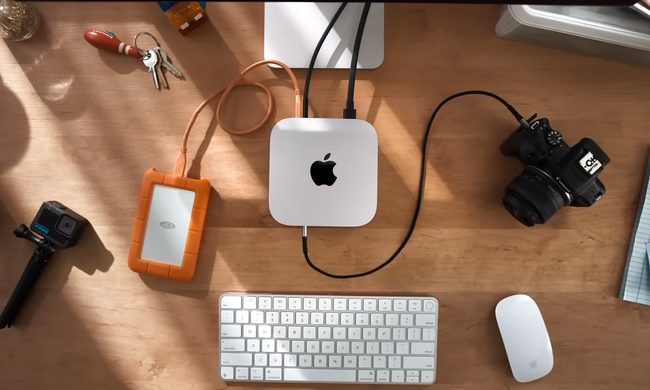
The M4 Mac mini on a desk.

Apple has quietly been testing a new memory supplier for some of its devices sold in China, and the name behind those chips is one that Washington has been keeping a close eye on.

It’s the one that I talked about a few days ago in another story, when rumors about Apple considering a Chinese memory supplier started surfacing after the company announced an ugly price hike for most of its devices (except iPhone and Apple Watch). 

Read more
Android 17’s new video standard fixes one of HDR’s biggest problems
Your HDR videos are about to look right, no matter what screen you use.
Electronics, Mobile Phone, Phone

Android 17 is packed with new features, but one small addition might end up mattering more than the flashy ones. It's called Eclipsa Video, and its whole purpose boils down to this: your HDR videos should finally look the way they're supposed to, regardless of which screen you're staring at.

Why does HDR look different on every screen?

Read more
Your free mobile VPN is a privacy disaster. Go figure
Android's free VPNs are somehow worse than you expected
VPN

The free VPN app you downloaded for your Android phone might be doing more harm than good. A recent large-scale audit of free Android VPN apps has shared some worrisome findings that justify some healthy suspicion. Researchers found these apps leaking traffic, sending identifying information to third parties, and basically the opposite of what a VPN is supposed to do.

The study comes from researchers at the University of Michigan, the University of New Mexico and IIT Delhi. Their findings were presented at the Network and Distributed System Security Symposium 2026 alongside MVPNalyzer, a framework designed to audit mobile VPN apps automatically and at scale.

Read more