Mounting a donation campaign’s easy. Mounting a successful one isn’t. Between 35 and 42 percent of online giving happens over the course of just two months (November and December), and according to a recent survey of email funding campaigners, the average response rate hovers around 0.06 percent. Facebook has an idea to boost giving: Recruiting your friends for the cause.
On Thursday, Facebook rolled out “personal fundraiser,” an expansion of its existing fundraising tools that let users ages 18 and up create a page to raise money for themselves, friends, or people or things who aren’t on Facebook. It will roll out to U.S. users in the coming weeks.
“We want to be able to support people fundraising for personal causes,” Naomi Gleit, Facebook’s vice president of social good, told Mashable.”We’ve researched and surveyed people who have used our platform in the past, and our users have told us that they want this.”
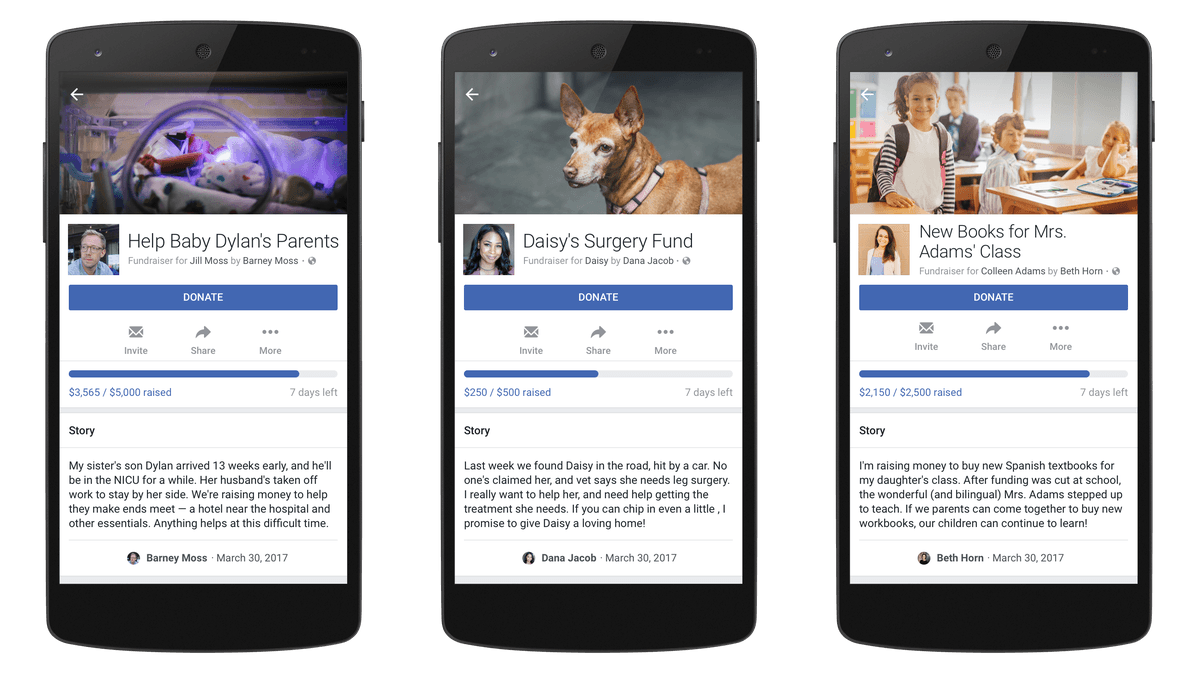
Starting a campaign is easy: A new Fundraisers tab in the menu in Facebook’s News Feed brings up creation tools. When you start a new campaign, you will be asked to specify the Facebook user or nonprofit for whom you’re raising money, and select from one of six categories: Education (like tuition), medical, pet medical, crisis relief, personal emergency, and funeral and loss. After that is done, Facebook’s reviewers will check to ensure the fundraiser meets the network’s policies and community standards.
Once a fundraiser’s approved, you have the option of adding a cover photo, a “beneficiary card” showing the person receiving the money, information about the fundraiser, and a short biography about yourself. When visitors to the page click on your profile or the recipient’s profile, they will see the appropriate Facebook profile.
The fundraiser tools are not just for campaigners. A new Discover section lets you peruse a list of popular philanthropies, and a Manage tab lets you keep track of fundraisers you’ve been invited to in the past.
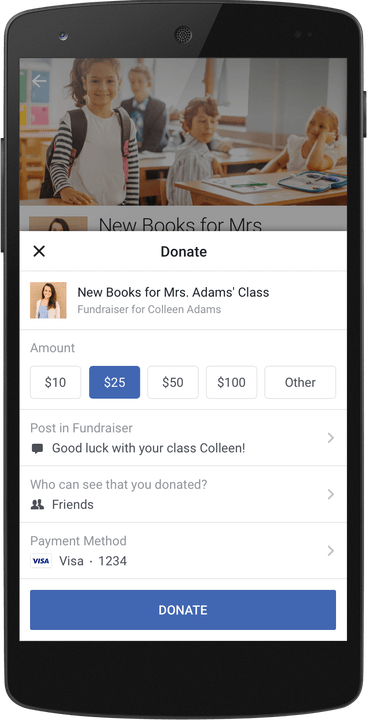
Facebook’s handling donations through its existing payment processor. It will charge a 6.9 percent fee on every gift, plus a 30-cent transaction fee to cover payment processing, vetting, and security.
Personal fundraisers are the latest in Facebook’s long-running effort to improve tools for fundraisers. In 2013, the social network introduced a Donate button and later allowed donations via ads and Facebook Pages. In 2015, it partnered with Mercy Corps., the National Multiple Sclerosis Society, the World Wildlife Fund, and 34 other organizations to launch a charitable giving platform.
“I’m really excited about this, and I think the whole team is,” Gleit told Mashable. “We offer the reach — you want to fundraise from your friends, and they’re all on Facebook. Everything is in one place … We hope we’ll make this easier and help raise even more money.”