1. Home
  2. Space
  3. News

Inspiration4 crew shares an update on their mission from orbit

Add as a preferred source on Google

The crew of SpaceX’s first all-civilian mission, Inspiration4, has shared an update on how they have been spending their time in orbit — including performing scientific research, admiring the view from space, and enjoying art and music.

Inspiration4 | In-Flight Update with the Crew

The Inspiration4 crew consists of mission commander Jared Isaacman, the billionaire founder of Shift4 Payments, pilot Sian Proctor who is a science communicator and won her seat in a competition, medical officer Hayley Arceneaux who is a physician at St. Jude Children’s Research Hospital and survivor of childhood cancer, and mission specialist Christopher Sembroski, a U.S. Air Force veteran.

The Inspiration4 crew answering questions while in orbit aboard a SpaceX Crew Dragon spacecraft.
The Inspiration4 crew answering questions while in orbit aboard a SpaceX Crew Dragon spacecraft. Inspiration4 / SpaceX

“We’re cruising right now at 580 kilometers above the Earth, going about 7.6 kilometers per second,” Isaacman said by way of an introduction to the update. “So we’re really booking! We’re seeing the world every 90 minutes, that’s how fast we’re traveling around it. It’s pretty incredible.”

Recommended Videos

The crew showed off the interior of the Crew Dragon and their view of space, including an aurora which was visible as the crew passed over Europe. They enjoy an epic view from the Dragon’s cupola, the largest window ever flown in space. This is not a standard part of a Crew Dragon spacecraft but was installed specially for this mission, as unlike most other Crew Dragon missions this flight did not dock with the International Space Station and so didn’t need docking hardware.

“We have been spending so much time in this cupola,” said Arceneaux. “We can put our head in and fit multiple crew members and see the entire perimeter of the Earth, which just gives such incredible perspective. And the views, I have to say, are out of this world.”

The crew also described some of the research they have been doing using a portable ultrasound to measure how the human body changes in space, and Proctor shared some of the art she has been drawing while in orbit. As well as art, the crew has been enjoying space music too with a custom ukulele shown off by Sembroski.

As well as the live update, the crew has also given a recorded interview with patients at St. Jude Children’s Research Hospital, rung the closing bell for the New York Stock Exchange on Friday, September 17, and spoken with actor Tom Cruise and SpaceX founder Elon Musk.

Georgina Torbet
Georgina has been the space writer at Digital Trends space writer for six years, covering human space exploration, planetary…
SpaceX Starship reaches orbit for the first time but its historic flight ends early
Starship reaches orbit for the first time and deploys 26 Starlink satellites before an early splashdown.
spacex-starship

After 13 suborbital test flights and more than $15 billion in development costs, SpaceX's Starship has finally reached orbit. The 407-foot megarocket, the most powerful ever built, lifted off from Starbase, Texas, on Monday and delivered its first real payload on it's 14th attempt. The celebration came with an asterisk, though, since SpaceX had to cut the planned 10-hour mission to roughly three hours.

https://twitter.com/SpaceX/status/2104601695711904180

Read more
Starship is finally going orbital, and SpaceX has picked September 22
Flight 14 is aiming for orbit, Starlink V3 deployment and a very long day in space.
Starship rocket.

SpaceX is finally ready to give Starship its biggest test yet. The company says the massive rocket's 14th test flight is scheduled for September 22, when it will attempt to put the upper stage into Earth orbit for the first time. The launch is currently pending regulatory approval, with a 75-minute window opening at 7:15 a.m. CT.

Starship has 26 Starlink satellites to deliver

Read more
Want a city on the Moon? Scientists say there’s not enough water
A billion tons still comes up short
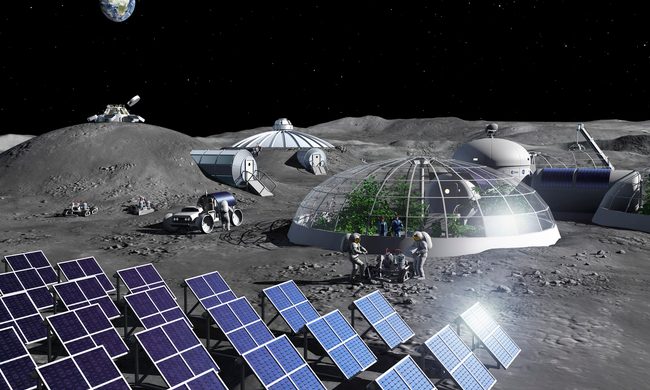
Artist impression of activities in a Moon Base.

For decades, humanity has looked up at the Moon and wondered what it would be like to live on it. Think sprawling cities, factories, research centers, and permanent human settlements. Unfortunately, there is one fairly fundamental problem with that vision.

A new study published in Frontiers in Space Technologies argues that even the Moon's potentially enormous reserves of frozen water may be nowhere near enough to support city-sized populations sustainably. Researchers Martin Elvis and Jonathan McDowell estimate that the permanently shadowed regions near the lunar poles could contain roughly one billion tons of water. It sounds like an extraordinary amount until you put a million thirsty humans next to it.

Read more