

Remember back in early 2010 when Apple launched iBookstore? The idea of selling electronic books wasn’t new — the Kindle, Sony Reader, Barnes & Noble Nook, and other e-readers were already on the market, along with their associated book stores and third-party efforts like Google Books. But one thing that made consumers’ jaws drop when Apple unveiled iBookstore was the price tags: New releases were initially priced at $12.99 to $14.99 each, compared to the $9.99 typically offered by Amazon and others. Now, the European Commission has launched a formal antitrust investigation looking into whether five major publishers — perhaps with Apple’s help — abused their market position to effectively raise the price of e-books in Europe.
J’accuse
The investigation specifically targets Simon & Schuster, Harper Collins (owned by News Corp), Penguin (owned by the UK’s Pearson Group), Hachette (part of France’s Lagardere Publishing), and Verlagsgruppe George von Holzbrink (which owns MacMillan). The EC intends to examine whether those publishers, perhaps in collusion with Apple, conspired to fix pricing for e-books. If so, the actions could be in violation of EU regulations that prohibit cartels and restrictive business practices. The EC notes that the fact they’ve launched a probe will not prejudice the outcome, but it will be treating the case as a matter of priority.
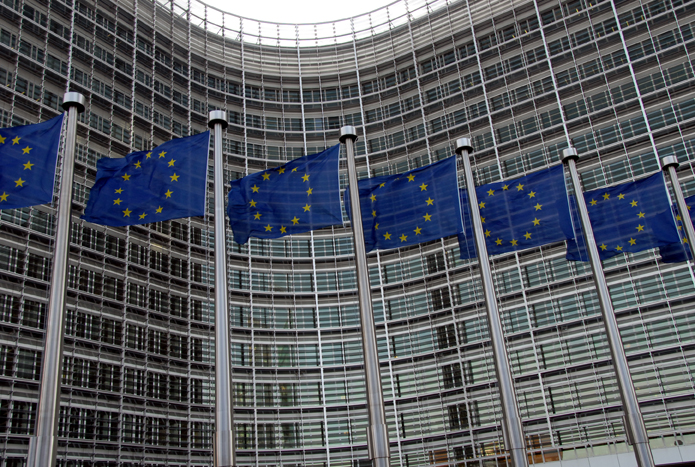 The EC’s investigation follows on the heels of a similar probe by the UK’s Office of Fair Trading earlier this year, and mirrors a class action lawsuit filed against Apple and the same five publishers in the Northern District of California earlier this summer. Earlier this year, the EC carried out unannounced inspections at the locations of several e-book publishers.
This week, the UK’s OTF closed its investigation “on the grounds of administrative priority,” but will be working closely with the EC as it conducts its own inquiry.
Agency versus wholesale
Here’s how the logic of the anticompetitive argument works: Apple was the first e-book retailer to offer publishers an agency pricing model, rather than a wholesale pricing model. Under a wholesale pricing model, booksellers pay a fixed price for a particular book title, but are free to try to sell it to consumers at any price. They might be able to get a particular book from a publisher for $5, but under a wholesale pricing agreement they can try to sell it for $100 a copy—if they think they can find enough gullible consumers.
 Under an agency model, publishers set the prices retailers can charge for books. Book sellers (like Apple’s iBookstore) are just agents of the publisher, and have to stick to the publisher’s prices. If a publisher decides a book should cost $19.99, then all retailers under that agency deal have to charge $19.99.
Publishers generally favor an agency model: it means prices for particular titles are consistent across a wide range of retailers,offering a better consumer experience, and publishers don’t have to get into complicated negotiations with individual booksellers, distributors, and partners, all of whom are angling for the best price possible. The agency model also makes it easier for publishers to manage their costs and revenue streams. However, retailers — especially big retailers — generally favor a wholesale model: Negotiate the lowest price possible, then sell as many units as they can at the highest price the market will bear. Big retailers benefit from wholesale models because they can leverage their buying power to make bulk purchases, lowering their per-unit costs and increasing their margins. Small, locally-owned bookstores might be able to match Walmart’s pricing on books, but they are almost certainly paying a higher price than Walmart for the same product, and making less money from selling it.
How is an agency model anticompetitive?
An agency pricing model isn’t anticompetitive on its own. However, the European Commission is concerned that Apple setting up agency-based deals with many major publishers at the same time had a negative impact on competition between online booksellers. After all, online booksellers using an agency model can’t really compete with each other by setting lower prices.
Since the introduction of iBookstore, a number of online booksellers have shifted to an agency pricing model. In most cases, they do it so they can continue to sell popular e-book titles from leading publishers — like the five in the investigation. That includes Amazon.com, which was forced to convert over to an agency model in April of 2010. The question before the EC’s antitrust investigation is, essentially: Did Apple’s decision to go with an agency model in its iBookstore force the rest of the industry to convert to an agency model, effectively raising e-book prices for most consumers?
Is Apple to blame? Or merely a victim?
Apple’s launch of iBookstore corresponded to the release of the original iPad. Although Apple was (and remains) the dominant digital music retailer, the company had not yet branched out into e-books. In fact, Apple CEO Steve Jobs raised eyebrows in 2008 when he claimed in the New York Times “people don’t read anymore,” leading many to question whether the iPad would be a capable e-reader. Nonetheless, the Amazon Kindle was seeing tremendous success in the marketplace, and Apple apparently decided that if the iPad was going to take on the Kindle— especially at a substantially higher price point — it would have to be in the e-book business.
 However, rather than make a deal with Amazon, Sony, Barnes & Noble, or other companies running e-book stores, Apple decided to chart its own course and integrate e-books into its existing digital goods infrastructure. After all, Apple was already handling music, movies, television shows, and apps. That meant Apple had to make its own deals with publishers; however, unlike selling all those other forms of content, which it helped pioneer, Apple came very late to the game on e-books.
Publishers had been chafing against Amazon’s discount wholesale model for some time. The wholesale pricing model was developed from the physical process of printing, shipping, and selling books. Publishers would sell to a retailer (like Amazon or the now-defunct Borders) or an distributor like Ingram, charging a price based on the suggested retail price and a discount schedule — typically 50 percent off the retail price. But under this model, publishers who offered discounts on e-books that were the same as physical book discounts were effectively subsidizing e-book retailers, who were then able to cut e-book prices to consumers. That’s how Amazon started selling new titles at $9.99.
Publishers realized an agency model for e-books would be much more advantageous for them: Not only does it give them more control over e-book pricing and make for a more consistent customer experience across digital goods retailers, but it also brings in more revenue.
So when Apple knocked on publishers’ doors and said “Hey, we’d like to start selling e-books!” the major publishers may have realized they had Apple over a barrel, and replied with “Sure. But we’re not going to make the same mistake with you we did with Amazon.” As long as enough of the major publishers held the line on only signing a deal with Apple if it used an agency model, Apple probably had a choice between agency pricing and a very thin selection of titles for the iBookstore. Publishers then used Apple compliance to force agency pricing on other e-book retailers, with Macmillan being the first to play hardball with Amazon over agency pricing.
How it might play out
If the publishers are found to have colluded to force Apple, Amazon, and others to accept agency pricing models for e-books, they could be forced to pay hefty fines and alter their business practices — that could mean a return to some form of wholesale pricing for e-books in the future. If Apple is found to have cooperated or assisted, Apple could also be on the hook for penalties.
European anti-competition law has no caps, and can extend to up to 10 percent of the worldwide revenue of each company taking part in the infringement, although the commission has wiggle room for lesser and higher penalties.
So far, Apple and Hachette have had no comment on the investigation; Harper Collins and Simon & Schuster indicated only that they are cooperating with the investigation, and representatives of Penguin and Macmillan have denied any wrongdoing.


