
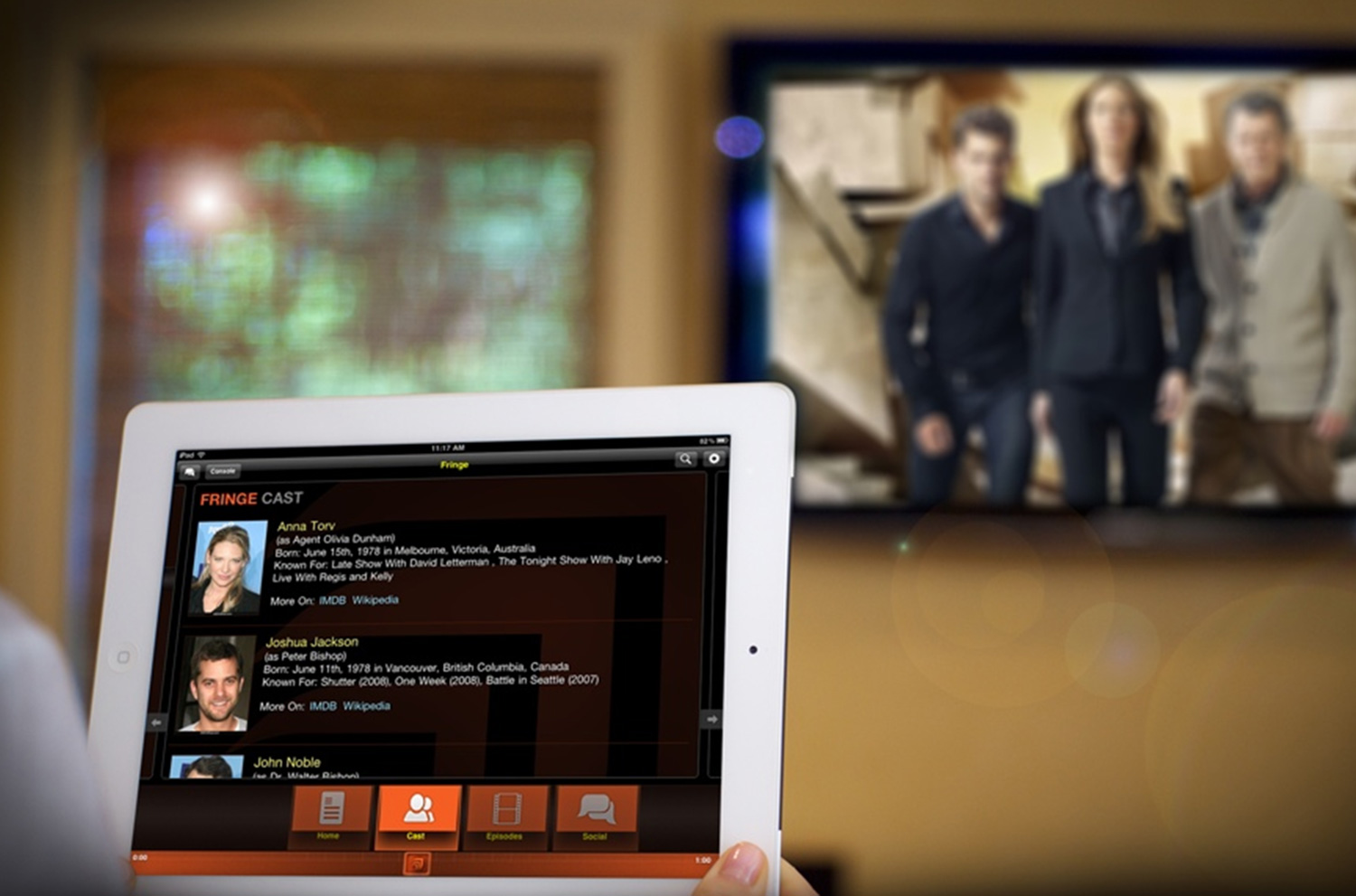
Whether its a mobile app to remote control your TV, a Netflix app for watching movies, or a social TV app that helps you tell your friends what you think of latest episode of Game of Thrones, the fact is: Apps are where its at. People aren’t just punching up channel numbers anymore, they are going to new destinations previously unserved by televisions, and they are using apps to get there. Essentially, apps are making TVs more like a tablets and smartphones, while tablets and smartphones are becoming more like mini TVs. The lines between these devices has never been blurrier, and now we have some interesting numbers to prove it.
TV viewing in the home has become a multiscreen experience in that smartphones and tablets are just as prominent in the living room as a flat-panel TV would be, but a series of studies and findings indicate that today’s viewers are not only increasingly connected, but also more likely to be avid app users, own smart TVs, or both.
Parks Associates conducted a survey that found four out of five smart TV owners use apps regularly. According to the report, 43 percent of usage is for watching video on a smartphone or tablet, and 45 percent is to play games on those devices. Perhaps the more telling stat is that 79 percent of smart TV owners, overall, are regular app users.
The findings lend credence to manufacturers’ desire to focus more on getting apps onto connected-TVs, except development has been slow, while deployment and implementation hasn’t been as seamless an experience as it’s been on mobile devices.
“TV viewing is a lean-back, shared experience, with apps as access points to complementary content, whereas smartphone app use is more personalized,” said Heather Way, senior research analyst for Parks Associates, about the report’s findings. “Apps will alter the TV viewing experience by opening new avenues to discover content and also serve as a means for content owners to push premium content to households.”
Indeed, smartphones have a higher penetration rate than all other app platforms, now that 60 percent of U.S. households with broadband have at least one handset in the home. Way added that smart TVs are expected to hit 25 percent penetration nationwide by the end of this year. If an Apple iTV actually comes to fruition this year, as some analysts have claimed, then that number could theoretically spike upwards even further.
Ooyala says Web viewers spent more than 75 percent of their time watching mobile video on content that was longer than 10 minutes.
Taking a further step back and adding PC viewers into the equation, comScore figures the unduplicated audience for all three devices (PC, smartphone, tablet) together in the U.S. sits at about 235 million. The report doesn’t contrast that number with what it was as recent as five years ago, but it’s likely a major disparity, given that the iPad hadn’t launched and smartphone growth was still behind feature phones.
Lynn Bolger, executive vice president of advertising solutions at comScore, noted that 91 percent of people use tablets at home, mostly in the living room or bedroom, and that more than half of those surveyed by the firm said they use their tablet while watching TV, and that what they do on it usually relates to the program they’re viewing.
Moreover, the results also found tablets are mainly an evening device, with usage largely tied to primetime hours. Mobile browsing and app use topped the list of use cases, and respondents browsed the Web twice as much on an iPad as they did an iPhone, plus spent seven times longer with apps.
More eyeballs watched content on Vimeo, Hulu, Disney Online, Discovery and Sony Online through video channels than the year prior. Mobile traffic also spiked for Dow Jones and The Weather Channel, at about 30 percent each. Sports TV content had no definitive numbers, but Bolger suggested that there was less TV audience duplication because of the use of mobile devices.
That last tidbit is interesting because Ooyala, a video services firm, conducted its own study to look at the differences between time spent watching live content and video-on-demand. Ooyala’s findings suggest people will stick around 2.5 times longer if they’re watching something live than if they’re pulling in something on-demand from broadcasters and entertainment networks.
It’s not known if information like this prompted Discovery to launch Animal Planet L!VE, a live 24/7 network that plays Web streams of animal footage and documentaries. YouTube debuted its own Live service back in 2011, but it hasn’t materialized into anything substantial due to a lack of partnerships. Still, Google says users upload more than 72 hours of video to the service every minute. How many people are actually watching it collectively is the number the company hasn’t revealed.
Despite that, attention spans seem to be growing along with overall viewership on mobile devices. Ooyala says Web viewers spent more than 75 percent of their time watching mobile video on content that was longer than 10 minutes. Almost half of all tablet video consumption was of video at least 30 minutes in length. That last stat makes sense, given that watching episodes of TV shows would push the average up.
What wasn’t addressed was how often, or how many of the respondents in these various studies threw content from a mobile device to the TV. With AirPlay a prominent fixture in the Apple ecosystem, and others for Android slowly edging forward, it’s a wonder if mobile devices are merely viewing companions or content arbiters.
The role of smart TVs and media players is also glossed over when it comes to mobile video or video-on-demand, particularly if content is streamed within a home network from network attached storage (NAS) devices. Not only can smart TVs access that content, but so can smartphones and tablets with the right apps.
The fact that smartphones and tablets are part of the TV viewing experience has been noted before, but the reasons why are arguably more compelling. Expect to see more of these kinds of studies to figure that out, as more and more ad dollars are strategically spent to capture the wandering eyeballs of the mobile masses.


