“Why you can trust Digital Trends – We have a 20-year history of testing, reviewing, and rating products, services and apps to help you make a sound buying decision. Find out more about how we test and score products.“
Ever since virtual reality headsets started popping up in homes, we’ve seen games that create real emotions like vertigo or dizziness. We’ve even seen some that simulate standing in front of a crowd to practice giving a presentation. Rock Band VR may be the first game to generate real stage fright, and then ask you to push past it, just like a real rock star.
Using an existing Xbox One or Playstation 4 guitar controller, and a special mount included with the upcoming Oculus Touch controllers, players can hop on stage and jam out to their favorite guitar-heavy tracks, just like the classic games from the series. But does Rock Band VR shred, or fall short of a record deal?
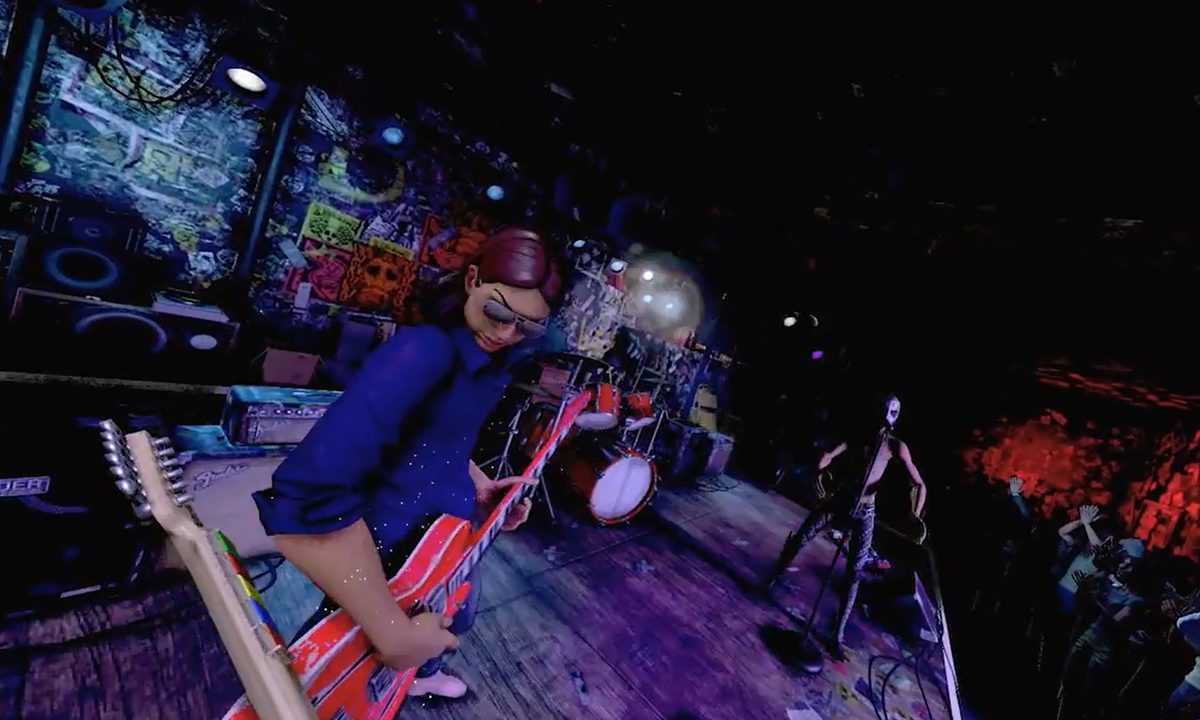
The first thing you’ll notice about Rock Band VR, apart from the stage fright, is how differently it plays from previous games in the series. Instead of following a string of notes coming downstream, you have the opportunity to use different chords and chord patterns freely, while gaining bonus points for following patterns that appear on the guitar’s head. Hitting those countdowns at the right time, and following the song’s natural chord progression, becomes a matter of expression. The team notes that it’s designed with inspiration from Tony Hawk’s Pro Skater, where you score points by nailing combos in an improvised spectacle.
Which can be overwhelming. Unlike the straightforward Guitar Hero of the early 2000s, the breadth of options at any given moment can leave you wondering exactly what to do. Even while playing Van Halen’s “Panama,” a song we’re very familiar with, it wasn’t entirely clear which guitar part we were responsible for, and we missed out on playing the classic opening lick.
The team at Harmonix says there’s still classic mode, but there are a few reasons for switching over to the new format. For one, it puts the audience and stage presence at the forefront of the experience, which is far more immersive than staring at a stream of notes flying at you. It also gives you the chance to let loosen up and rock out. You can jump from point to point on-stage, going back to back with your bass player, or head banging alongside your drummer. Just make sure you’ve cleared your room.
Conclusion
It’s clear Harmonix is still figuring out exactly what Rock Band VR is, and for once that’s totally okay. It isn’t just a rejuvenation of the genre, but a complete reinvention, and one that comes a lot closer to what players, and developers, imagined when it launched almost ten years ago.
Rock Band VR is about throwing a sick solo over your favorite Black Keys song.
With Rock Band VR, Harmonix is moving past the franchise’s roots in gaming and into something new, something that’s not just about executing moves shown on-screen. It’s about feeling, passion, and energy. Harmonix wants everyone to feel like a rock star.
What’s so exciting about Rock Band VR isn’t how it looks in its current form, but the sheer possibilities. There’s a ton of room on stage for multiplayer components, fun new venues, augmented reality, and new instruments – none of which have been confirmed by Harmonix, but all of which are easily possible down the road.
Highs
- Totally immersive
- Uses existing guitar controllers
- Full motion tracking
Lows
- “Freeplay” mode can be overwhelming
- Only guitar support, for now