1. Home
  2. Wearables
  3. Health & Fitness
  4. Outdoors
  5. News

Artificial intelligence will make your sports wearables — and you — even better

Add as a preferred source on Google

By bringing artificial intelligence to its wearable tech, PIQ is looking to improve on its design. Whether you are playing golf, tennis, skiing, or kiteboarding, this new technology will help you get better in any sport

Until now, sports wearables have largely boiled down to high-tech sensors recording basic data. With the addition of GAIA Intelligence, the company will be able to make the PIQ Robot that much better at improving your performance.

Recommended Videos

Both the PIQ Robot and GAIA Intelligence give coaches and athletes the ability to analyze every movement during a game or match. This data can then be compared with any previous performances as well as with a community’s performance overall. The system will highlight key improvements to focus on for success.

The French startup has one of the most powerful wearable sensors on the market. The PIQ Robot captures and analyzes more than thousands of data points to measure speed, strength, and precision.

To better understand and analyze sports movements, GAIA was developed. Using various motion-capture algorithms, the software is able to break down body movement related to a specific sport. GAIA will continue to learn from your movement each time you use the PIQ Robot. To give the artificial intelligence a head start, GAIA has been analyzing millions of movements from thousands of other athletes.

“With GAIA and the Winning Factors, sports wearables enter a new paradigm,”CEO Cédric Mangaud said in a statement. “Our technology enables athletes, not only to measure their performance but also to benefit from personalized advice and get closer to victory. Our goal is now to integrate this technology in sports devices to offer athletes a fully integrated experience.”

If you already own a PIQ Robot, don’t worry about ordering a new one. A free software update will bring GAIA to all current users. PIQ wants to make sure that everyone has the ability to improve their performance.

Garrett Hulfish
Garrett is the kind of guy who tells you about all the tech you haven't heard of yet. He also knows too much about other…
This smart ring makes a blood pressure promise Apple and Oura still won’t
The $399 Signal Ring provides actual systolic and diastolic readings, but it’s launching as a wellness device without FDA clearance
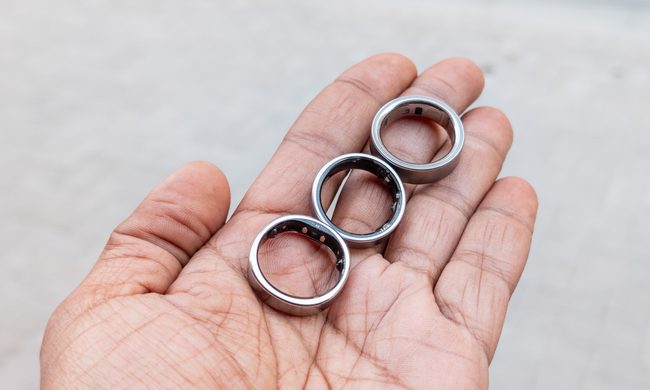
Oura Ring 4, Galaxy Ring and RingConn Gen 2 in the palm of a hand

Vital Signals has unveiled a $399 smart ring that goes further than Apple and Oura currently dare. The Signal Ring displays numerical blood pressure readings without requiring an arm cuff for initial or recurring calibration.

Bloomberg reports that preorders open July 16, with shipping scheduled to begin in October. The ring can collect readings during the day and overnight, then display the results through an iOS or Android app.

Read more
HTC’s smart glasses are apparently coming to the US, but HTC hasn’t said so
Amazon briefly listed the VIVE Eagle for a September 1 launch, while HTC still says the $499 glasses are only available in Taiwan
A woman wearing the HTC Vive Eagle smart glasses

HTC’s VIVE Eagle smart glasses could finally be heading to the US. Apparently, Amazon got the memo before HTC was ready to share it.

Notebookcheck spotted six versions available for preorder at $499, each carrying a September 1 release date. Amazon has since pulled the pages, so new orders are closed and anyone who already placed one is left wondering whether it still counts.

Read more
Don’t expect smartwatches and fitness bands with replaceable batteries anytime soon
Turns out even the EU thinks your smartwatch is too small for a battery swap.
Wristwatch, Arm, Body Part

The EU has a habit of pushing tech companies to adopt meaningful changes in their product. It's the reason your iPhone finally has a USB-C port, and it's also why companies now have to offer spare parts and repair support for electronics for several years after launch. So naturally, many of us assumed wearables were next in line for mandatory swappable batteries. Turns out, the EU just went the other way.

So what did the EU announce?

Read more