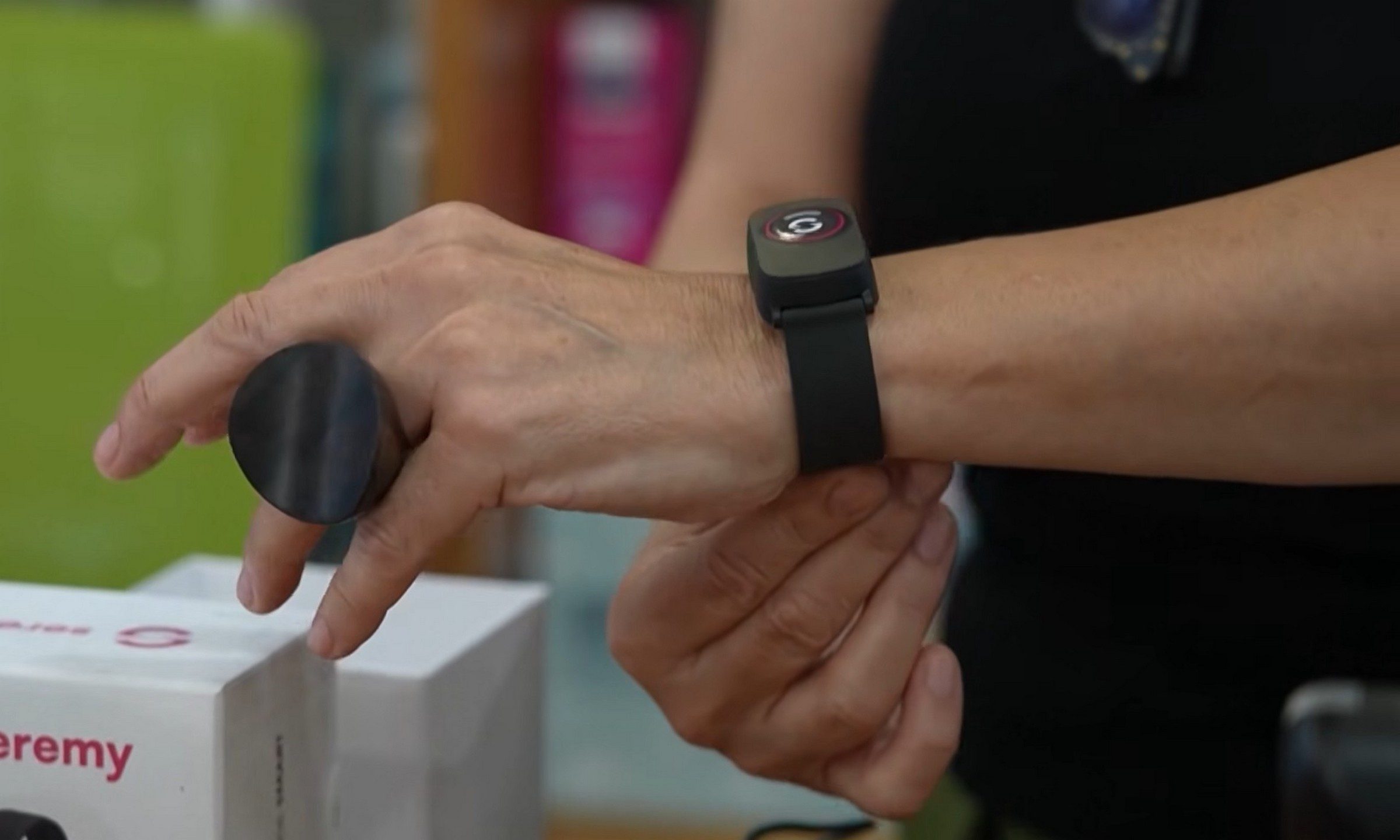
Random number generators aren’t just some niche toy of interest only to mathematicians. They’re also crucial to keeping our computer systems safe from hackers and those who would seek to do us harm. It’s a problem researchers have been trying to crack for years, and with the growing number of hacks that are taking place on a regular basis, it’s more of a concern than ever.
That’s where research from Northwestern University comes into the picture. Using thermal noise generated via carbon nanotubes, they’ve developed something of a holy grail for those working in cryptography: a truly random number generator (TRNG) — one that’s compact enough to be used in wearable devices.
“We have developed one of the most important building blocks for cryptography using a nontraditional semiconductor material, namely solution-processed semiconducting single-walled carbon nanotubes,” Mark Hersam, an expert in nanomaterials at Northwestern University, told Digital Trends. “This TRNG carries the advantages of its constituent solution-processed material, such as being able to be printed at a low cost on flexible plastic substrates, which makes it ideal for emerging flexible electronic applications such as wearables and sensors for the Internet of Things.”
There are two main approaches to creating random numbers: hardware and software, but neither one has proven to be particularly well-suited to something as small as a wearable device. Software-based approaches are typically what is known as “pseudorandom,” which leaves them open to hacking because the numbers are not truly random. Hardware approaches can be truly random, but they are also typically large and bulky — and therefore not ideal for something like an activity tracker or smart sensors.
Northwestern takes a different approach to hardware. Their solution involves a semiconducting carbon nanotube-containing ink that’s used to print a static random-access memory cell. The random numbers are bits generated through thermal noise in a way that is both compact and random.
“The solution-processed random number generator described in our report is readily scalable and reproducible, enabling us and other groups to build upon our work to create a wide array of integrated security applications,” Hersam said.
The randomness of the numbers has already been validated using industry standard protocols, including the NIST statistical testing suite and the TestU01 software library. While there’s still more work to be done to demonstrate this technology in action, it’s definitely an exciting advance for anyone who cares about keeping their devices secure.
A paper describing the work was recently published in the journal Nano Letters.