1. Home
  2. Wearables
  3. Mobile
  4. News

Future smartwatches could get battery life boost from an unusual source

Add as a preferred source on Google
(From left to right) Dr. Han Joong Tark of KERI and Dr. Kim Taehoon of KIMS, along with their research teams, are posing while holding the CNT dope and wires, as well as necklace-type supercapacitors.
(From left to right) Dr. Han Joong Tark of KERI and Dr. Kim Taehoon of KIMS, along with their research teams, are posing while holding the CNT dope and wires, as well as necklace-type supercapacitors. Korea Electrotechnology Research Institute

Wearable devices like smartwatches and smart glasses have gradually become a regular part of daily life, but there’s still an ongoing annoyance with many of them: battery life. While devices like smartwatches can do a few days per charge, larger devices like smart glasses have a history of shoddy battery life that makes them impractical for many people.

Now, though, new technology could help make wearables last for longer and make them lighter weight. A team from the Korea Electrotechnology Research Institute has developed a new method for creating the functional wires which form the basis of smart wearables.

Recommended Videos

The newly developed wires are made from carbon nanotubes, a material which is 100 times stronger than steel but can conduct electricity as well as copper. The tubes are created from atoms connected into hexagonal rings, making them both strong and flexible.

However, it is hard to work with carbon nanotube material because it has a tendency to bunch up and tangle. The researchers managed to address this by adding acid and other additives to the material and then kneading it similar to the way you make bread.

The result is carbon nanotube wires which were tested out in textile supercapacitors, of the sort used in smart clothing.

The tubes had excellent energy storage meaning they can help wearables operate in a more efficient way, which would reduce weight and lets the devices last for longer. Another research group found that they could add sensors using these wires to clothing, which could detect harmful gases — making them ideal for use in fields like firefighting.

“This is the world’s first achievement of dispersing functionalized CNTs in organic solvents for solution spinning. It will drive the development of lightweight and long-lasting wearable electronic devices,” said lead researcher Han Joong Tark. “Through continuous research, this technology could replace copper wires in future mobility fields, such as electric vehicles and drones, greatly improving both lightweight design and energy efficiency.”

The research is published in the journal ACS Nano.

Georgina Torbet
Georgina has been the space writer at Digital Trends space writer for six years, covering human space exploration, planetary…
This smart ring makes a blood pressure promise Apple and Oura still won’t
The $399 Signal Ring provides actual systolic and diastolic readings, but it’s launching as a wellness device without FDA clearance
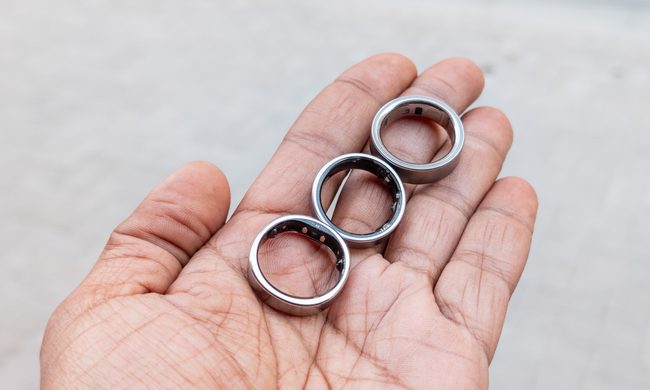
Oura Ring 4, Galaxy Ring and RingConn Gen 2 in the palm of a hand

Vital Signals has unveiled a $399 smart ring that goes further than Apple and Oura currently dare. The Signal Ring displays numerical blood pressure readings without requiring an arm cuff for initial or recurring calibration.

Bloomberg reports that preorders open July 16, with shipping scheduled to begin in October. The ring can collect readings during the day and overnight, then display the results through an iOS or Android app.

Read more
HTC’s smart glasses are apparently coming to the US, but HTC hasn’t said so
Amazon briefly listed the VIVE Eagle for a September 1 launch, while HTC still says the $499 glasses are only available in Taiwan
A woman wearing the HTC Vive Eagle smart glasses

HTC’s VIVE Eagle smart glasses could finally be heading to the US. Apparently, Amazon got the memo before HTC was ready to share it.

Notebookcheck spotted six versions available for preorder at $499, each carrying a September 1 release date. Amazon has since pulled the pages, so new orders are closed and anyone who already placed one is left wondering whether it still counts.

Read more
Don’t expect smartwatches and fitness bands with replaceable batteries anytime soon
Turns out even the EU thinks your smartwatch is too small for a battery swap.
Wristwatch, Arm, Body Part

The EU has a habit of pushing tech companies to adopt meaningful changes in their product. It's the reason your iPhone finally has a USB-C port, and it's also why companies now have to offer spare parts and repair support for electronics for several years after launch. So naturally, many of us assumed wearables were next in line for mandatory swappable batteries. Turns out, the EU just went the other way.

So what did the EU announce?

Read more