

Google’s acquisition of fitness-tracking company Fitbit seemed like a big move at the time, but four years later, the future of Fitbit looks uncertain. Recently, Google has discontinued Fitbit products in many countries, and despite promising to make fitness “more accessible to more people,” Google has only released one new Fitbit-branded product in 2023.
Neither of these decisions reflects positively on the company, which has a history of discontinuing once-popular products, sometimes on what feels like a whim.
Fitbits are disappearing from multiple countries
As noted on Google’s support website (first spotted by Android Authority), Fitbit products are no longer being sold in 11 countries in the EU, including Croatia, Czech Republic, Estonia, Hungary, Latvia, Lithuania, Luxembourg, Poland, Portugal, Romania, and Slovakia. The products have also been pulled from five locations in the Asia-Pacific region: Hong Kong, Korea, Malaysia, Thailand, and the Philippines. According to Tech Central, Fitbit products are also being pulled in South Africa.
And it doesn’t stop there. As spotted by 9to5Google, a separate support page from Google indicates that Fitbit products are no longer being sold in Mexico or any other markets in Latin America. That includes Argentina, Chile, Colombia, Costa Rica, Ecuador, Guatemala, Mexico, Panama, Paraguay, Peru, Puerto Rico, and Venezuela. Fitbits were previously being sold in all of these countries, but they’ve since vanished from thin air.
Google didn’t give a reassuring reason for this vast removal of Fitbit products; instead, it told Tech Central that this was done to “align our hardware portfolio to map closer to Pixel’s regional availability.” Google says it will continue to provide software releases, security updates, warranty fulfillment, and customer service for existing Fitbit products in those areas.
Furthermore, Google provided another statement to Android Authority on November 9, saying:
“We communicated that we will stop selling Fitbit products in select countries in order to align our hardware portfolio to map closer to Pixel’s regional availability. We remain committed to our customers and have not made any changes that impact the existing Fitbit devices they already own. Existing Fitbit customers will continue to have access to the same customer support, warranties will still be honored, and products will continue to receive software and security updates.”
2023 has been a quiet one for Fitbit
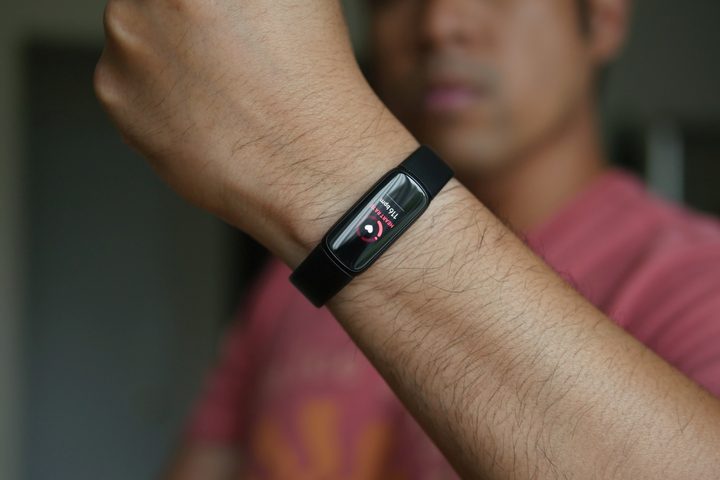
Meanwhile, as 2023 is nearing its end, only one new Fitbit wearable has launched this year — the Fitbit Charge 6. Interestingly, it is almost identical to Charge 5.
To draw a comparison, in 2022, Google launched three new Fitbit products: the Inspire 3, Versa 4, and Sense 2. A year earlier, it released the Fitbit Luxe and Charge 5.
Looking beyond Google’s statements, what else could be the reason for this shift in Fitbit’s strategy? While poor sales could be the most logical reason, the fact that Google only released one new Fitbit product this year suggests something else could be at play. It’s possible that Google’s long-term fitness product plans may not include the Fitbit name, or the company may have decided to focus only on certain regions worldwide.
On the bright side, the absence of new products from Google this year might also indicate that the company is gearing up to launch many new offerings in the coming years, possibly starting in 2024 and beyond.
Luckily for consumers, plenty of terrific wearable fitness products, including fitness trackers and smartwatches from various companies, are on the market. Time will tell whether the Fitbit name remains.


