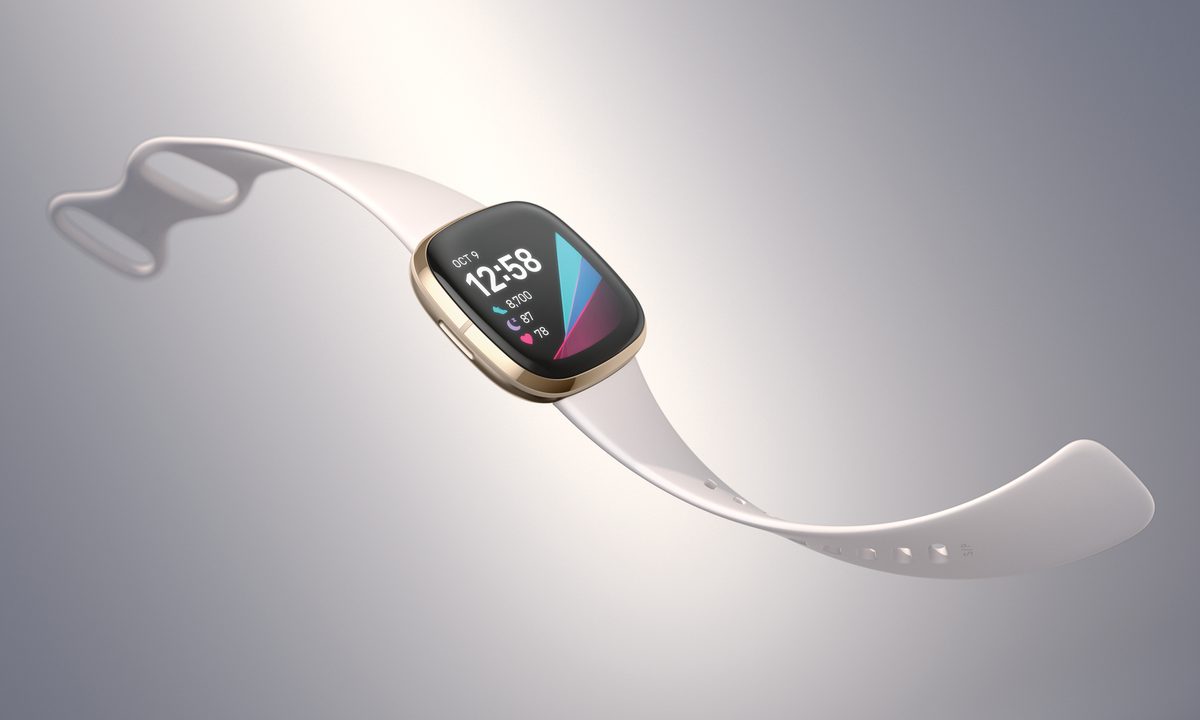
Fitness trackers are all the rage these days. Apart from the athletic market catering to those who want to track and measure their workouts and chart progress, there’s also a burgeoning market opening with seniors adopting the trackers for health reasons.
As usual, with more market share comes more competition. While Fitbit was one of the first out of the gate and able to dominate publicity and marketing circles, other companies jumped into the market with smartwatches and bands.
Today, we compare two popular fitness trackers: The Garmin Vívoactive and the Fitbit Sense. We’ll put them through the paces and see how they differ, where each one excels, and what they offer. You can also check out other options, like the best Garmin smartwatches, or learn which Fitbit is best for you.
Specs comparison
| Garmin Vívoactive 4 |
Fitbit Sense |
|
| Display size | 34 mm (1.34 inches) | 40.5 mm (1.58 inches) |
| Resolution |
260 × 260 pixels
|
300 × 300 pixels |
| Touchscreen | Yes | Yes |
| Color display | Yes | Yes |
| Weight | 50.5 Grams | 33.1 Grams |
| Depth | 12.8mm | 12.3mm |
| Interchangeable strap | Yes | Yes |
| Heart rate | Yes | Yes |
| GPS | Yes | Yes |
| SpO2 | Yes | Yes (overnight only) |
| Waterproof | Yes – 50m | Yes – 50m |
| Battery life | up to 8 days | up to 6 days |
| Stair Counting | Yes | Yes |
| Swim Lap Counting | Yes | Yes |
| Guided Workouts | Yes | Yes |
| Music Storage | Yes | Yes |
| Price | $349 | $299 |
| Availability | Now | Now |
| Review | Coming Soon | Full Review |
Design and screen/interface
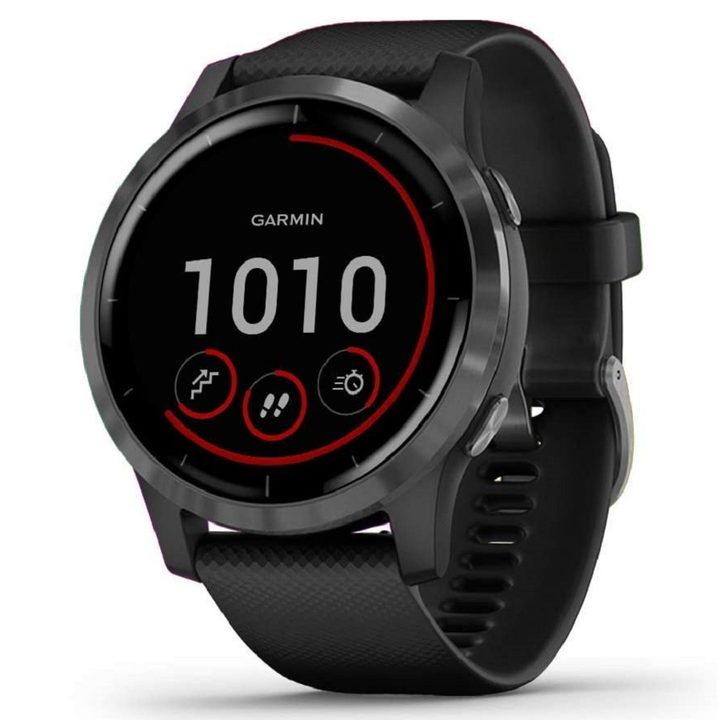
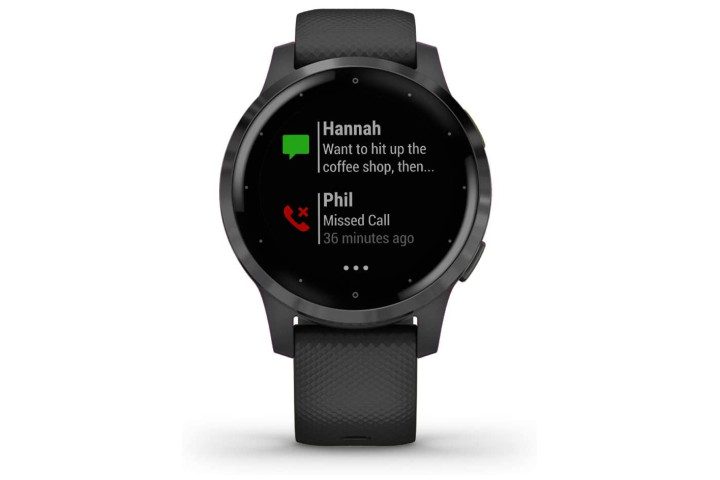
The Garmin Vívoactive 4 has a circular face with a transflective memory-in-pixel display. It also features a touchscreen. There is a built-in alarm, timer, clock, and stopwatch. Garmin further gives you sunrise and sunset times, as well as auto-sync for when you travel. Garmin Pay can be used for contactless payments. You’ll also be able to control your smartphone music with the watch and accept or reject calls to your phone.
The Fitbit Sense has a square-shaped face with rounded corners and has an AMOLED full-color display, with a touch-screen for easy navigation. It’s possible to change the watch face through the Fitbit app instead of a secondary app like Garmin. There’s both a stopwatch and a timer at your fingertips, and you can stream music through the Fitbit Sense and use Fitbit’s own NFC tap pass, which allows you to pay directly with the watch.
Winner: Fitbit
Both watches have really similar features in this category, but Fitbit takes it due to their AMOLED screen and larger display.
Metrics
The Garmin Vívoactive 4 tracks steps and distance and has a built-in sports app to track specific types of exercise. It also has an animated on-screen workout function to guide you through yoga, cardio, and Pilates workouts. It also has sleep monitoring, which tracks different stages of sleep, and Pulse Oxygen data.
The Fitbit Sense tracks steps, distance, floors climbed and calories burned as part of its basic metrics. It also tracks four stages of sleep (awake, light, deep, and REM). Active Zone tracking also lets you know when you’re entering an optimal heart rate zone, customized to your height, weight, and age. Its built-in GPS will also measure “non-workout,” tracking steps and heart rate while you’re moving around the house or office.
Winner: Tie
Both of these fitness trackers handle the basics equally well. There’s not a lot separating them.
Extra metrics
The Vívoactive 4 is capable of measuring SPO2 (Pulse Oxygen) both while sleeping and on-demand. It also has a “body battery” level that tracks your overall energy level. The Vívoactive 4 stress levels are based on heart rate sensor data. It will track daily fluid levels if you enter them, and it will also track menstrual cycles, as well as your general respiration. Note that both the stress and respiration tracking are based on heart rate monitoring.
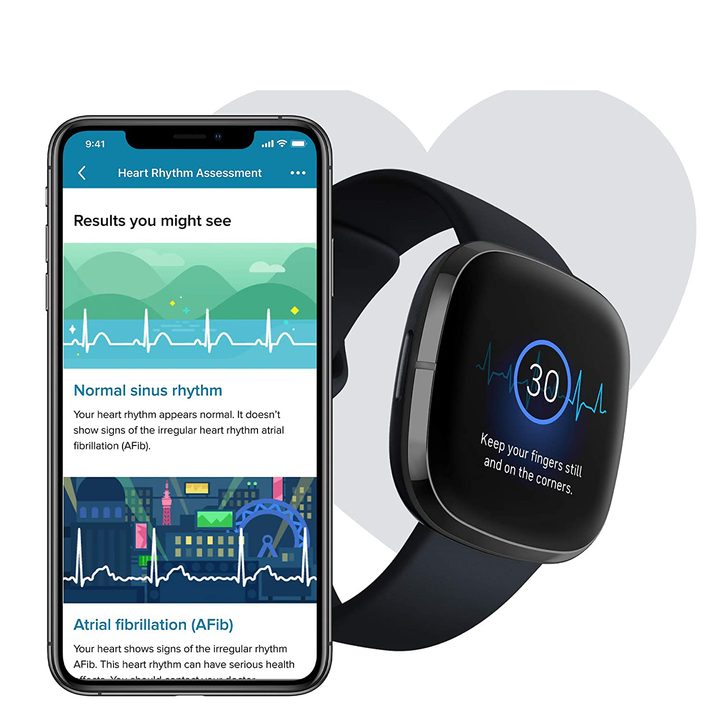
The Fitbit Sense measures SPO2 while sleeping and on-demand and records daily levels. It also has an EDA Scan that detects electrodermal activity as well as measures EGC (electrocardiogram). The Fitbit Sense also tracks VO2 to give you a cardio fitness score. This version also contains a skin temperature monitor to provide you with a running track of your temperature range during the day.
Winner: Fitbit Sense
GPS quality/tracking
The Garmin Vívoactive 4 has onboard GPS so it can track both your speed and distance.
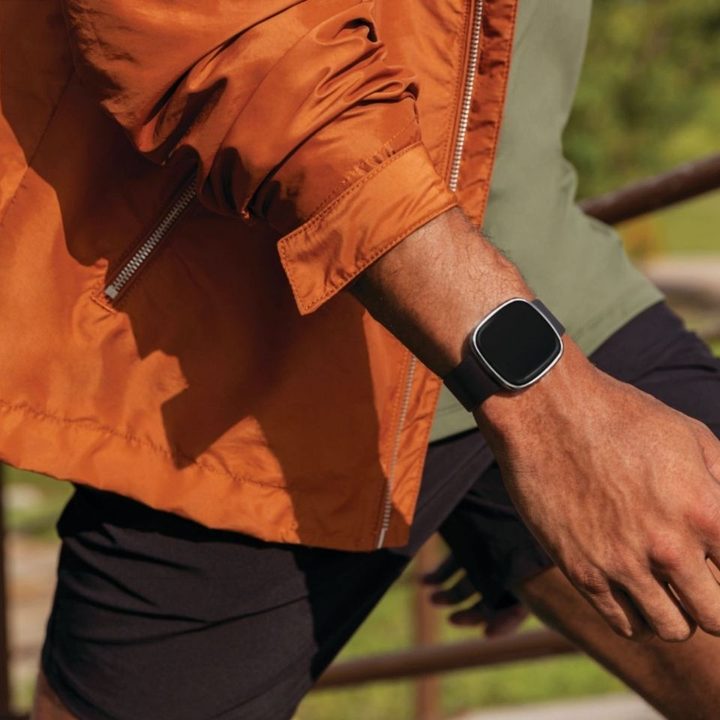
The Fitbit Sense also uses an onboard GPS, though that can also have some issues. Though some users have experienced delays with the GPS connection, the tracking is generally more accurate than with the Vivoactive 4.
Winner: Tie.
Battery life and why it matters
Garmin claims the Vívoactive 4 lasts up to eight days in smartwatch mode (which means most tracking turned off), 18 hours in GPS mode without music, and 6 hours in GPS mode with music.
Fitbit claims the Sense can last six days with GPS disabled and 12 hours with continuous GPS.
It’s important to keep in mind that you’ll likely want to use the features on your fitness tracker, so the best gauge of battery life is with everything turned on.
Winner: Garmin Vívoactive 4
It just edges out the Fitbit Sense, lasting a few more hours.
Price
The Buy at Walmart.com sells from the Garmin website at $349 with free shipping (at time of writing.)
Thewith free shipping (at time of writing.)
Winner: Fitbit Sense
The price is substantially less than Vívoactive 4, though we will mention that sale prices frequently bring them much closer together in cost.
Overall winner: Fitbit Sense
After comparing the two fitness trackers, it seems clear that while they have many features in common, the Fitbit Sense does a little more a little better. At half the cost of the Vívoactive 4, this one is a no-brainer. Be sure to read the full review of the Fitbit Sense here for our honest and detailed analysis.