1. Home
  2. Wearables
  3. Health & Fitness
  4. Mobile
  5. Social Media
  6. News

Follow your Fitbit heart rate to find love with this dating app

Add as a preferred source on Google

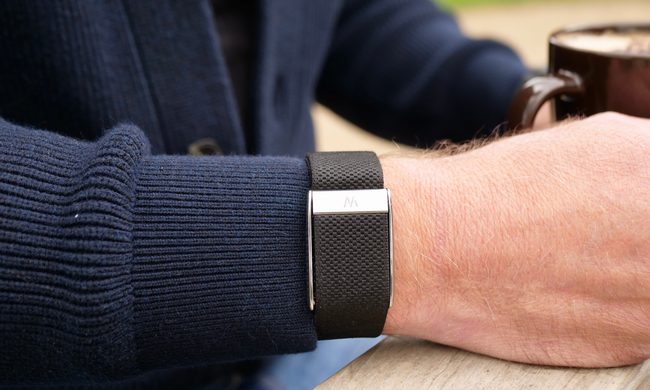
Once, a dating app that takes a more human approach to online matchmaking, has introduced Fitbit and Android Wear integration to help users follow their hearts.

Currently available in the U.K., France, and Spain, and claiming a user base of 600,000, the app can now be sync with the aforementioned fitness trackers to display the user’s real-time heart rate in reaction to each potential match. Future updates will allow users to opt-in to a function that sends their heart rate to a counterpart or potential suitor, reports TechCrunch. For the time being, however, only you will be able to see your true heart rate’s desire.

Recommended Videos

Aside from its integration with wearables, Once also takes a unique approach to the matchmaking side of things. The service currently employs a team of 120 matchmakers that trawl through member profiles to create combinations; a single handpicked match is then offered for users to like or dislike each day. The company’s employees choose prospective suitors based on profile history, such as previous matches.

once-xlarge_trans++7d-rgPQbzFLCmlzSAJLC_7faChs3bJDgJM8n1y90GAw
Image used with permission by copyright holder

Once founder and CEO, Jean Meyer, says the service offers a relaxed dating option. “[Other] dating platforms are too complex, aimed toward an older demographic, or…focused on casual dating and hook ups,” Meyer told TechCrunch.

Meyer claims that his app’s single daily match-up methodology and human (and hormonal) heart-rate feature sets it apart from the pack. A U.S. launch date for the app has not been disclosed.

Fitness fans who like the sound of Once can also seek out Sweatt, a dating app for regular gym-goers that launched in December.

Saqib Shah
Saqib Shah is a Twitter addict and film fan with an obsessive interest in pop culture trends. In his spare time he can be…
The Pixel 11 is almost here, but I’m more excited about what could come with it
Maroon, Text

It’s August, which means one thing if you follow smartphones even remotely closely: new Pixels are almost here. Google is holding its next Made by Google event on August 12, and this year, we’re expecting another packed lineup of phones. The Pixel 11, Pixel 11 Pro, Pixel 11 Pro XL, and Pixel 11 Pro Fold are all expected to take the stage. Yes, that’s the same four-phone lineup Google gave us last year, but the interesting part will obviously be what’s changing underneath. Between the usual camera improvements, new hardware, and whatever AI tricks Google has been cooking up, there should be plenty to talk about.

And the phones may only be part of the story. Google is expected to have a few more announcements up its sleeve, making this one of its biggest hardware events of the year. So, if you’re planning to tune in, here’s when the Made by Google event starts, how you can watch it, and everything we expect Google to announce.

Read more
Kids’ smartwatches are meant to keep children safe, but hackers can turn them into stalking devices
Millions of kids' smartwatches may share the same hackable security flaw.
kid-wearing-smartwatch

A smartwatch designed to help parents keep tabs on their children turned out to be surprisingly easy to hijack. In a new demonstration, security researchers showed how hackers could secretly monitor someone wearing a GPS-enabled kids' smartwatch.

They can take photos, listen through its microphone, and even track location without the wearer noticing. These findings, reported by Wired, highlight a much larger problem that goes well beyond a single gadget.

Read more
Caviar just gave Meta’s smart glasses the gold treatment but forgot to make it pretty
Meta's Ray-Ban AI glasses just got a $6,840 gold makeover nobody asked for.
Caviar Meta Glasses

Luxury customization brand Caviar has built a reputation for taking mainstream gadgets and wrapping them in gold, diamonds and exotic materials. Its latest project follows that familiar formula, but this time the company has turned its attention to wearable AI. Caviar has unveiled a luxury edition of the Ray-Ban Meta AI glasses, replacing the standard design with 24-karat gold accents and an alligator leather case while pushing the price to $6,840.

Dubbed the Odyssey, the limited-edition smart glasses arrive at an interesting moment for the category. AI glasses are gradually moving into the mainstream as companies including Meta, Google and Apple continue investing in wearable computing. Yet Caviar isn't attempting to improve the technology underneath. Instead, it is betting that exclusivity alone is enough to convince wealthy buyers to spend nearly ten times the price of the standard product.

Read more