1. Home
  2. Emerging Tech
  3. Photography
  4. Smart Home
  5. News

There is now a flying surveillance drone for … your home

Add as a preferred source on Google

When it comes to keeping an eye on your home, both while you’re there and while you’re away, there are a handful of options to choose from. You can go with hardwired surveillance cameras, Wi-Fi surveillance cameras, or some other similar options.

Soon though, you might be able to take an even more proactive approach. Meet Cardinal, the world’s first autonomous surveillance drone designed for home use. Developed by Cardinal Robotics, the Cardinal drone is an entirely new way of keeping tabs on your home via an eye in the sky.

Recommended Videos

Inside the the lightweight drone is a 14-megapixel camera capable of shooting full 1080p video. These images remain smooth thanks to its three-axis stabilization technology, and the device is nighttime compatible with a near infrared camera and onboard array of infrared LED lights.

Besides the base specs, not many details have been provided. According to the Cardinal website, the drone has a flight time of 20 minutes and is capable of completing an entire sweep of your home in just two minutes, but no battery information has been given to substantiate the claims.

Furthermore, other than a few renderings and a little copy, there’s not much to go from, which could be a little concerning for those looking to pre-order the device.

Besides the ambiguous details on the battery life and no mention of how the device will automatically recharge itself, another aspect that stands out is the lack of any details of weatherproofing. If you’re paying $4,000 to have a drone keep an eye on your home, it would only make sense it would be able to fly in light rain and know when to stay put in more dangerous weather.

For the time being, Cardinal Robotics is taking pre-orders for the device at $4,000. According to the pricing page, the drone will retail for $6,000 when it hits the market.

The concept looks promising, but we’d need more information before we could assess whether the device will be able to deliver on its promises.

[amz_nsa_keyword keyword=”surveillance drone”]
Gannon Burgett
Former Editor
I let Gemini take care of my houseplants, and they’ve never looked better
Study guide created by Gemini

I am, by every reasonable measure, a serial plant killer. I've lost count of the pothos, the peace lilies, the one very expensive fiddle-leaf fig that judged me silently for a month before giving up entirely. My problem was never a lack of love. It was that I'd either drown them out of guilt or forget they existed for a fortnight, with no middle ground. So when I started leaning on Gemini for the odd everyday question, letting it babysit my plants wasn't some grand plan. It happened almost by accident, and now my flat looks like something a person with their life together would own.

It started the way most of my plant emergencies do, with a leaf going a color it definitely shouldn't. Instead of doom-scrolling through contradictory Google searches like I usually would, I snapped a photo, handed it to Gemini, and asked what was wrong. What I got back was a proper answer, and it was the first of many.

Read more
I underestimated this NotebookLM feature until it completely changed how I study
google-adds-data-tables-feature-in-notebooklm

I'll admit it: I ignored NotebookLM's Mind Maps feature for far longer than I should have. I mostly used the app to ask questions about my documents or generate Audio Overviews and Short Video Overviews, while that little Mind Map button sat untouched. I assumed it was more of a nice-to-have than something I'd actually use. Turns out, I was completely wrong.

I stopped drowning in my own notes

Read more
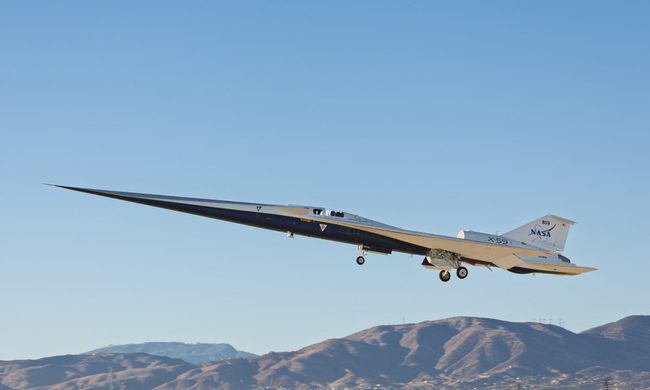
The Concorde dream is within reach. NASA X-59 just has to silence the supersonic boom
The jet built to kill the sonic boom just reached full speed
Lockheed Martin’s X-59

NASA has already proved that its needle-nosed X-59 can move seriously fast in recent test flights. Now, the next step is to find out whether it can break the sound barrier without announcing its arrival to everyone below. The experimental aircraft recently reached Mach 1.4, or about 924 mph (1,487 kph), at an altitude of 55,000 feet. Those are the target conditions NASA plans to use during future tests of the X-59’s quieter sonic signature, making the flight a major milestone for the agency’s Quesst mission.

NASA’s supersonic jet has reached full speed

Read more