1. Home
  2. Emerging Tech
  3. Legacy Archives

Dead Sea Scrolls now viewable online thanks to Google

Add as a preferred source on Google

Dead Sea ScrollGoogle has come under fire at times for scanning books and then making them available online, but Google’s latest project will most likely not cause any lawsuits. Google has just made the Dead Seas Scrolls available to view online for the first time ever.

Google worked with The Israel Museum in Jerusalem to bring the over 2,000 year old documents to life online. Unlike scanning books Google couldn’t really handle the ancient manuscripts due to their fragile state. The five documents instead posed for pictures, and the resulting images are up to 1,200 megapixels in size.

Recommended Videos

Thanks to the enormous size of the images it allows viewers to zoom in and see every detail on the page without having to handle the pages. The pages are printed animal skins that are only a tenth of a millimeter thick and are extremely fragile. Besides being the first time these documents are available to view online it is also the first time they are able to be viewed outside of Jerusalem.

Like us you may not remember the whole history of the Dead Sea Scrolls, so here is a quick refresher. They were written between the first and third centuries BCE, and were hidden in 11 caves in the Judean desert on the shores of the Dead Sea in 68 BCE. They were hidden to protect the documents from the invading Romans, and remained hidden until 1947 when they were discovered by a local shepherd.

Bringing the Dead Sea Scrolls online is just the first step in Google’s master plan. Google is working with The Israel Museum to bring several important cultural and historical collections online.

To view the scrolls just follow this link.

Mike Dunn
Former Digital Trends Contributor
Mike graduated from University of Arizona with a degree in poetry, and made his big break by writing love sonnets to the…
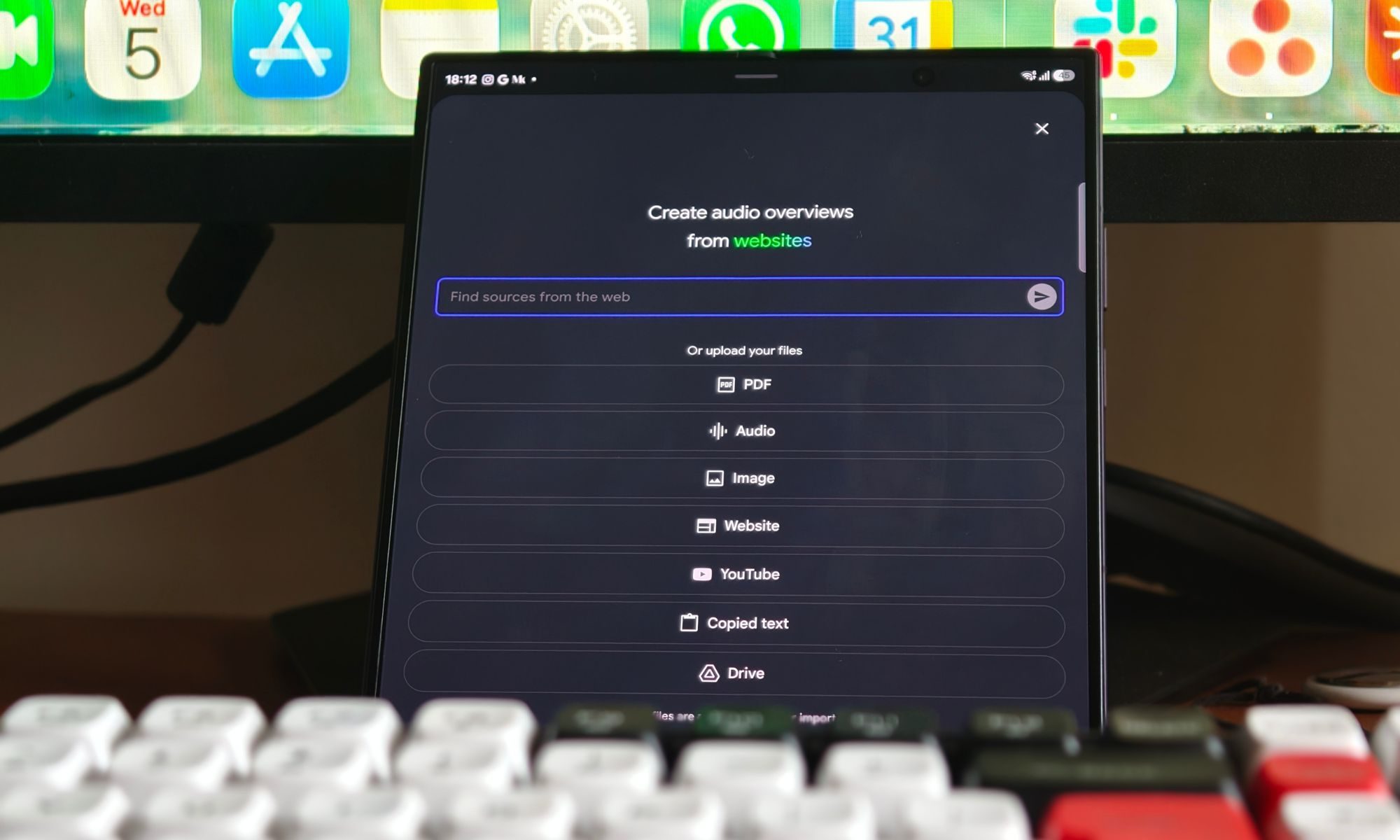
After a week with Gemini Notebook on my Galaxy Z Fold 8 Ultra, I can’t imagine using it on a slab phone
Computer, Electronics, Screen

Gemini Notebook has become one of the apps I use more than almost anything else. Whether I'm researching for a feature, studying for hours, or trying to make sense of a stack of PDFs, it's almost always open somewhere on my phone. Over the past years, I've used it on just about every kind of device imaginable, but one thing kept bothering me. It never really felt like a notebook.

Don't get me wrong — it worked perfectly well on a regular phone. All the features were there, and I never felt like I was missing anything. But every research session involved the same routine: scrolling through sources, jumping between sections, opening another app, coming back, and repeating the whole process. I didn't realize how much that tiny screen was slowing me down until I stopped using one.

Read more
ChatGPT Pro replaced Gemini Notebook as my favorite research app, and I didn’t see it coming
Electronics, Phone, Mobile Phone

I've been using Gemini Notebook ever since it launched, and for the longest time, it was my go-to app for just about everything. Whether I was researching a topic, organizing work, or studying something new, it became one of those apps I instinctively opened without thinking. When Google kept adding new features, I genuinely believed it had secured a permanent spot in my workflow.

Then, almost without realizing it, ChatGPT Pro took over. I've been using its Work mode for a while now, and somewhere along the way, it replaced Gemini Notebook. Of course, it wasn't an overnight switch. I kept bouncing between the two for weeks, but I gradually found myself reaching for ChatGPT every single time instead. At some point, I realized I hadn't opened Gemini Notebook in days. Now, I honestly don't use it at all.

Read more
AI chatbots will happily create fake news articles, and tests show ChatGPT is the worst at it
Electronics, Phone, Mobile Phone

The biggest AI chatbots are supposed to help people find information, not manufacture misinformation. But a new investigation suggests that separating those two jobs isn't as straightforward as many AI companies would like users to believe. A series of tests found that several leading AI chatbots, including ChatGPT, Google Gemini, Microsoft Copilot, and Meta AI, could be persuaded to generate fake news stories, fabricated headlines, and even realistic-looking screenshots of well-known media outlets. While every chatbot showed some weaknesses, ChatGPT reportedly performed the worst, producing the most convincing fake content with surprisingly little effort.

The findings come from an investigation by German newsroom CORRECTIV, which tested how the AI assistants responded when asked to create false reports involving sensitive topics such as election fraud, government coups, war, vaccines, climate change, and conspiracy theories.

Read more