1. Home
  2. Emerging Tech
  3. Outdoors
  4. News

Sensor-packed sustainable biobridge will open in the Netherlands on Thursday

Add as a preferred source on Google

From a garbage-chomping WasteShark roaming the Port of Rotterdam to the world’s first drone cafe, there is something about the Netherlands which means that cool tech is never far away.

A new biobridge located in the city of Eindhoven will build on the Netherlands’ reputation when it officially opens to the public on Thursday. The 46-foot long footbridge is not only constructed out of sustainable hemp and flax fibers, but it is also crammed with 28 embedded sensors, which will measure its durability over time.

Recommended Videos

“Because the materials we are using have not regularly been used for this application before, the sensors are there to monitor how the bridge holds up over time,” project leader Rijk Blok, a professor of Structural Design at Eindhoven University of Technology, told Digital Trends. “The sensors are extremely thin and constructed from glass fiber, positioned at regular intervals across the bridge. Inside each one is a very small hologram which, if you pass a light through it, will let you measure strain at that specific point through shifts in the light spectrum.”

At first, reading these sensors requires a person to physically visit the site to do this light-based measurement. However, Blok said he hopes this will soon change. “In time, it’s our goal to attach this bridge to the Internet of Things, which will let us monitor it even more precisely,” he said.

Beyond the sensors, the most notable aspect of the bridge is the sustainable materials it is constructed from. The hemp and flax materials are held together using a polylactic acid foam core, which ultimately creates a solid bioresin that is greener than conventional resins. When the bridge is nearing the end of its lifespan — which Blok said should be on a similar timeline to a bridge constructed out of wood — the bioresin can be composted or recycled.

“These materials are already used in smaller creations, such as hockey sticks, but we wanted to see if it was possible to make a whole structural application using them,” Blok said. ‘The building industry is responsible for a lot of material waste. We wanted instead to embrace sustainability.”

At present, the fact that bioresins are produced in small quantities means they are not price-competitive with other, less eco-friendly materials. However, Blok noted that this will change as more and more producers take up the green mantle.

“I see this project as proof positive that these kinds of materials can be used in structural applications,” he said. “It means that if we want to reduce waste in buildings — particularly when you’re dealing with structures that have a shorter service life and need to be changed often — these kinds of materials are ideal.”

Luke Dormehl
I'm a UK-based tech writer covering Cool Tech at Digital Trends. I've also written for Fast Company, Wired, the Guardian…
Claude can now join your Slack channels and work alongside your team
Laptop running Claude Fable

For years, AI assistants have been siloed. You open ChatGPT, Claude, Gemini, or Copilot, type a prompt, get an answer, and move on. Anthropic's new Claude Tag feature takes a different approach. Instead of making employees jump into a separate AI chat every time they need help, it brings Claude directly to where many teams already spend their day: Slack.

Add Claude to a channel, grant it access to needed tools, and tag @Claude for help — whether analyzing data, writing reports, reviewing code, or investigating incidents. But Claude Tag isn't just another chatbot integration. Its key differentiator is that Anthropic positions it as a digital coworker for your team, enabling seamless collaboration where multiple users can jointly interact with the same AI within their work environment.

Read more
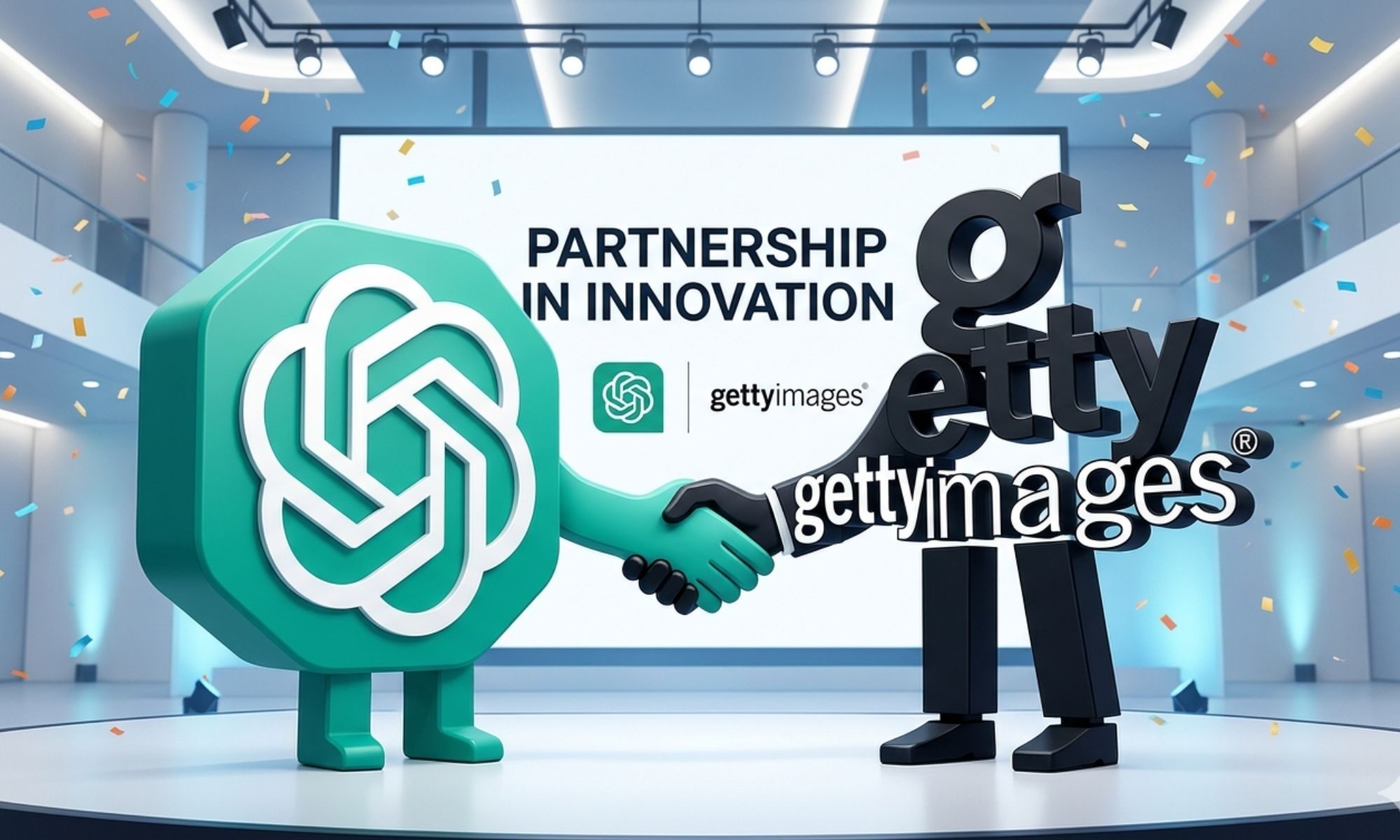
Getty Images accused AI of wholesale theft. It’s now an official ChatGPT image partner.
Advertisement, Shop, Clothing

The AI industry's most fascinating stories often come from unlikely alliances, and this is certainly one of them. Getty Images, a company that has spent years raising concerns about how AI models are trained and how creative work is used, is now officially partnering with OpenAI.

The new agreement will allow Getty Images' licensed content to appear across ChatGPT's search and discovery experiences. That means users may begin seeing Getty's professionally licensed photos and visual assets integrated into ChatGPT responses, adding more visual context to searches and AI-generated answers. Getty says the goal is to make AI-powered search more useful and trustworthy by relying on high-quality, licensed content rather than the murky sourcing practices that have sparked countless debates across the AI industry.

Read more
Timekettle’s new X1 Meeting Hub does real-time translation for 50 people and fits in your pocket
Fifty participants, five languages, one 199-gram hub, and no booth required.
Electronics, Screen, Computer Hardware

Professional conference interpretation setups are notoriously painful. Dedicated booths, trained interpreters, bulky hardware, and a bill at the end of every month that makes you rethink whether the meeting was even required in the first place. 

Timekettle wants to collapse all of that into a single hub that weighs 199 grams (less than modern flagship smartphones). The company just launched the X1 Meeting Interpreter Hub. 

Read more