

“Telltale Games kicks off its latest series with episode one of The Wolf Among Us, a five-part story set in Bill Willingham's Fables universe.”
- Superb production values and focus on cinematic presentation
- Completely faithful to Willingham's vision for these characters
- We'll have to wait for four more episodes to find out how this story ends
- The suspense is killing us
“Why you can trust Digital Trends – We have a 20-year history of testing, reviewing, and rating products, services and apps to help you make a sound buying decision. Find out more about how we test and score products.“
The Wolf Among Us – Episode One: Faith introduces a tale of two outsiders, one seen and one unseen. Strip away all of the fantastical ties to Bill Willingham’s wonderful Fables comic book series, and you’re left with the story of a surly sheriff on the hunt for a vicious, unknown killer. All that really sets them apart is the cop’s firm grip on his beast within.
This is a game for the fans, no question, but you don’t need to be a fan to enjoy it.
Applause all around to the dev team at Telltale Games, which somehow managed to fully lay out the building blocks of the Fables universe in its debut episode of The Wolf Among Us, titled Faith. The all-text opening screen alone delivers a concise synopsis that introduces newcomers to Willingham’s magical vision of New York City. Fans know already that Wolf is effectively a prequel story; newcomers don’t need to, at least not yet.
“Once upon a time in New York City there lived a community of fairy tale characters known as Fabletown. The Fables who live there arrived hundreds of years ago, after they were exiled from their Homelands,” the intro reads.
“Through the use of a magic spell called Glamours, they have protected their secret community from the mundane world. Sheriff Bigby Wolf protects them from each other.”
That is all you need to know when you first step into The Wolf Among Us. Additional details emerge naturally during the first episode. Fans of the comic will no doubt take some pleasure in picking out overt and subtle nods to Fables lore. You’ll smile at Mr. Toad’s fearful aversion to The Farm and you’ll nod knowingly at Bigby’s easy, comfortable patter with Snow White. This is a game for the fans, no question, but you don’t need to be a fan to enjoy it.


Credit the star of the game, Fabletown’s sheriff. The human personification of the fabled Big Bad Wolf, Bigby is a man divided. On one hand, he’s a tough guy cop who isn’t afraid to bloody his knuckles if it helps to keep the peace. And on the other, he’s a simmering cauldron of rage, a wolf in human clothing who is trusted by few and feared by all. Fables don’t die easily, but the younger, wolfier Bigby inflicted a lot of pain and suffering on the beings he’s now charged with protecting.
In many ways, Bigby Wolf is the perfect video game protagonist for Telltale. He’s a cop with wolf in his blood, a natural-born investigator and observer. These two qualities lie at the playable heart of every Telltale story as well: the characters may change, but the player is always expected to watch what’s happening in the world around them and dig for answers wherever they can.
What’s more, Bigby is as malleable as The Walking Dead‘s Lee Everett was. The choices players make, both in interactions with other characters and in earmarked moments in which your path through the story branches, influence how others perceive Bigby. He remains an outsider though, both because he’s subject to the whims of a human operator and because of his dark history as the Big Bad Wolf.
Somehow the unfolding story feels completely natural and unforced even though it’s designed to turn in any number of directions.
The particulars of this debut episode are best left to be discovered as they naturally unfold, but a mournful vibe bubbles throughout. These are exiled beings, imprisoned far from their homes in a world that will never understand them. Even if you go in knowing nothing of The Adversary and his conquest of the Homelands, you get a strong sense of the hopeless desperation that has become a daily aspect of Fabletown existence through everything from the music to the exceptional voice performances (particularly Adam Harrington’s Bigby).
The story effectively introduces a sizable cast of characters and the universe they exist in while also setting a chain of events in motion that will ripple through the season’s four remaining episodes. It’s a strong starting point, bolstered by a number of meaningful choice-driven moments that branch Bigby’s investigation in unexpected directions. Somehow the unfolding story feels completely natural and unforced even though it’s designed to turn in any number of directions.
The presentation helps a lot here too, with a strongly cinematic delivery sticking to the basic rules of filmmaking. Artful close-ups and camera cuts are very consciously used for exposition and foreshadowing. Framing and an attention to the physical makeup of every scene (mise en scène, if you want to get pretentious) impart information where words wouldn’t comfortably suffice. Wrapping around all of it is a motion comic-like art style that feels similar to The Walking Dead, while maintaining a distinctly Fables identity.
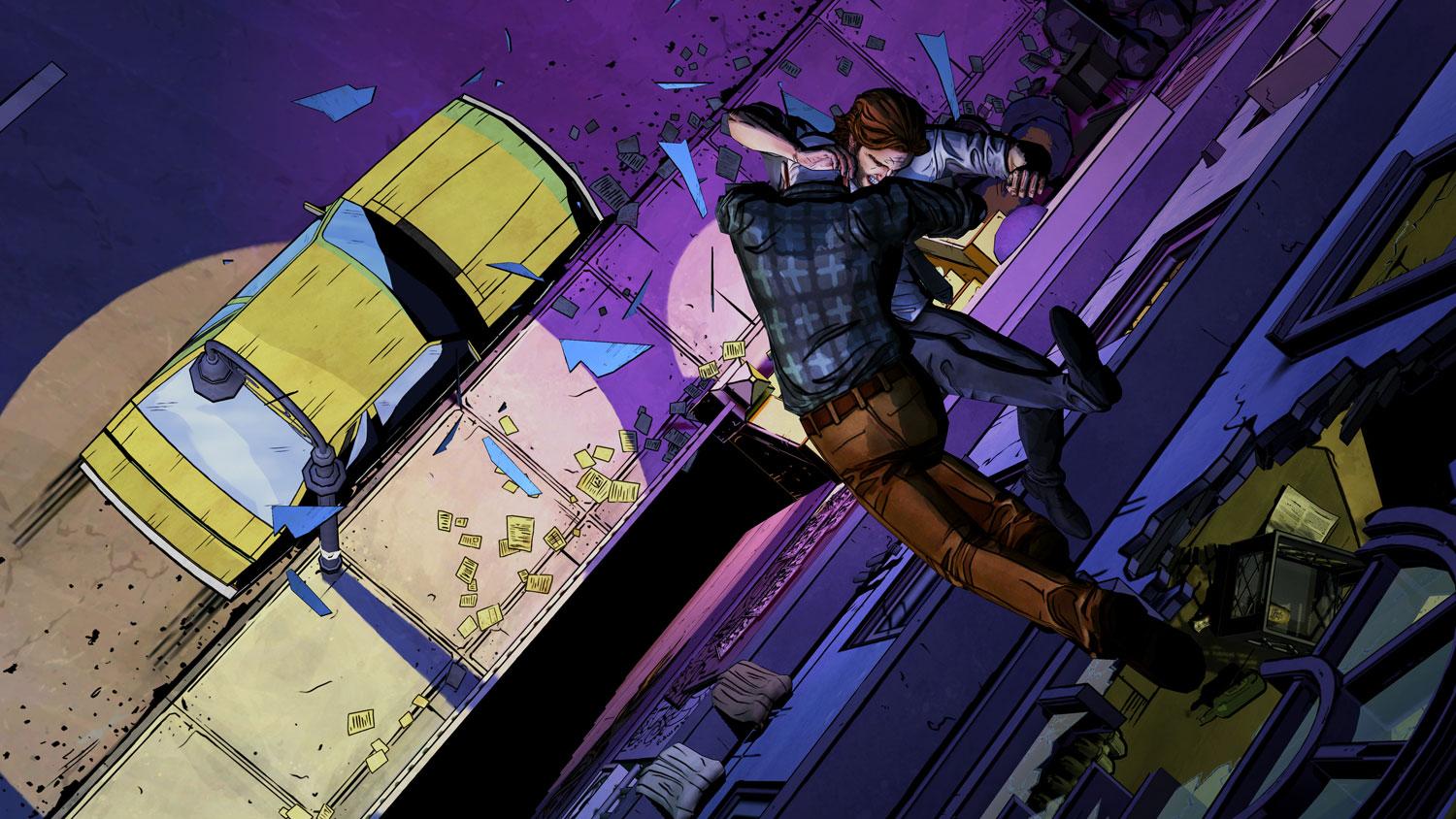
On the gameplay side, very little differs from The Walking Dead in a functional sense. Aspects of the presentation feel fresh – such as contextual radial menus that appear when you hover the cursor over an item of interest, or the stylized quick-time event button prompts – but the play still boils down to exploration mixed with character interactions and the occasional QTE. Telltale smartly avoids making any sweeping changes to the undeniably successful formula that drove its last episodic adventure.
One cool addition is the new “Book of Fables” extra, accessible from the main menu. It’s a text-based reference guide covering characters and items of interest from the Fables universe, and it updates whenever you encounter something new. A welcome resource for those that wish to learn more about the comic book series. Also new to the Extras menu is a “Player Choices” option, though that remained locked even after we completed the first episode.
And there you have it. Go play The Wolf Among Us. Now. Willingham’s Fables is one of the most refreshingly novel ongoing series’ today. If you feel any twinge of appreciation for TV’s Once Upon a Time, know that Fables does it better, and smarter. Episode one of The Wolf Among Us captures the spirit of the comics perfectly while breathing life into characters that have too long lived as static drawings on a page.
This game was reviewed on a first-gen Alienware X51 gaming PC using a Steam code provided by Telltale Games.
Highs
- Superb production values and focus on cinematic presentation
- Completely faithful to Willingham’s vision for these characters
Lows
- We’ll have to wait for four more episodes to find out how this story ends
- The suspense is killing us
(This game was reviewed on Steam using a code provided by the publisher)


