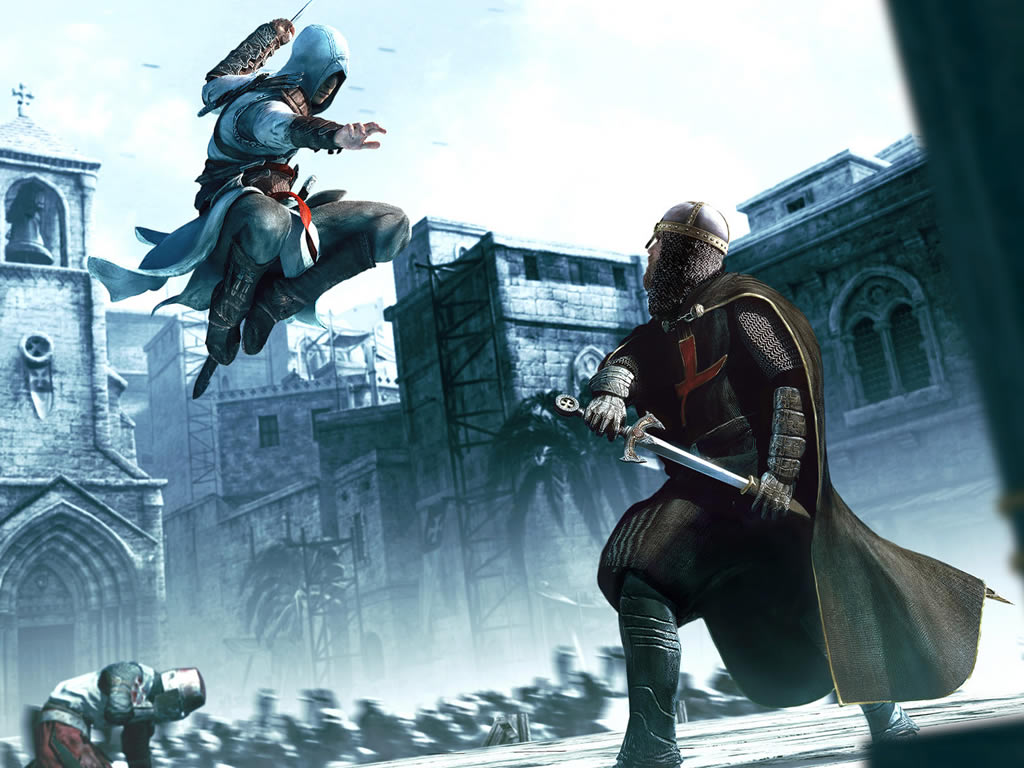
After months of negotiations, Ubisoft’s uber-popular Assassin’s Creed property has found a home at Sony. On the surface it sounds simple enough—a major movie studio buys the rights to one of the biggest properties in the video game world—happens all the time. But this contract is a bit unusual. And not everyone is happy about it.
A closer look at the contract by Vulture.com shows that Sony has agreed to give Ubisoft unprecedented control over the film, including approval over the budget, principal cast, the script and even the release date. That level of control is unheard of in Hollywood, especially in a big budget film, which Assassin’s Creed almost certainly will be. Even the most respected directors working today don’t receive this level of control, and several studios are said to have passed on the project after showing interest, once the conditions were known. “As a director, even Steven Spielberg cannot get this kind of deal,” one unnamed insider told the site.
Speilberg’s Dreamworks, Universal and Warner Bros. all courted the project, but ultimately balked at Ubisoft’s demands, according to insiders.
 Fans of video games have long been victims to the Hollywood machine, as time and again they have seen some of their favorite game properties turned into films that typicaly range from mediocre to god-awful messes. There is no one specific reason for the general mistreatment of gaming adaptations, yet it seems to happen over and over, and even the moderately successful franchise like the Resident Evil movies aren’t exactly lighting fans’ brains on fire with imaginative glee.
For every film adaptation like the moderately well received Silent Hill adaptation, there is a Super Mario Bros. or an Alone in the Dark waiting to remind fans that when things go bad, they go very bad. So for fans of the Assassin’s Creed series, this may sound like a good movie by Ubisoft to protect its billion dollar franchise, but most in Hollywood would disagree.
“It’s [Ubisoft’s] billion-dollar brand, so I get that they’re protective,” an unnamed head of a studio that eventually passed on the deal said, “But they’re not moviemakers, and the only way to make sure it’s a bad movie is to undervalue what movie studios do — and this is a deal that totally undervalues what movie studios do.”
Earlier this year, Ubisoft announced that it would be creating its own entertainment division to develop the studio’s properties. A handful of games including Splinter Cell and Ghost Recon were mentioned, but of all Ubisoft’s titles, few can touch the popularity of the Assassin’s Creed series, which has sold over 30 million copies in three titles (not counting mobile games) and a fourth is due this month.

The series is based on a secret guild of assassins that have existed since the crusades, and have been locked in a centuries old struggle with the Knights Templar. The games are told from the point of view of a modern day assassin named Desmond, who thanks to an experimental piece of hardware can relive the experiences of his assassin ancestors.
Part of the reason for the Ubisoft’s decision to form an independent studio was said to stem from the publisher/developer’s unhappiness at the way the Prince of Persia: The Sands of Time film was adapted by Disney last summer. The film did decently at the box office, earning over $335 million on a $200 million budget, but the movie was panned heavily by fans and critics alike. Ubisoft blamed Disney for not giving it enough control, while Disney blamed Ubisoft for having too much influence.
Many game developers have grown hesitant to license their properties. Rockstar and Activision have repeatedly turned away interested studios hoping to adapt the Grand Theft Auto and Call of Duty franchises. Both properties already earn over a billion dollars with each new release and see the risk of a failed movie far outweighing the benefits.
One of the properties that is most commonly discussed as a possible target for the big screen adaptation is the Halo series. Several studios have expressed interest over the years, and a Halo movie produced by Peter Jackson and directed by Neil Blomkamp–who had directed three live-action, award winning Halo shorts, collectively known as Halo: Landfall was greenlit in a joint venture between Universal and Fox.
Shakeups at Universal were the first of many issues with that production, and the project eventually died. One of the reasons all involved gave for the death of the adaptation was the deal that Microsoft demanded, which granted the company $5 million up front, and 10-percent of any theatrical profits. Adding in the salaries and demands for profits from Jackson and both studios, and the adaptation was deemed far too costly.

Once Jackson was off the property, and following a legal battle between Fox and Universal, Dreamworks made overtures to take on the project. That project would have been produced by Spielberg, but the interest eventually died away. Many involved claimed that Microsoft showed almost no interest in adapting the game, and were more concerned with the negative effects a bad movie would have on a franchise that was already a huge moneymaker. The publisher didn’t trust Hollywood to make a successful movie, and so it demanded a hefty price tag to offset the risks.
Part of the reason Sony seems to be willing to grant so much control to Ubisoft is that the publisher/developer is willing to put up serious cash of its own to make sure that the Assassin’s Creed film is handled properly. For Sony that means that it will end up spending much less to develop the film than it normally would, and a huge fanbase already exists.
Sony also seems to be serious about trying to find the right combination that will unlock the video game adaptation vault. Several games developed by Sony’s in-house developers for the PlayStation 3 are rumored to be under consideration for the big screen jump, and the first up will be an adaptation of the Uncharted series, which will be written and directed by Neil Burger.
Burger is considered to be an up-and-comer in Hollywood and he replaces David O. Russell, who was attached as the writer/director for the film until he and Sony began to disagree on the story (and budget) that Russell was proposing.
For Ubisoft’s new entertainment division, the pressure will be on. Sony will likely push for its own people to be hired and cast, and if that coincides with what Ubisoft is thinking, the movie could go ahead with smooth sailing. If disagreements begin though, the movie could end up in development hell. If the property succeeds, it could cause more headaches for Hollywood, as the current owners of adaptable properties look to the precedent set by Ubisoft, and demand more control, something most in Hollywood are unlikely to give.