  1. Home
  2. Tablets
  3. Mobile
  4. Legacy Archives

Verizon to Bring Live TV to Mobile Devices

Image used with permission by copyright holder

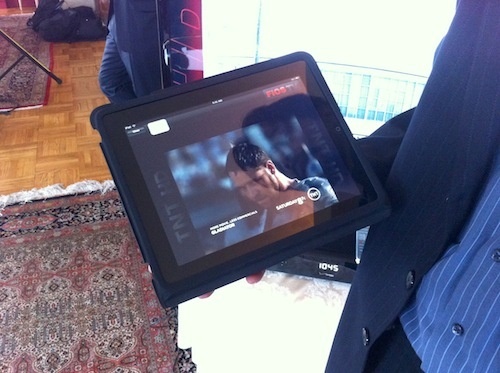
Soon iPad and other mobile device owners will be able to watch live, streaming cable TV from their mobile devices courtesy of Verizon FiOS. If everything goes to plan, the mobile version would be identical to what you see on your TV, including all 600+ channels and On Demand content. We may not have the jetpacks or flying cars that the future promised, but live, streaming, mobile TV that can go anywhere might be the next best thing.  The app will also include a “Whats Hot” feature that will show you the top programs being watched in your area, and it will be updated every five minutes.

There is a catch though, and it is a big one. Gizmodo is reporting that the app is still being developed, and should not be out until next year at the earliest. When it is released, users will only be able to stream the service within their own homes, due to legal issues.

Recommended Videos

From a legal perspective, streaming to the iPad in your house is no different than sending a cable signal to another TV. Once you leave your house though, things get more complicated. Verizon is attempting to get the agreements of the networks, but it is unclear how far along the negotiations are. The legal wrangling could delay the release of the app for day, weeks, or even years.

Verizon CIO Shaygan Kheradpir was full of praise for the iPad and its potential to air live, streaming TV,going so far as to say that it was “why [they] built FiOS.” Despite the love for the iPad, Verizon has confirmed that it will be available on all platforms.

If it works, it could quickly be a game changer. It would likely force other cable providers into following suit or risk getting left behind. If that happens, the appeal of Hulu’s paid service falls drastically. It would also give the iPad an even further head start on the upcoming tablets, even if they all adopt the FiOS app.

Regardless of the legal hurdles that this app will be forced to jump, the technology does exist, and sooner or later, it will be released. When it does, and when people are able to carry mobile devices that can access any television channel live, and possibly have access to On Demand materials, things might never be the same again.

Ryan Fleming
Former Gaming/Movies Editor
Ryan Fleming is the Gaming and Cinema Editor for Digital Trends. He joined the DT staff in 2009 after spending time covering…
Apple could drop new hardware later this week, but don’t expect any fireworks
Apple could nudge us into the era of M5 silicon, but not atop a hardware evolution.
Rear view of lid on M4 MacBook Air.

Apple’s Fall launch event was pretty stacked, as the company delivered an ultra-slim iPhone, improved flagship earbuds, and a trio of smartwatches. Now, it seems the company is focused on unveiling its next wave of computing gear, and they could be revealed next week.  

What’s on the horizon? 

Read more
Apple’s new iPad Pro is faster, smarter, and built for AI
With the new M5 chip at its core, the latest iPad Pro pushes performance to new heights.
Person in the backseat of a car using an iPad Pro with Apple's M5 chip.

What's happened? Apple today lifted the covers off the next-gen M5 MacBook Pro and iPad Pro models, both featuring its latest M5 chip.

The 2025 iPad Pro is available in 11-inch and 13-inch screen sizes, with both models packing Apple's Ultra Retina XDR displays.

Read more
I’m liking Apple’s M5 update because it favors smaller fixes over flashy upgrades
Faster storage, more RAM, increased comfort, and better connectivity? I'll take it all.
iPad Pro, MacBook Pro, and Vision Pro.

Apple is shifting into the next phase of computing with the launch of new machines powered by the M5 chip. In a single batch, the company revealed three “new” machines equipped with its next-gen processor – a refreshed iPad Pro in two sizes, a 14-inch MacBook Pro, and a second-generation Vision Pro headset.

The term “new” is a tad subjective here. All these machines look exactly like their respective predecessors. Additionally, the focus on AI enhancements somewhat took away from their standalone merits. What caught my attention was that these new devices don't try to make a huge splash with head-turning changes. 

Read more