  1. Home
  2. Cars
  3. News

AAA study: Road rage epidemic is worse than we thought

Add as a preferred source on Google

It’s 8 a.m. and you’re on your way to work. Late, as usual. The streets are packed with commuters and the air is saturated with piercing honks and shrieks, and you’re about four blocks away from pulling your own hair out. If you’ve ever experienced this agony before, you’re not alone.

Road rage is a very real and dangerous thing, but according to a new study by the AAA Foundation for Traffic Safety, it’s much worse than we thought. Nearly 80 percent of drivers have expressed significant anger, aggression, or road rage behind the wheel at least once in the past year, and approximately 8 million Americans engaged in acts of extreme road rage, such as ramming another vehicle or confronting another driver. In other words, misery loves company.

Recommended Videos

“Inconsiderate driving, bad traffic and the daily stresses of life can transform minor frustrations into dangerous road rage,” said Jurek Grabowski, director of research for the AAA Foundation for Traffic Safety. “Far too many drivers are losing themselves in the heat of the moment and lashing out in ways that could turn deadly.”

Road rage
Luca Bertolli/123RF
Luca Bertolli/123RF

The level of aggressive driving varies among different age groups and genders, but the AAA claims that male motorists aged 19-39 are significantly more likely to let their emotions get the better of them on the road. Overall, purposefully tailgating, yelling at another driver, and making angry gestures are the most common manifestations of road rage. Bumping or ramming another vehicle is the least likely scenario, but the AAA estimates nearly 5.7 million drivers have done it in the past year. Yikes.

Read more: Feeling road rage set on? Instagram trends reveal you’re not alone

Perhaps the most sobering statistic is the following: Nearly two in three drivers believe that road rage is a bigger problem today than it was three years ago. So unfortunately, this could be one issue that will get worse before it gets better.

Andrew Hard
Andrew first started writing in middle school and hasn't put the pen down since. Whether it's technology, music, sports, or…
Volvo is rolling out Apple Music to over 2 million cars with a simple OTA update
Your Volvo may soon get Apple Music without needing CarPlay
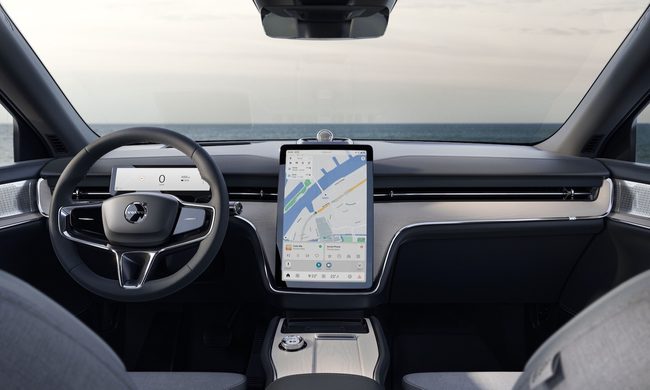
Interior view of the 2024 Volvo EX90.

The line between your smartphone and your car continues to blur. Volvo has announced that it is rolling out an over-the-air software update that brings Apple Music directly to the infotainment systems of more than 2 million vehicles worldwide. Instead of relying on Apple CarPlay or plugging in an iPhone, eligible drivers will be able to stream music natively from their car's built-in system, making Apple Music another integrated feature of Volvo's software experience.

The update is arriving for a wide range of Volvo models, including the EX90, ES90, XC90, S90, V90, XC60, S60, V60, XC40, EX40 and EC40, covering model year 2020 onwards. Availability, however, may vary depending on the vehicle.

Read more
Chery’s latest EV packs flagship tech for the price of a base Tesla, but you can’t buy it
Here's everything packed into Exeed's 2027 Exlantix ES, from its 27-sensor autonomous driving suite to its 860 km range, all starting under $31,000.
Car, Transportation, Vehicle

Chery's premium arm just dropped a sedan that makes you wonder why American EVs cost twice as much for half the tech.

Exeed's 2027 Exlantix ES ships with a driver-assist system called Falcon 700. It is built around an Nvidia Orin-Y chip and a genuinely stacked sensor suite.

Read more
A new AI model wants self-driving cars to think before they swerve
Forget guessing games, this self-driving AI actually shows its work.
Self driving car

Self-driving cars have gotten pretty good at driving. The harder problem is teaching them to drive safely in situations nobody planned for. We have heard horror stories of self-driving cars, behaving erratically in emergency situations, often times delaying first responders from reaching the scene.

A team at Seoul National University, led by professor Jun Won Choi from the Department of Electrical and Computer Engineering, thinks they have cracked part of that puzzle with a new AI model called SafeDrive. The research was recently selected as a highlight paper at CVPR 2026, a distinction that goes only to roughly 3% of all submissions.

Read more