1. Home
  2. Emerging Tech
  3. Computing
  4. Smart Home
  5. Virtual Reality
  6. Wearables
  7. News

Digital Trends may earn a commission when you buy through links on our site. Why trust us?

HoloLens concept lets you control your smart home via augmented reality

Add as a preferred source on Google

There’s no doubt that device-filled connected smart homes are on the way. The real question is how we’re going to control them.

That was the starting point of a nifty proof-of-concept project created by interaction designer Ian Sterling and software engineer Swaroop Pal during a recent HoloLens hackathon in San Francisco. Their augmented reality pitch shows how smart devices could be controlled with glances and gestures — in what Sterling calls a “virtual Zen mode,” complete with calming lights and sounds.

Recommended Videos

“The primary goal of the app is to provide a 3D spatial UI for cross-platform devices — Android Music Player app and Arduino-controlled Fan and Light — and to interact with them using gaze and gesture control,” Ian Sterling, a design student at California College of the Arts, told Digital Trends.

“The connectivity between Arduino and a mixed reality device is something which holds a huge amount of creative opportunity for developers to create some very exciting applications — be it [Internet of Things], robotics, or other sensor data visualization. Besides this, our app features some fun ways to connect devices. Our demo featured a connection between a music player and a light in order to set a certain mood in your home.”

While the so-called IoTxMR concept is just a demo, Sterling thinks it signals the way our interactions with smart devices need to go. “I feel that in order for smart devices to be less obtrusive, while at the same time becoming more robust in functionality, new forms of interaction will be a requirement,” he continues. “Whether this is with a simple app on your phone, or using mixed reality software on your phone or wearable device — such as HoloLens or Magic Leap — we will be interfacing with our smart home devices through a separate piece of smart technology.”

Hey, if it means we get to feel like Neo from The Matrix, by controlling our devices with the simple wave of a hand, courtesy of Sterling and Pal’s “visually serene and relaxing” Zen mode, consider us sold.


Luke Dormehl
I'm a UK-based tech writer covering Cool Tech at Digital Trends. I've also written for Fast Company, Wired, the Guardian…
Yet another study says AI is bad for elections, and the rabbit hole gets worse
AI may be an election bomb waiting for someone to light the fuse
Voters cast their ballots on Election Day

Another election, another study has concluded that asking an AI chatbot for political guidance is a spectacularly bad idea. Research conducted during Hungary’s 2026 parliamentary election found that ChatGPT and Google Gemini offered not just inaccurate but also inconsistent and unreliable voting advice. The chatbots misclassified voter profiles, overlooked relevant parties, recommended parties absent from the ballot, and sometimes produced materially different answers when given the same information repeatedly.

AI keeps failing the voter test

Read more
Samsung’s humanoid robot ambitions are real, but factories come first
Samsung’s new robotics division has humanoids in its sights, although its immediate business is far more practical factory automation
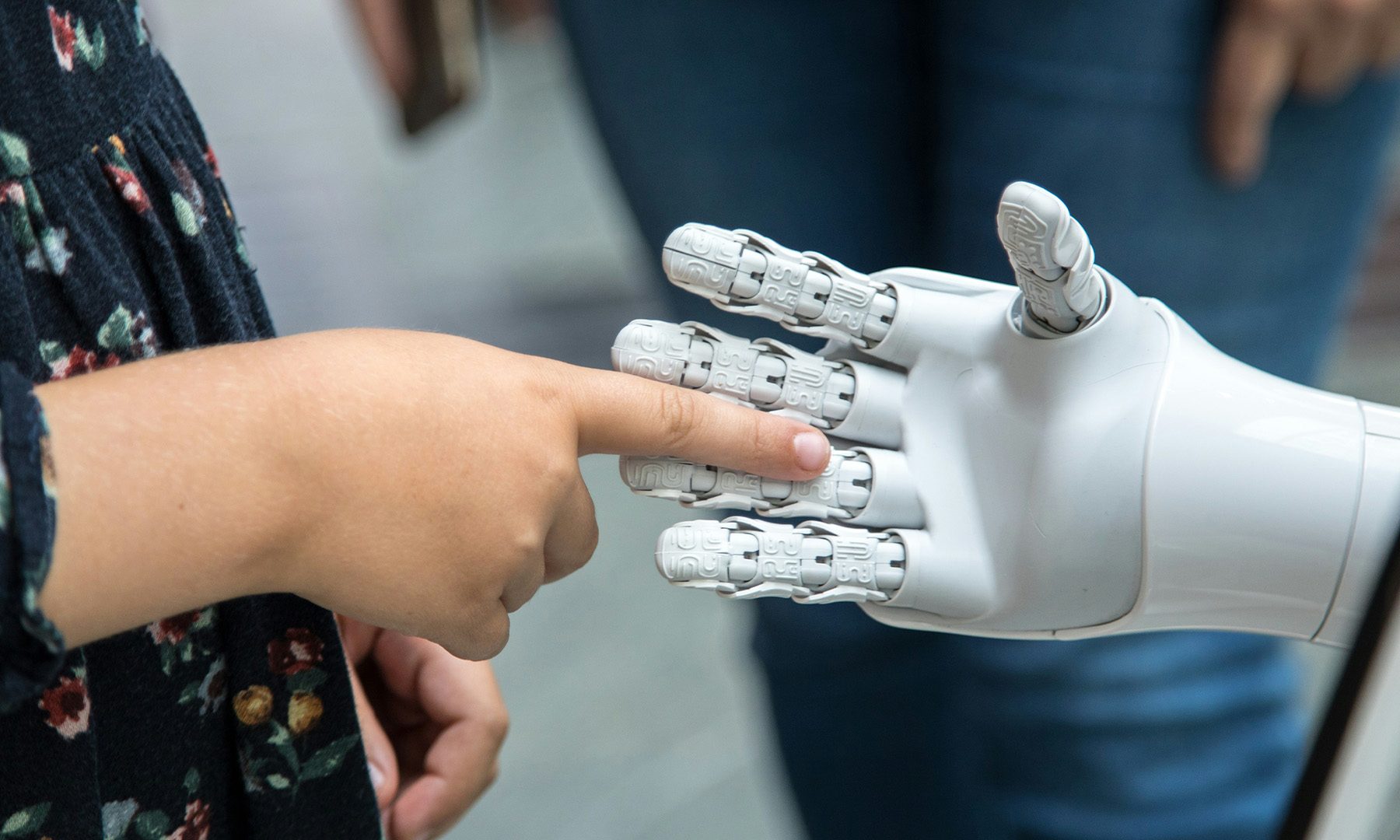
Robot Touch Human Finger

Samsung wants a place in the humanoid race, but its new robotics push begins with machines built for factories rather than homes.

The CEO-led RX robotics division will initially focus on manufacturing robots. Samsung has separately identified humanoids as a priority, although it hasn’t announced a commercial model or explained where one fits into the division’s immediate plans.

Read more
The future of AI may depend on this one behind-the-scenes change
Running Claude on Android.

Whenever a new AI model arrives, it's easy to get caught up in the bells and whistles. We talk about how much smarter it is, how quickly it answers questions, or how realistic its images have become. But here's the thing: none of that matters much if the AI can't reliably work with the apps and services people use every day.

That's why an upcoming update to the Model Context Protocol (MCP) caught my attention. It isn't a new chatbot or a fancy AI model. In fact, most people will never even know it's happening. But it could quietly make the AI ecosystem a lot healthier. If you've never heard of MCP before, don't worry. Think of it as a shared language that lets AI assistants safely talk to apps like Gmail, Slack, calendars, databases, and countless other services. Instead of every company inventing its own way to make those connections, MCP gives everyone a common rulebook.

Read more