1. Home
  2. Emerging Tech
  3. s

Inside Hooperfly’s grand plan to launch an army of homemade drones

Add as a preferred source on Google

There’s Silicon Valley in San Francisco and Silicon Alley in New York City, but we’re of the humble opinion that Silicon Forest in Portland may just be one of the most innovative new tech hubs in the U.S. In our new video series, Got it Made, join host Ezra Cimino-Hurt as he meets some of the unique people who marry cutting edge tech with innovative ideas in the heart of the Pacific Northwest. And believe us, they’re doing Portland proud.

Meet Rich Burton of Hooperfly, a man who is hoping to hoping to democratize the unmanned aerial vehicle (UAV) building process. Operating under the belief that anyone should be able to build a flying device, Burton doesn’t rely upon kits or pre-made parts. His UAVs are constructed with resources that are lying around his garage.

Recommended Videos

Of course, they’re not exactly materials that would be lying around any garage, but they certainly are accessible. The foundation of all Hooperfly’s designs depend upon cross-linked polyethylene (or Pex). Burton shapes these “little pieces of white tubing” into a circle, then begins a repetitive connecting process with zipties and more Pex that ultimately forms the beginning of an airframe.

But the really cool thing about Hooperfly’s flying robots (because that’s what Burton considers them — not drones), is that they can be flown and launched without a transmitter. While most drones today require a one-to-one relationship between a flyer and an aircraft, Burton explained, his hope is to launch multiple UAVs around the world, simultaneously. And really, it’s transcended hope — Burton has met with already considerable success in this endeavor.

“We can do so much more when we’re connected and empowered to help each other,” he told us. And of course, being called out of the blue by musicians like MIA to create drones for her music videos isn’t a bad perk either.

“I’m just a guy trying to figure it out,” Burton said. And if you’d like to figure out drones along with him, just check out the Hooperfly Github page.


DT Staff
Digital Trends has a simple mission: to help readers easily understand how tech affects the way they live. We are your…
Google just canceled its AI Studio mobile app, and it’s not all bad news
Logo, Symbol, Disk

Google AI Studio was on track to make its way to Android and iPhone, giving developers and AI enthusiasts a dedicated place to build prompts and experiment with Google's latest models from their phones.

That's no longer happening. In a post shared by the official Google AI Studio account on X, Google confirmed that it's canceling the standalone AI Studio mobile app before launch. The announcement comes despite the company saying nearly 800,000 people had already pre-ordered the app across iOS and Android.

Read more
Google Earth’s AI misadventure lasted only a day. It was a tale of dangerous ignorance.
Nuclear reactors, tanks, and historical destruction on a life-like satellite map? Yeah, that's bad.
Nano Banana AI image generator representation.

Technology behemoths are clearly not reading the room, or they are just moving faster than they should when it comes to AI deployment. Google has already stuffed its Gemini AI in every corner of its software stack, from Android to daily productivity tools like Gmail that are used by hundreds of millions of users every day. AI is everywhere. Not all of it is bad, mind you. But in a few places, it just feels forced.

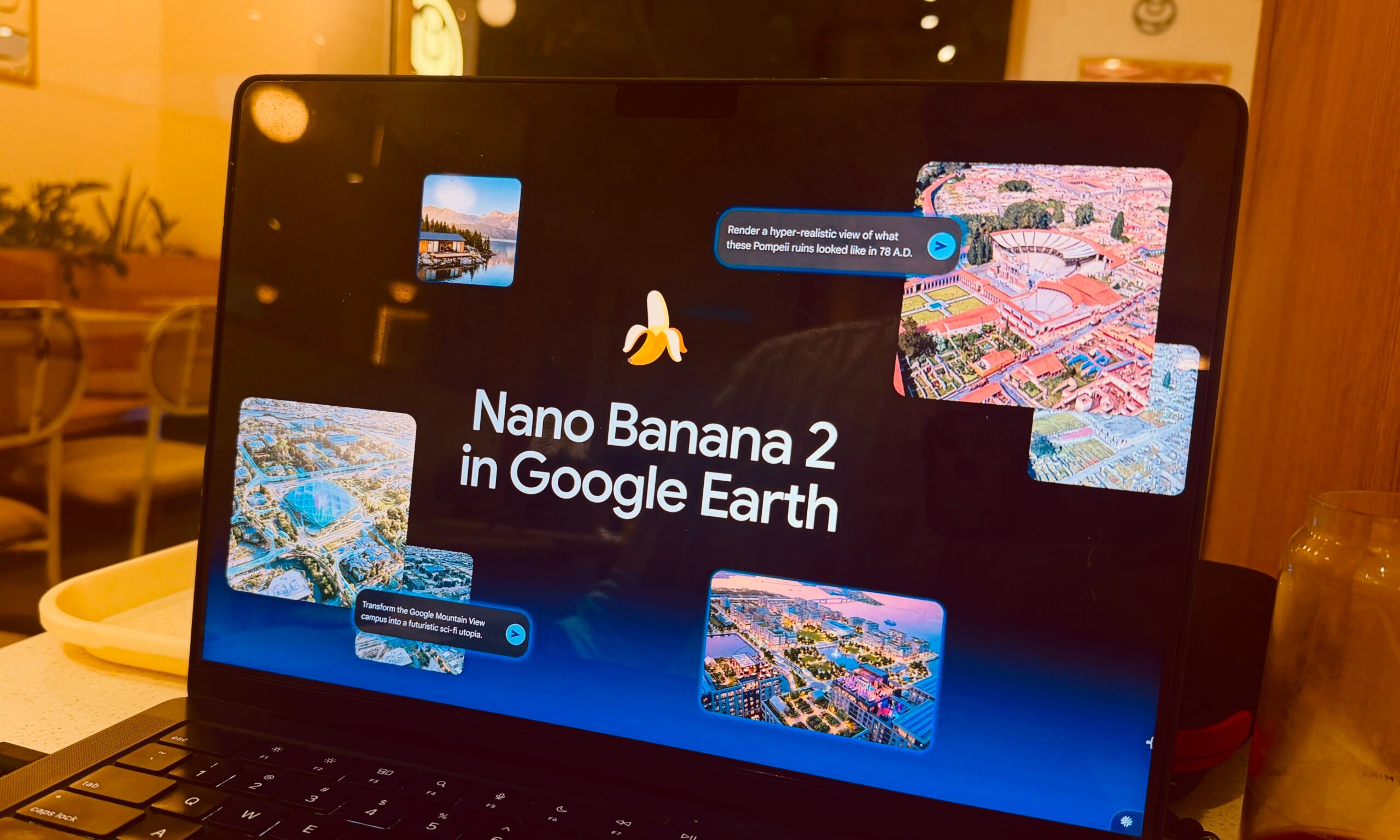
In its latest AI-fication experiment, the company targeted Google Earth. The idea was to let the audience use its Nano Banana 2 AI image generator and make images that can be placed on the map view. On paper, it's a cool idea. What would the Colosseum of Rome look like in your urban neighborhood? Yeah, fun stuff like that.

Read more
Google’s new AI gives robots better balance, smarter hands, and teamwork capabilities
Google just made robots a lot less clumsy and a lot more helpful.
Gemini robotics 2.0

Google DeepMind just brought sci-fi robots closer to reality, and it is very exciting. Building on its original Gemini Robotics model, the company has introduced Gemini Robotics 2, an AI system designed to help robots think, move, and even work together. Unlike most robots today, which rely on pre-programmed routines or someone controlling them remotely, this new system lets robots figure things out on their own when situations get unpredictable.

Can robots finally handle whole-body tasks?

Read more