1. Home
  2. Emerging Tech
  3. News

3D printing used to create prosthetic hand for an 8-year-old boy

Add as a preferred source on Google

We may be years away from 3D printing being used to bioprint full organs which can be used in transplants to save lives, but make no mistake about it: additive manufacturing is already helping people.

This month, an eight-year-old British boy named William Joyner, who was born without a left hand, received a 3D-printed robotic prosthesis that lets him grip objects and even hold a pen.

Recommended Videos

“Within a few minutes of having it on his hand, William had picked up a marker and was drawing a picture and signing his name,” Professor David Jazani, a senior lecturer at University of Bedfordshire — who helped create the prosthesis — told Digital Trends. “While he was doing this I glanced across at his mom, and her eyes were full of tears. That’s when we realized just how worthwhile this work is.”

According to Professor Jazani, William’s mother first got in touch with the university after reading a story online about a 3D-printed prosthesis, and believing that similar technology could transform her son’s life. Professor Jazani worked with technician Mark Hooper to build the piece.

An initial prototype was first developed earlier this year, although it was only this week that a more robust final model was completed and presented to William. “[The first prototype] worked, but it was also extremely fragile,” Jazani said. “Some of the plastic parts in it were just 1mm thick. Its material, ABS plastic, has a lot of benefits, but it also has downsides — such as the fact that when it’s exposed to sunlight it starts to erode and becomes a lot more brittle. In all likelihood, [the first prototype] would have broken in a matter of hours. We needed a way to make it more robust.”

Not only did the final version of the prosthesis meet this criteria, but Jazani and Hooper even 3D-printed it in the blue and white colors of William’s favorite soccer team. It should be usable by William until he is in his teenage years.

“One of the most important things about 3D printing is that it lends itself so well to rapid prototyping,” Jazani concluded. “Previously to make a part, we’d have had to create a mold and do injection molding. It was a lengthy and very, very expensive process. With 3D printing all of that changes. It’s very exciting.”

Luke Dormehl
I'm a UK-based tech writer covering Cool Tech at Digital Trends. I've also written for Fast Company, Wired, the Guardian…
OpenAI just made GPT-5.5 Instant more fun to talk to, and users may actually notice
The company says its most-used ChatGPT model is getting better at advice, decision-making, and everyday conversations.
Man using ChatGPT on a laptop

For years, AI companies have competed by talking about benchmarks, reasoning scores, and coding performance. OpenAI's latest ChatGPT update takes a different approach. Instead of focusing on raw intelligence, the company is making its most popular AI model more enjoyable to talk to.

OpenAI says GPT-5.5 Instant now better understands what users want

Read more
Claude can now join your Slack channels and work alongside your team
Laptop running Claude Fable

For years, AI assistants have been siloed. You open ChatGPT, Claude, Gemini, or Copilot, type a prompt, get an answer, and move on. Anthropic's new Claude Tag feature takes a different approach. Instead of making employees jump into a separate AI chat every time they need help, it brings Claude directly to where many teams already spend their day: Slack.

Add Claude to a channel, grant it access to needed tools, and tag @Claude for help — whether analyzing data, writing reports, reviewing code, or investigating incidents. But Claude Tag isn't just another chatbot integration. Its key differentiator is that Anthropic positions it as a digital coworker for your team, enabling seamless collaboration where multiple users can jointly interact with the same AI within their work environment.

Read more
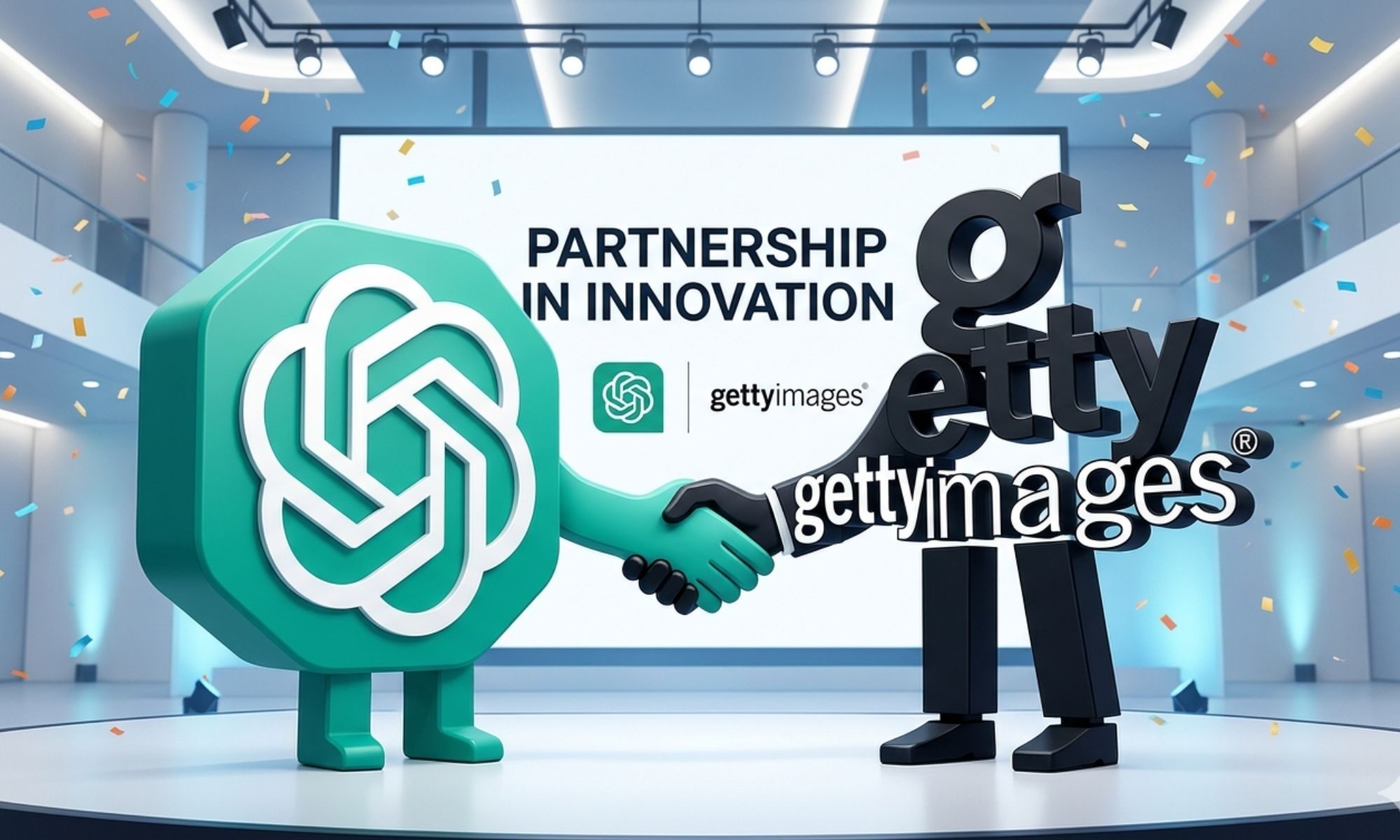
Getty Images accused AI of wholesale theft. It’s now an official ChatGPT image partner.
Advertisement, Shop, Clothing

The AI industry's most fascinating stories often come from unlikely alliances, and this is certainly one of them. Getty Images, a company that has spent years raising concerns about how AI models are trained and how creative work is used, is now officially partnering with OpenAI.

The new agreement will allow Getty Images' licensed content to appear across ChatGPT's search and discovery experiences. That means users may begin seeing Getty's professionally licensed photos and visual assets integrated into ChatGPT responses, adding more visual context to searches and AI-generated answers. Getty says the goal is to make AI-powered search more useful and trustworthy by relying on high-quality, licensed content rather than the murky sourcing practices that have sparked countless debates across the AI industry.

Read more