1. Home
  2. Emerging Tech
  3. News

Engineers cultivate fungus in brewery wastewater, develop biomass battery

Add as a preferred source on Google

Waste doesn’t have to be wasted. With a little innovation and a lot of engineering, waste may be used to make the world better. A team of engineers at the University of Colorado, Boulder, have turned to wastewater with this in mind, raising fungus in the medium and using them to create biomass that may offer a cheaper alternative for renewable fuel cells.

“Breweries use about seven barrels of water for every barrel of beer produced,” Tyler Huggins, a graduate student in CU Boulder’s Department of Civil, Environmental, and Architectural Engineering and lead author of the new study, said in a press release. “And they can’t just dump it into the sewer because it requires extra filtration.”

Recommended Videos

Huggins and his team took leftover water off the hands of Boulder brewers and introduced spores of a fast-growing fungus called Neurospora crassa. The fungus thrives in the sugar-rich brewery wastewater and, in that controlled environment, the researchers could cultivate the organisms to develop specific chemical and physical properties. They heated and gently shook the fungus-infused wastewater, encouraging the fungus to grow. After two days, it was filtered and baked into a chip from which the engineers extracted the carbon-based materials.

The result is one of the most efficient naturally derived lithium-ion battery electrodes to date, according to a paper re-entry published in Applied Materials & Interfaces.

“This is a ground breaking idea of using a bottom up approach for battery materials,” Zhiyong Jason Ren, an associate professor in CU Boulder’s Department of Civil, Environmental and Architectural Engineering and a co-author of the study, told Digital Trends. That means, rather than manufacturing batteries from the top down, researchers can bio-design the materials needed from the beginning.

Brewers may also benefit from this new technology. Wastewater can be expensive to dispose of and it just be flushed down the drain. It’s a whole lot easier if eager researchers come and collect the wastewater free of charge. In future research, CU Boulder will partner with Avery Brewing to explore whether the technology can be scaled up and commercialized.

“We are optimistic on the scale up potential as the system was designed modular,” Ren said. “We are working on scaled production and improve biomass and system performance.”

Dyllan Furness
Former Contributor
Dyllan Furness is a freelance writer from Florida. He covers strange science and emerging tech for Digital Trends, focusing…
OpenAI just made GPT-5.5 Instant more fun to talk to, and users may actually notice
The company says its most-used ChatGPT model is getting better at advice, decision-making, and everyday conversations.
Man using ChatGPT on a laptop

For years, AI companies have competed by talking about benchmarks, reasoning scores, and coding performance. OpenAI's latest ChatGPT update takes a different approach. Instead of focusing on raw intelligence, the company is making its most popular AI model more enjoyable to talk to.

OpenAI says GPT-5.5 Instant now better understands what users want

Read more
Claude can now join your Slack channels and work alongside your team
Laptop running Claude Fable

For years, AI assistants have been siloed. You open ChatGPT, Claude, Gemini, or Copilot, type a prompt, get an answer, and move on. Anthropic's new Claude Tag feature takes a different approach. Instead of making employees jump into a separate AI chat every time they need help, it brings Claude directly to where many teams already spend their day: Slack.

Add Claude to a channel, grant it access to needed tools, and tag @Claude for help — whether analyzing data, writing reports, reviewing code, or investigating incidents. But Claude Tag isn't just another chatbot integration. Its key differentiator is that Anthropic positions it as a digital coworker for your team, enabling seamless collaboration where multiple users can jointly interact with the same AI within their work environment.

Read more
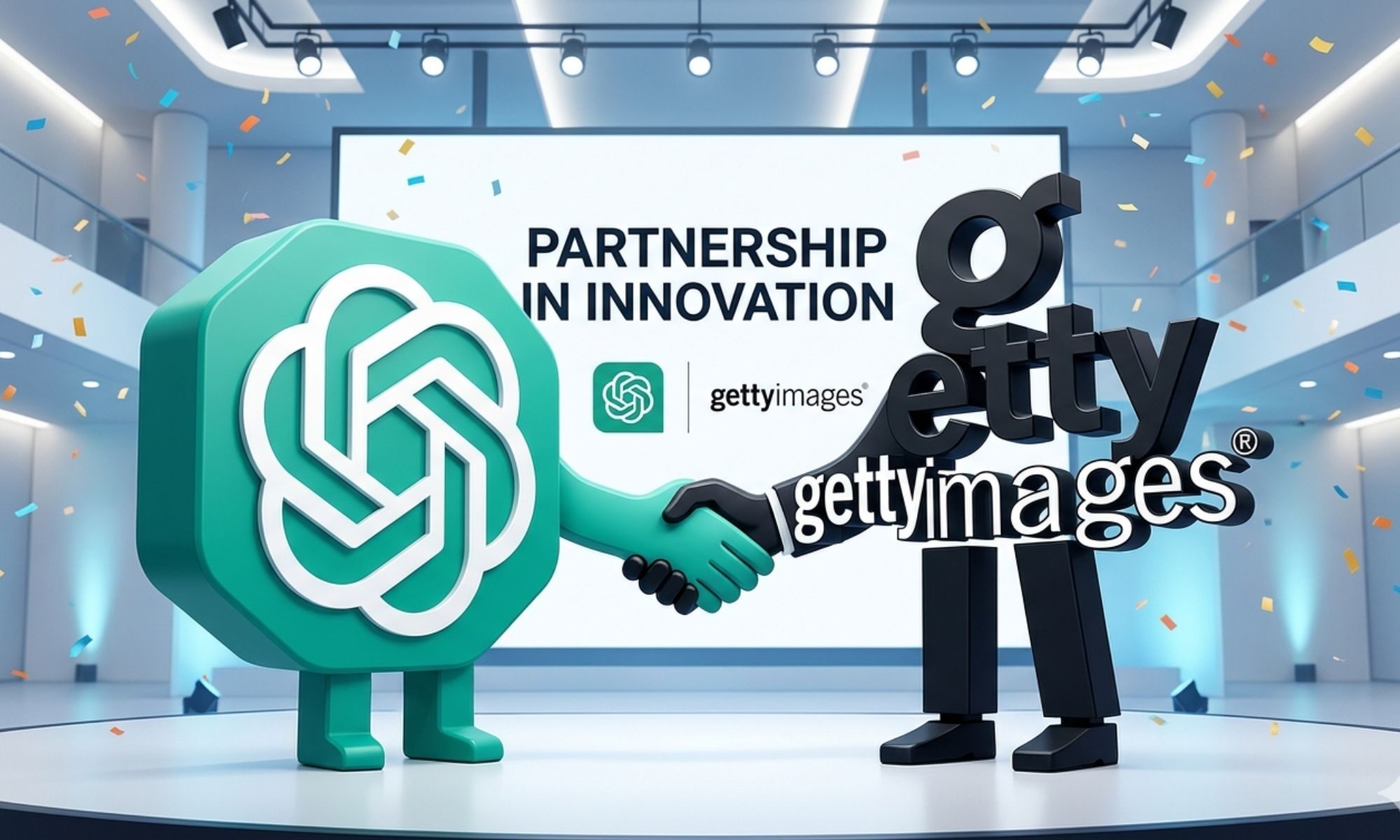
Getty Images accused AI of wholesale theft. It’s now an official ChatGPT image partner.
Advertisement, Shop, Clothing

The AI industry's most fascinating stories often come from unlikely alliances, and this is certainly one of them. Getty Images, a company that has spent years raising concerns about how AI models are trained and how creative work is used, is now officially partnering with OpenAI.

The new agreement will allow Getty Images' licensed content to appear across ChatGPT's search and discovery experiences. That means users may begin seeing Getty's professionally licensed photos and visual assets integrated into ChatGPT responses, adding more visual context to searches and AI-generated answers. Getty says the goal is to make AI-powered search more useful and trustworthy by relying on high-quality, licensed content rather than the murky sourcing practices that have sparked countless debates across the AI industry.

Read more