  1. Home
  2. Cars
  3. News

Honda’s new CR-V grows up with a sharp design, a nicer interior, and a turbo four

Add as a preferred source on Google

Honda’s popular CR-V crossover has entered its fifth generation.

All new, the 2017 CR-V falls in line with Honda’s recent design language. Its front end looks sharper than before thanks in part to a wide chromed grille that underscores a pair of chiseled headlights. Every trim level comes standard with Honda’s signature wing-shaped LED daytime running lights.

Recommended Videos

The rumors that claimed the CR-V would offer seven seats turned out to be false. The model carries on as a five-seater even though it offers a longer wheelbase that clears up more space for the passengers sitting in the back. Designed with practicality in mind, Honda’s newest crossover is available with a hands-free tailgate, a remote engine starter, and an electronic parking brake.

Honda promises it has put a big focus on making the CR-V’s cabin more upmarket. To that end, it has added a soft-touch instrument panel, seats that are more intricately stitched, and a color thin-film transistor (TFT) screen in the instrument cluster. An available seven-inch touchscreen runs Honda’s newest infotainment system, and it’s compatible with both Android Auto and Apple CarPlay.

Like other members of the Honda lineup, the CR-V is available with a suite of electronic driving aids named Honda Sensing. The features bundled into the package include collision mitigation braking, forward collision warning, road departure mitigation, adaptive cruise control, and lane-keeping assist.

The base CR-V gets an aging 2.4-liter four-cylinder engine that makes 184 horsepower at 6,400 rpm and 180 pound-feet of torque at 3,900 rpm. However, the top three trim levels benefit from the first turbocharged engine ever fitted to the CR-V. Borrowed from the Civic, the unit in question is a 1.5-liter that delivers 190 horsepower at 5,600 rpm and 179 pound-feet of torque from 2,000 to 5,000 rpm.

Front-wheel drive comes standard regardless of which engine is chosen, and all-wheel drive is available at an extra cost. The only gearbox available across the lineup is a continuously variable transmission. Honda promises the CR-V will be the most efficient model in its class, but official fuel economy figures aren’t available yet.

Built in North America, the 2017 Honda CR-V is scheduled to go on sale this winter. The lineup is broken down into four trim levels, called LX, EX, EX-L, and Touring. Pricing information will be published in the weeks leading up to its on-sale date.

Ronan Glon
Ronan Glon is an American automotive and tech journalist based in southern France. As a long-time contributor to Digital…
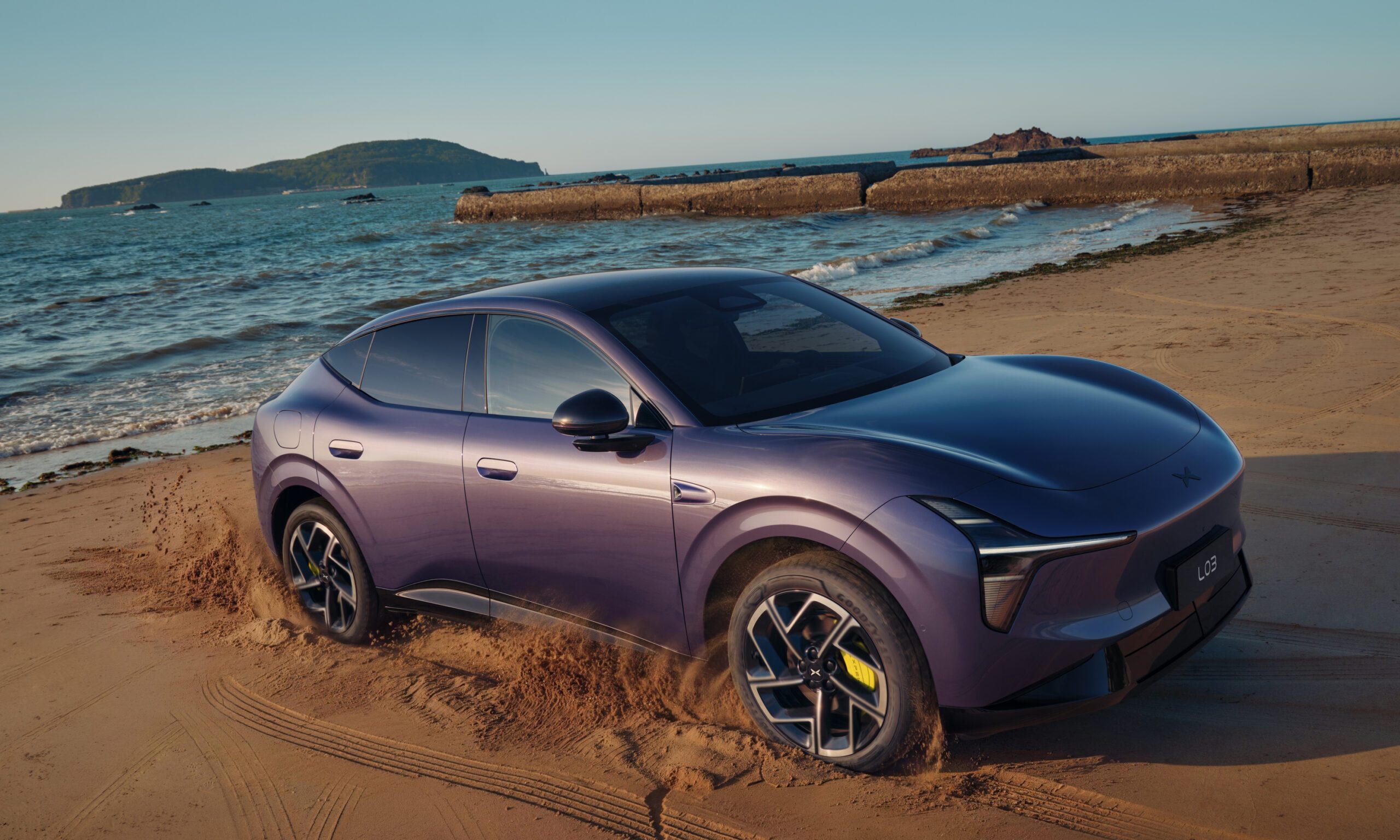
This sleek Chinese EV pairs supercar styling with three AI brains
The Xpeng L03 is an AI supercomputer disguised as a stylish family SUV
Xpeng L03

Xpeng’s latest electric vehicle carries enough processing power to make the term "smart car" actually sound more realistic than it actually is. The new Xpeng L03 debuted simultaneously in Europe and China on July 16, with the company presenting it across 65 markets. Available as a fully electric vehicle and an L03 Power X range-extender, the coupe-SUV is Xpeng’s most internationally focused model so far. Market-specific prices and sales dates remain unannounced.

Three AI chips and Google Maps built right in

Read more
A new sodium battery posts wild four-minute charging numbers, but don’t expect it in an EV yet
The breakthrough could improve fast charging and battery life, but the study hasn’t demonstrated those results in a production-sized pack
EV Charger

A new sodium-metal battery has posted a charging number that makes today’s EVs look painfully slow. In laboratory testing, the cell operated at a 15C rate, equivalent to completing a charge or discharge in roughly four minutes.

That doesn’t mean researchers plugged in an electric car and watched it fill up before the driver finished buying coffee. The result came from a small experimental cell using a new quasi-solid electrolyte, while the larger pouch-cell prototype delivered far less dramatic performance.

Read more
The Apple Car may be dead, but it became the foundation of Apple Intelligence
A decade of work on a canceled car project reportedly laid the groundwork for Apple Intelligence.
Apple Intelligence in Apple Car

The Apple Car may have never left the garage, but it apparently gave birth to Apple's AI ambitions. According to Bloomberg's Mark Gurman, Apple's canceled autonomous vehicle project, one that consumed more than a decade of work and over $10 billion before being scrapped in 2024, ended up laying the technological foundation for Apple Intelligence. In a rather ironic twist, one of Apple's most expensive failures may also become one of its most important long-term investments.

The Apple Car forced Apple to think like an AI company

Read more