1. Home
  2. Cars
  3. News

‘Stolen’ Subaru returned the next day with a bizarre explanation and gas money

Add as a preferred source on Google

Erin Hatzi’s stomach dropped. It was a typical Tuesday night in Portland, Oregon, but after her husband discovered that her car was missing from the driveway, this particular Tuesday got a whole lot worse.

A chemotherapy nurse, Hatzi uses her 2001 Subaru Impreza to get to work each day, so she immediately called the police to file a report and hopefully get her ride back. Then, a light bulb went off. The couple had a security system installed in their home, and it included a camera pointed right at their parking space. This was their chance to catch the thief red-handed.

Recommended Videos

Upon reviewing the film, things looked a little strange. A woman walked up to the car at about 7 p.m., got inside, and let the car warm up before casually driving away.

“It seemed very odd,” Hatzi told the Portland Patch. “Not typical thief behavior.” As it turns out, the “theft” was just a big misunderstanding.

The next morning, Hatzi’s husband went outside to find two police officers arresting a woman, and the red Subie was there safe and sound. The woman explained that she never intended to steal the car, rather she sent a friend to pick up her vehicle — also a red Subaru — from the same area the previous night, and she didn’t see it until the following morning. According to police, many old cars have interchangeable keys, and it just so happened Hatzi’s Impreza was compatible with the accidental thief’s.

Hatzi and the police were expectedly suspicious at first, right up until the moment they saw the apologetic note inside the Subaru alongside $30 for gas money. With the video footage providing further evidence, the woman was allowed to leave with a bizarre story to tell but no criminal charges.

“I was pretty angry at first,” Hatzi said. “Now I’m relieved and very amused.”

Only in Portland.

Andrew Hard
Andrew first started writing in middle school and hasn't put the pen down since. Whether it's technology, music, sports, or…
Volvo is rolling out Apple Music to over 2 million cars with a simple OTA update
Your Volvo may soon get Apple Music without needing CarPlay
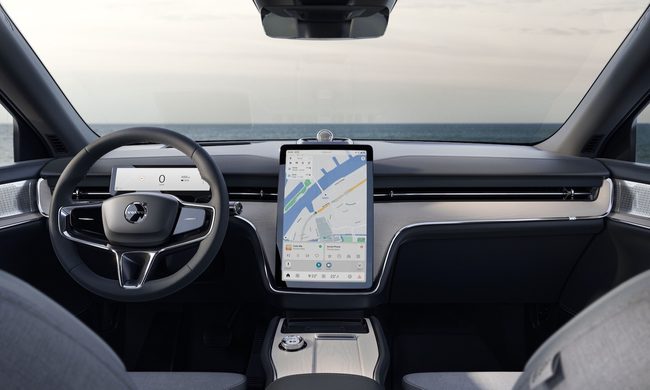
Interior view of the 2024 Volvo EX90.

The line between your smartphone and your car continues to blur. Volvo has announced that it is rolling out an over-the-air software update that brings Apple Music directly to the infotainment systems of more than 2 million vehicles worldwide. Instead of relying on Apple CarPlay or plugging in an iPhone, eligible drivers will be able to stream music natively from their car's built-in system, making Apple Music another integrated feature of Volvo's software experience.

The update is arriving for a wide range of Volvo models, including the EX90, ES90, XC90, S90, V90, XC60, S60, V60, XC40, EX40 and EC40, covering model year 2020 onwards. Availability, however, may vary depending on the vehicle.

Read more
Chery’s latest EV packs flagship tech for the price of a base Tesla, but you can’t buy it
Here's everything packed into Exeed's 2027 Exlantix ES, from its 27-sensor autonomous driving suite to its 860 km range, all starting under $31,000.
Car, Transportation, Vehicle

Chery's premium arm just dropped a sedan that makes you wonder why American EVs cost twice as much for half the tech.

Exeed's 2027 Exlantix ES ships with a driver-assist system called Falcon 700. It is built around an Nvidia Orin-Y chip and a genuinely stacked sensor suite.

Read more
A new AI model wants self-driving cars to think before they swerve
Forget guessing games, this self-driving AI actually shows its work.
Self driving car

Self-driving cars have gotten pretty good at driving. The harder problem is teaching them to drive safely in situations nobody planned for. We have heard horror stories of self-driving cars, behaving erratically in emergency situations, often times delaying first responders from reaching the scene.

A team at Seoul National University, led by professor Jun Won Choi from the Department of Electrical and Computer Engineering, thinks they have cracked part of that puzzle with a new AI model called SafeDrive. The research was recently selected as a highlight paper at CVPR 2026, a distinction that goes only to roughly 3% of all submissions.

Read more