1. Home
  2. Computing
  3. Emerging Tech
  4. News

Just say something: IBM’s AI software can estimate a person’s age based on speech

Add as a preferred source on Google

IBM just passed two milestones in artificial intelligence. From a distance, the accomplishments seem insignificant but IBM Research Audio Analytic’s Jason Pelecanos called them necessarily small steps toward increasingly intelligent machines.

The first milestone involved demonstrating higher sensitivity in IBM’s automatic speaker recognition software, which is tasked with recognizing the identity of a speaker based solely on his or her voice patterns. Back in 2000, the best speaker verification software had an error rate of about 10 percent. Today’s industry standard has an error rate of less than one percent. IBM’s software has set a new record of just 0.59 percent.

Recommended Videos

Pelecanos acknowledges that the milestone is slight, and in most cases wouldn’t be obvious to active users trying to gain access to their smartphones. “However,” he told Digital Trends, “if a system was stricter and had a higher accept threshold, the user would notice that they are rejected on several occasions,” by both a system with a 0.6 percent and with a one percent error rate. “[But] the better-performing system may incorrectly deny access to you for about half of the occasions of the poorer performing system. This difference will be very noticeable.”

The IBM team also also developed a system to estimate the age of someone who is speaking, and the company says it’s published the most accurate results of any system yet with an average error rate of 4.7 years.

So — you’re wondering — what could this be good for?

First of all, the age estimate software may enable more personalization while tailoring conversations to age groups by considering things like vocabulary and syntax.

Besides better voice activation and security, Pelecanos thinks these highly sensitive speaker recognition systems will soon be able to multitask.

“One key focus for us is to have systems that can interact with more than one person at a time,” he says. “Current technologies, for example speech applications and personal assistants on smartphones or home units, have dialogue, which is established for a one-to-one interaction. Systems that can interact with multiple people at once bring about exciting opportunities for group collaborations with systems.”

Dyllan Furness
Former Contributor
Dyllan Furness is a freelance writer from Florida. He covers strange science and emerging tech for Digital Trends, focusing…
DuckDuckGo’s browser now blocks the YouTube ads everyone hates
DuckDuckGo adds a Brave-like YouTube ad blocking feature
Text, Aircraft, Airplane

DuckDuckGo has spent the past few months gaining fresh attention as more users look for alternatives to Google’s increasingly AI-heavy Search experience. Now, the privacy-focused company is adding a feature that could make its browser even more tempting for everyday use. DuckDuckGo says its browser can now block most video ads, including those on YouTube, when a video is playing inside the browser.

What’s happening?

Read more
ChatGPT Live could make talking to AI feel straight out of the movies
We might finally get the AI sidekick sci-fi movies promised
Elderly women using ChatGPT live on a smartphone

AI voice assistants have been chasing the sci-fi dream for years, but they still have a hard time holding a conversation with humans. Most voice systems still need clear turns, clean pauses, and a few seconds before they respond. OpenAI is now rolling out GPT-Live, a new voice model for ChatGPT Voice that is designed to make those exchanges feel faster and less scripted.

The main upgrade is what OpenAI calls a full-duplex architecture. In simpler terms, GPT-Live can listen and speak at the same time. It continuously processes what the user is saying while also generating its own response, allowing it to decide when to talk, when to pause, when to keep listening, and when to use a tool.

Read more
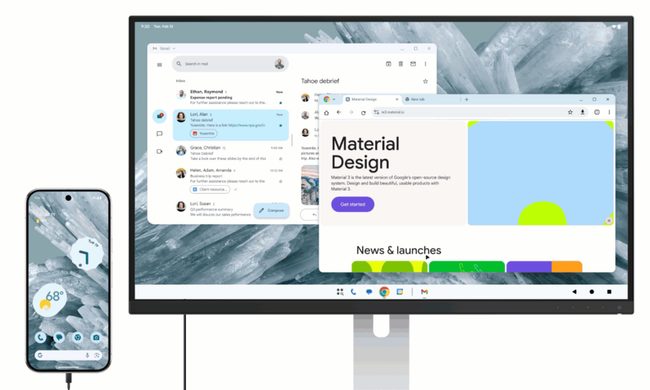
A broken Galaxy Fold 5 just became the Pixel desktop future I want Google to steal
A broken Galaxy Fold 5 became a tiny PC because Samsung already built the desktop mode Google keeps treating like a side quest.
Desktop mode within Android 16.

A broken Galaxy Fold 5 should be a sad little monument to modern gadget math. One busted outer display, one repair bill nobody wants to inspect too closely, and suddenly a powerful foldable starts heading toward a drawer. Instead, a Redditor turned one into a glowing acrylic DeX box with spare parts, fans, a USB hub, and the kind of LED lighting that makes every homebrew computer look mildly illegal.

https://www.reddit.com/r/SamsungDex/comments/1upica7/fold_5_dexbox/

Read more