1. Home
  2. Emerging Tech
  3. News

MIT engineers made an innovative artificial muscle out of fishing line

Add as a preferred source on Google

Muscles have inspired design since ancient times and even today’s top engineers turn to the fibrous tissue to inform their inventions. The problem is, many artificial muscle materials are either too expensive or too fragile for most practical applications.

That might change thanks to a new design by Massachusetts Institute of Technology researchers, whose relatively simple and inexpensive solution is to selectively heat nylon fibers.

Recommended Videos

While in the early stages of his Ph.D., doctoral candidate Seyed Mirvakili and his colleagues first discovered that, when twisted into a coil, nylon filaments can be used as artificial linear muscles. Although these twisted filaments could extend and retract further than natural muscles, the nylon couldn’t bend and recover like fingers do, so Mirvakili looked for a solution and found it while working under MIT’s Ian Hunter.

Nylon behaves strangely when heated — it shrinks in length but grows in width. Mirvakili and Hunter realized heating just one side of the filament causes that side to contract faster than the other, causing the entire strand to bend.
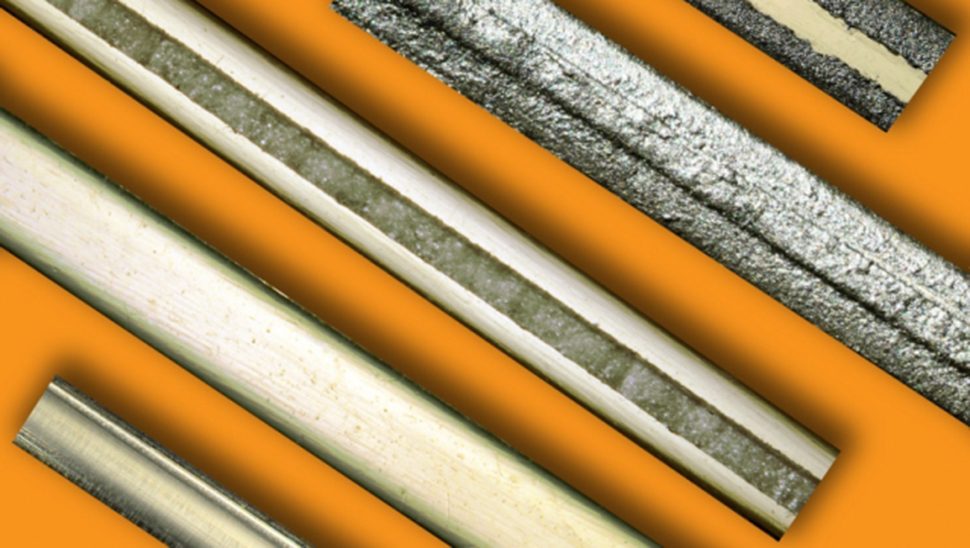
The stages of the nylon filaments fabrication process, from left to right.
The stages of the nylon filament’s fabrication, from left to right: Standard, rounded fishing line. Compressed fishing line. Mask added to the middle of the filament. Filament coated in conductive ink. Mask removed so the conductive ink is only on the sides Felice Frankel and Seyed Mohammad Mirvakili

But getting the nylon to behave in intended ways required the researchers to redesign fishing line, pressing its rounded shape into a rectangle. Luckily, the fishing line was easy to acquire. “Nylon is cheap and abundant,” Mirvakili told Digital Trends.

After forming the nylon into its desired shape, the researchers tested various heat sources and angles, prompting the filament into sophisticated motions like figure eights. As any angler knows, nylon is tough. Mirvakili and Hunter showed their filament could perform sufficiently through at least 100,000 bending cycles .

Nylon-based artificial muscles may have application for things  like robotics, biomedical devices, toys, and form-fitting clothing. “In general, anywhere that muscle-like motion such as bending is needed, nylon artificial muscle can be useful,” Mirvakili said.

A paper detailing their design was published recently in the journal Advanced Materials.

Dyllan Furness
Former Contributor
Dyllan Furness is a freelance writer from Florida. He covers strange science and emerging tech for Digital Trends, focusing…
Google Flow Music Spaces is becoming an all-in-one AI music studio
The latest update brings song editing, stem splitting, image generation, lyrics, and video creation into a single workspace.
Google Flow Music Featured

The company has announced a major update for Flow Music Spaces, bringing a suite of new AI-powered creative tools directly into collaborative workspaces. Instead of jumping between different apps or sessions, users can now generate and edit songs, split audio stems, create images, write lyrics, and even generate videos without leaving a Space.

What's new in Flow Music Spaces?

Read more
A Florida pastor asked ChatGPT if he was okay. It nearly got him killed.
When "just relax and recover" turns out to be the worst medical advice you could get.
ChatGPT on iPhone

Scott Winters, a pastor from Florida, is suing OpenAI after ChatGPT allegedly gave him what his lawsuit calls "extremely dangerous" medical advice, advice that nearly cost him his life.

What happened to the pastor?

Read more
Scientists made robots curious like toddlers, and it helped them learn language twice as fast
Give a robot curiosity, and it starts learning language (and misbehaving) just like a toddler.
robots and kids photo

Scientists have been trying to figure out how kids pick up language so fast for decades, and a new study out of the Okinawa Institute of Science and Technology (OIST) might have cracked part of the puzzle: curiosity.

Researchers built a virtual robot with a brain-inspired neural network and set it loose in a simulated 3D world full of shapes, colors, and simple commands like "push left magenta dumbbell." 

Read more