1. Home
  2. Computing
  3. News

EU still unhappy with Windows 10 data collection, despite changes

Add as a preferred source on Google

Microsoft recently announced some changes to its Windows 10 privacy policies and configuration, making it easier to see at least some of the user information that’s being gathered and giving users some ability to change privacy settings. While those changes — some of which are coming in the impending Creators Update — were welcome, they’ve also been met with some skepticism.

Apparently, the changes aren’t enough to placate at least one major governmental body. The European Union (EU) has let Microsoft know that it’s not completely satisfied with the company’s work so far in managing Windows 10 privacy and that more remains to be done, as PCWorld reports.

Recommended Videos

Privacy issues in the EU are managed by the Article 29 Working Party, which represents all of the privacy regulators for each EU country. The working party wrote a letter to Microsoft CEO Satya Nadella and Chief Privacy Officer Brendon Lynch, in which it outlined its remaining concerns with how the company gathers data in Windows 10 and what should be done to address them.

The body’s main concerns revolve around the extent to which Microsoft informs users of what data is being passed along, and how the company plans to use the data:

“The Working Party would like to recall that user consent can only be valid if fully informed, freely given, and specific. While it is clear that the proposed new express installation screen will present users with five options to limit or switch off certain kinds of data processing, it is not clear to what extent both new and existing users will be informed about the specific data that are being collected and processed under each of the functionalities.”

Specifically, the new change to offer “full” and “basic” data gathering isn’t enough of a change to meet the EU’s requirements, because saying that Microsoft will collect “less data” isn’t specific enough for users to fully understand what’s being collected. Also, telling users what data is collected in general isn’t enough — the company should also tell users clearly and specifically how the data will be used.

While the working party doesn’t have the authority to levy any fines or otherwise dictate Microsoft’s actions, it does influence policy throughout the EU. So far, a number of European countries are conducting investigations into how Windows 10 gathers data, and so the working party’s continued displeasure with Microsoft’s policies could indicate the company is in for a bumpy road.

Mark Coppock
Former Computing Writer
Mark Coppock is a Freelance Writer at Digital Trends covering primarily laptop and other computing technologies. He has…
Google’s new Magic Pointer Play Store listing reveals a Gemini shortcut built for Googlebooks
The unannounced app turns the cursor into a contextual AI tool for search, image creation, and shopping
Plant, Text, Business Card

Google has quietly published a new Play Store listing for Magic Pointer, an unannounced app built for Googlebooks. Updated on July 10, the app turns the cursor into a Gemini shortcut that can act on whatever a user selects on screen.

Magic Pointer can send an image to Lens, generate a related image, or surface a shopping action without forcing users to open a separate chatbot. Regular Android devices currently show as incompatible, so the listing offers an early preview rather than a broad release.

Read more
You can stop using AI, but this new report says you probably can’t escape it
A UK survey found that most people feel AI exposure is unavoidable, raising harder questions about consent, privacy, and whether opting out is still realistic
AI Chatbots

More people are trying to use less AI, but avoiding it altogether may already be impossible.

A survey of 2,055 UK adults found that 42% deliberately limit how much AI they use. Another 70% said avoiding AI exposure would be difficult or impossible, even when they actively wanted less of it.

Read more
The face on an AI interviewer may matter as much as the decision it makes
Researchers found that race and gender matching changed how fairly rejected applicants viewed an automated interview, even though everyone received the same outcome
File, Computer Hardware, Electronics

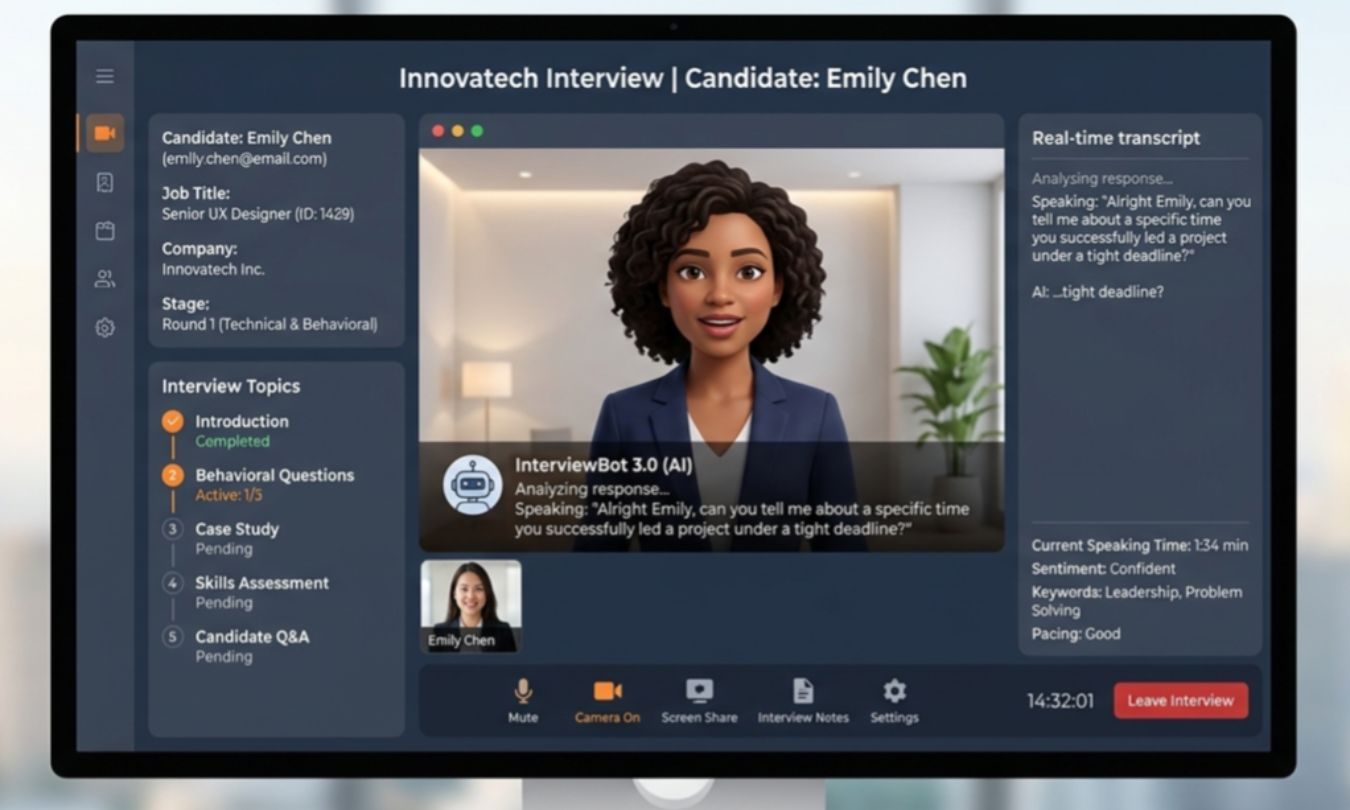
An AI hiring system can treat every applicant the same and still leave some people feeling targeted. Researchers found that rejected candidates judged an automated interview differently depending on the race and gender of the avatar delivering the result.

Around 220 participants completed a simulated interview for a fictional customer support role with one of four photorealistic AI avatars. Everyone was rejected, yet perceptions of fairness shifted with the interviewer’s appearance. An algorithm audit could miss that reaction because candidates don’t experience the system as raw code. They experience a face asking questions and judging their answers.

Read more