1. Home
  2. Cars
  3. Emerging Tech
  4. News

Truly driverless cars could soon be hitting public roads in California

Add as a preferred source on Google

Sure, we’ve been testing self-driving cars for years now, but we haven’t really been testing them. After all, the whole point of having driverless technology is to see how a car would truly behave sans driver. Actually, no — sans human intervention altogether. But soon, we may be putting autonomous technology to the real test. California, the largest car market in the U.S. and the state that has been friendliest thus far to self-driving testing, says that it plans to allow autonomous cars take to public roads with no backup human driver by the end of the year.

Buckle up, kids. This could be a bumpy ride.

Recommended Videos

As it stands, driverless cars must have some flesh and blood being in the vehicle while they’re being tested, just in case something goes wrong. But now, California’s Department of Motor Vehicles is looking for public feedback on proposed regulations that would not only allow for 100 percent driverless testing, but would also nix the requirements for traditional car controls like steering wheels and pedals (really, those become superfluous once you take out the human element).

Over the course of the next 45 days, the public is welcome to comment on the new guidelines. After April 24, there will be a public hearing to further discuss next steps, and the final rules ought to be completed by the end of 2017. Should things go according to plan, California transportation secretary Brian Kelly says that self-driving cars could soon go on sale in the state.

27 companies already have permission to test autonomous cars on public roads — there’s BMW, Tesla, Alphabet, and Baidu, along with a number of startups that are all looking to make your morning commute something of a snooze fest.

But don’t worry — we won’t be taking humans completely out of the equation. Any self-driving car must come with a remote operator who would be able to monitor the vehicle’s operation and communicate with those taking a ride. But hey, sometime soon, those passengers may not have to know how to operate their own vehicles. At least, not in the traditional sense.

Lulu Chang
Fascinated by the effects of technology on human interaction, Lulu believes that if her parents can use your new app…
The Wild West era of robotaxis is starting to end
New global rules could replace patchwork regulation with stricter safety proof for driverless fleets.
Self driving car from Waymo

Robotaxi rules have entered their first global phase. A UN vehicle standards forum has adopted the first international framework for fully autonomous vehicles, giving driverless fleets a common safety baseline across major markets.

The move lands while robotaxis are expanding from test programs into a bigger commercial race. In the US and China, private fleets more than doubled in 2025 to 8,000 vehicles across more than two dozen major cities.

Read more
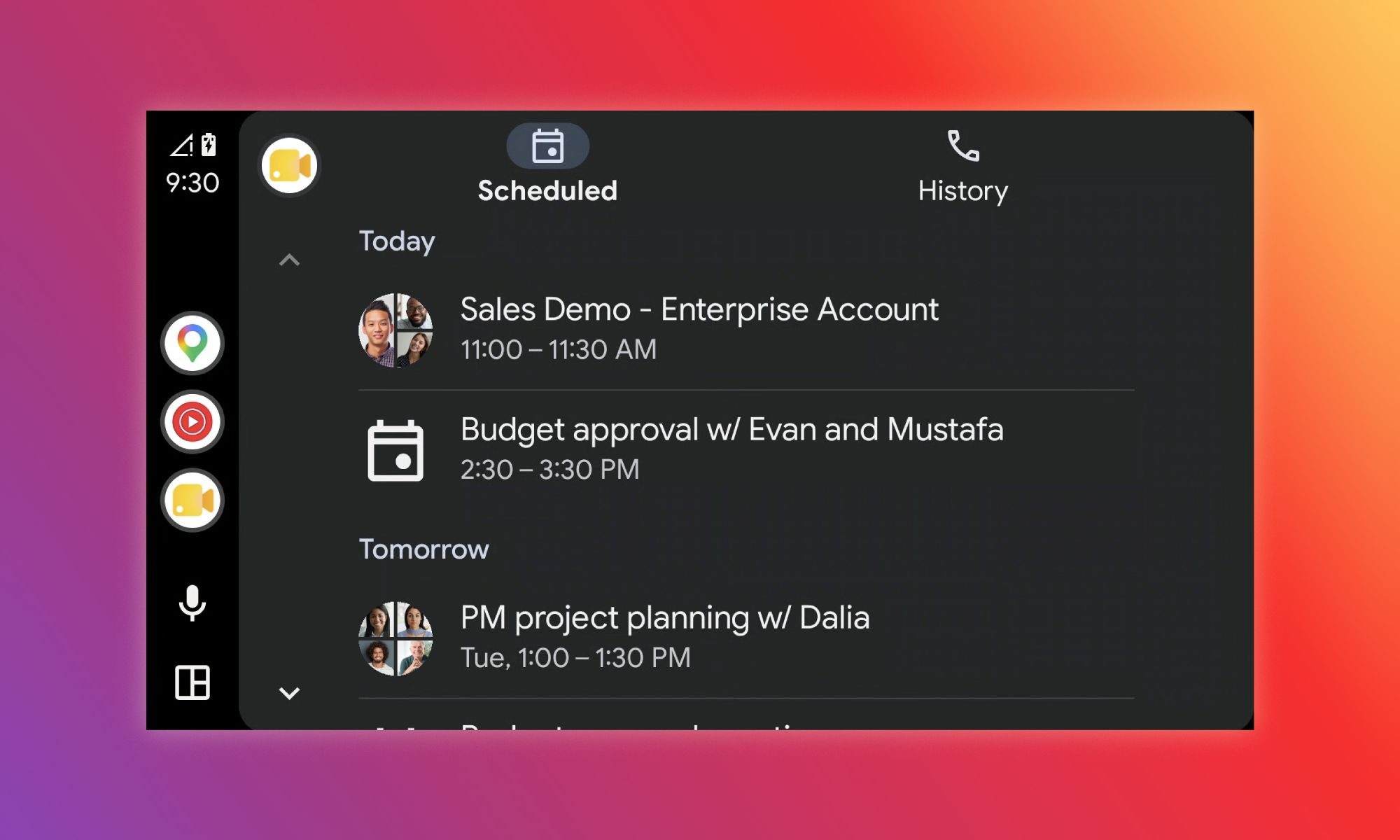
Google Meet finally lands on Android Auto, giving you one less excuse to skip a meeting
Android users can now join scheduled meetings and audio calls from their car's dashboard, catching up to what iPhone users have had for months.
Google Meet on Android Auto

Android Auto is finally getting Google Meet, months after the video conferencing app made its debut on Apple CarPlay. Android users can now pull up scheduled meetings and dial recent contacts straight from their car's display instead of reaching for their phone.

How it works behind the wheel

Read more
Waymo’s robotaxis keep finding new things to drive into, and construction zones are the latest
Thirteen construction zone incidents, one fleet recall, and a passenger who thought the end was near.
A Hyundai Ioniq 5 is equipped as a robotaxi.

Waymo has recalled its entire fleet of nearly 4,000 robotaxis to prevent them from driving on highways after identifying at least 13 instances where its vehicles drove straight into highway sections closed for construction. 

This is the company's sixth recall in under a year, and follows separate incidents involving flooded roads, telephone poles, chains and gates, towed trucks, and school buses.

Read more