Interested in getting into the drone racing scene, but don’t know how to get started? Not to worry. These days you can build your own rig with relative ease — though it might be a bit daunting if you’re a first-timer. Therefore, to help you hit the ground (or sky?) running, we’ve put together this quick reference guide.
How does drone racing work anyway?
Drone racing is evolving at a fast and furious pace. Miniaturization has allowed a lot of tinkerers and a few manufacturers to build very small, very fast drones that can be outfitted with miniature cameras. Naturally, the first time two of these guys met, it was time to race. Much like Fight Club, the sport quickly got out of hand.
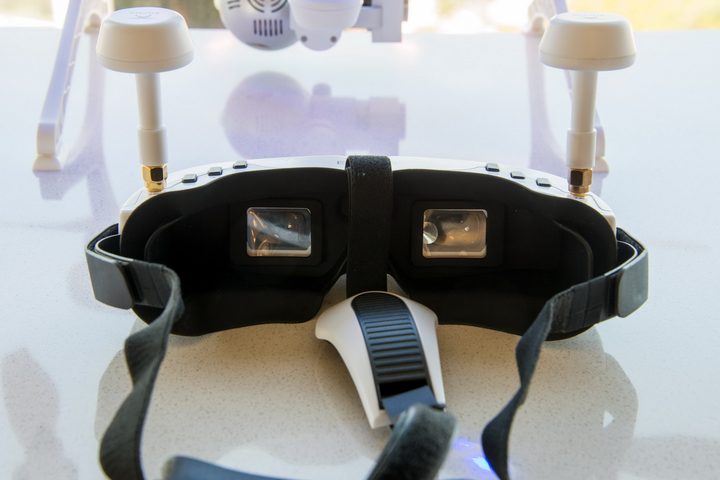
The acronym you’ll quickly come to learn in drone racing is “FPV,” which stands for “First Person View.” That’s because our racers have attached tiny cameras to their drones, which subsequently broadcasts what the drone “sees” to either a screen or, more commonly, to specialized goggles. This allows racers to fly as if they were tiny pilots sitting in the seat of their tiny, frighteningly fast drone. The races occur on predetermined “tracks,” many of which are extremely complex, like the one at last year’s World Drone Prix in Dubai. In fact, the sport kind of resembles Grand Prix Racing — if race cars could fly.
If you intend to compete seriously, you’ll want to do quite a bit of research prior to building your first drone. Much like any other semi-professional sport, drone racing has its own teams, leagues, classes, and rules. There are literally dozens of leagues, including the Drone Racing League, MultiGP for FPV quadcopters only, and FPVRacing.TV. A quick Google search should also turn up like-minded pilots in your area.
In terms of the types of races, there are currently three major classes, although the drone racing community invents new challenges all the time. The first is a time trial: fastest drone wins. The second is a drag race in which racers challenge each other on a straight track over a short distance. This race is less about maneuvering and more about how a pilot manages a drone at speed. The final category is Rotorcross, during which drones race through an obstacle course and the first drone to the finish line wins.
Once you’ve figured out what types of races and whether you want to become a casual or serious racer, you can start thinking about your build.
How much is this going to cost me?
The short answer is more than a PlayStation 4 or an Xbox One, but less than a motorcycle or car. That said, drone racing is probably not the best hobby for penny pinchers. A solid, league-compliant FPV drone setup will inevitably set you back between $1,000 and $2,000. Drones themselves aren’t that expensive, especially if you buy a ready-to-fly model or a pre-fabricated kit. However, the accompanying peripherals can quickly add up, once you factor in the camera, goggles, a decent radio, batteries, and a charter on top of your quad.
Now, let’s take a look at all the gear you’ll need to build a racing drone. Keep in mind that this is just a jumping-off point. As you learn more, you can explore more detailed hubs like those of DroneEnthusiast.
Essential components
The drone components you choose will likely depend on your level of engineering or tinkering skill. We like the Lumenier QAV250 Mini FPV Carbon Fiber Edition because it’s modular and customizable, which is great if you want augment your drone’s speed and level of control. Regardless, here are the essential components you’ll need to build your own DIY racing drone.
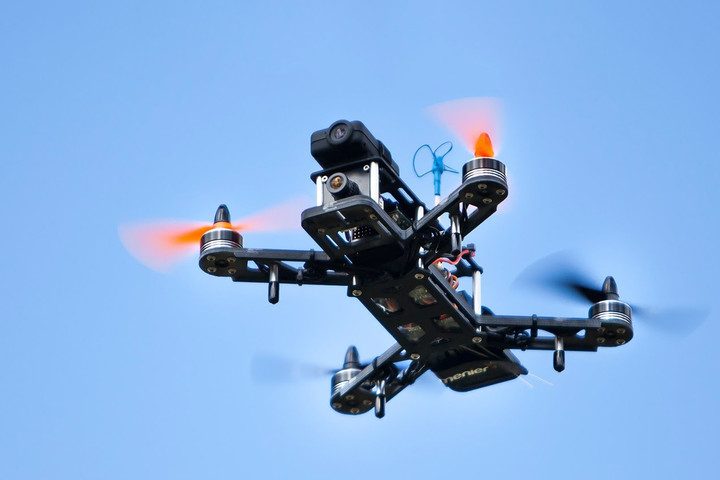
The quadcopter frame: The physical body of the drone needs to be lightweight yet strong enough to hold all the components it needs to carry. These are usually composed of carbon fiber, much like most modern airplanes.
The power distribution system: This is your drone’s “juice,” which connects to a small — albeit, powerful — battery.
The flight controller system: The “brains” that interpret signals from the radio control system and subsequently send commands to the electronic speed controllers, prompting your drone to fly. This also involves the motor and propellers.
The radio control system: The system that sends and receives signals to and from your drone. This includes a radio and a receiver.
The first person view (FPV) system: Allows the drone pilot to “see” from the drone’s point of view, simulating the sensation of actually piloting the drone.
If you don’t buy a pre-made kit, you’ll want to buy a frame that has a good build log online. You can find build logs simply by searching for “racing drone frame” and “build log” online. This will give you a map to follow when creating your first build. You’ll also want to make sure you’re buying motors and propellers that fit your frame, as well as reliable electronic speed controllers.
Additionally, you’ll need to decide which radio frequency is best suited to your drone, as the difference in signal strength between open tracks and obstacle courses can be significant. There are also many types of cameras to consider. Amateurs often think they can simply duct tape a GoPro to their drone, but professional racers know that a wide variety of choices exist, including CCD, CMOS, NTSC, and PAL-based cameras. Such being the case, you may find this lengthy guide to drone cameras useful.
Keep in mind that your quad also needs to be calibrated, meaning you’ll have to tweak the flight controller’s connection to the receiver, configure the throttle threshold, refine the communication protocols, and fine-tune the electronic speed controls.
Safety
Drones in general, and drone racing in particular, have been known to attract controversy. Concerns regarding security, regulation, registration, and restrictions are all still up in the air. Because of this, it’s crucial that all drone pilots learn to fly responsibly so that the hobby doesn’t get shut down. It’s also worth noting that some of our less-tolerant citizens have been known to shoot down drones, so it’s worth keeping abreast of the conversations surrounding drone regulation.

FPV racing, in particular, has emerged with unique risks compared to traditional remote-controlled aircraft. Given the nature of the camera, the strength of the radio frequency, and the difference when flying from a first-person perspective, it’s easy for a drone to quickly get away from its pilot. That said, bringing along a buddy to act as a second spotter is always a good idea.
It’s also important to remember that much of this technology is new, and sometimes relatively untested. Any system that involves digital processing can result in a lag between commands and execution, so it’s important to always maintain an appropriate distance.
Drone racing is an exciting new hobby, and there’s a ton of information to absorb. Check out RCState’s comprehensive roundup of the racing sites for a start, and have fun doing your research. Much like building a car, crafting the perfect racing drone is a complex task, so don’t rush and really get to know your gear before you start building your perfect racing companion.