There are 1,851 emojis in the latest Unicode release, according to Emojipedia. Many of them depict men and women, while some have remained genderless yellow smilies. For a long time, male and female emojis were restricted to specific professions or activities. For example, with the release of the first iPhone, Apple used a woman for the haircut emoji and a man for the construction worker.
Emojis are more inclusive today than ever before, now presenting men and women in all occupations, but there is still work to be done. Of those nearly 2,000 emojis, not one displays a human character that doesn’t ascribe to the binary. With the release of Emoji 5.0 planned for later in 2017, the Unicode Consortium Emoji Subcommittee is hoping to change that.

Paul Hunt, a typeface designer at Adobe and a member of the subcommittee, took to the Emojipedia blog on Monday to lay out a possible solution. The subcommittee is planning the addition of three gender-inclusive emojis — a child, an adult, and an older person — to fill the gap, at least partially. Hunt says the three emojis are only the first step and the goal is to expand representation to every man/woman pair.
“My wish is that adding more gender options in emoji will help us all to celebrate our unity and our diversity,” Hunt said. “I advocate for everyone to feel comfortable using emoji men when we feel masculine, emoji women to express our feminine aspects, and gender inclusive emoji whenever we feel like celebrating our humanity regardless of gender.”
Hunt notes that the gendering of emojis began in earnest with the advent of smartphones. The original set didn’t display fine detail, like masculine and feminine characteristics, because displays on mobile phones were too low-resolution at the time. Once that changed, developers seized the opportunity to flesh out what used to be pixelated, rudimentary symbols. The result was a much more specific and visually interesting set of emoji that came at the cost of inclusiveness.
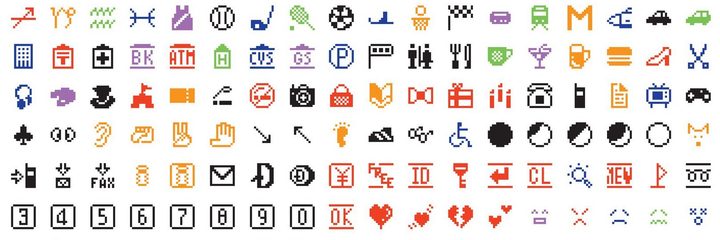
“Whether it was intentional or not, users saw an all-too-familiar pattern: emoji persons in active or working roles were depicted as men, and those in passive or frivolous roles were depicted as women,” Hunt said.
Since then, Unicode and the Emoji Subcommittee have been trying to catch up, responding to users’ requests for more representation, while also trying to release updates in a timely, steady manner. While it’s impossible to design an emoji for every possible appearance, the group’s commitment to inclusion continues to make emoji a better universal language for all people, regardless of race or gender identity.