1. Home
  2. Emerging Tech
  3. Health & Fitness
  4. News

Scientists get 3D-bioprinted human cells to grow inside live mice

Add as a preferred source on Google

In what represents an exciting advance for those hoping for 3D-printed body parts, researchers at Sweden’s Chalmers University of Technology and Sahlgrenska Academy have demonstrated the successful implantation of 3D-bioprinted human cartilage in mice.

The printing was carried out using Swedish company CellInk’s Inkredible bioprinter.

Recommended Videos

“This work involved the bioprinting of human stem cells and human chondrocytes in a biocompatible bioink with the aim to engineer cartilage tissue,” Héctor Martínez, chief technology and scientific officer of CellInk, told Digital Trends. “The engineered grafts were then implanted in a mice model to aid and study their maturation and development.”

3D-printed implants themselves are nothing new. What is new, and potentially transformative, about this work is that the human cartilage grew inside the mice, while blood vessels formed around the lattice-shaped 3D-printed material. After 60 days, what had developed looked a lot like cartilage, which was then stimulated through the addition of stem cells — thereby prompting further cell division.

“What makes this research exciting is the hope, one day, to overcome the limitations of conventional surgery and move closer to a future in which it will be possible to improve the health of people worldwide,” Matteo Amoroso, a consultant plastic surgeon who co-authored a paper on the work, told us. “Our results represent a small step forward, advancing the knowledge in this field, and we are happy for the contribution.”

As to what’s next, Héctor Martínez noted that extensive in-vitro and preclinical studies must now be carried out to assess the development of such engineered tissues, as well as what’s needed to control the tissue development. “That is, we must understand the efficacy and safety of the engineered tissue before it is translated to the clinic,” he said.

We may still be years away from this technology being available for humans, but there’s every reason to be cautiously optimistic.


Luke Dormehl
I'm a UK-based tech writer covering Cool Tech at Digital Trends. I've also written for Fast Company, Wired, the Guardian…
Yet another study says AI is bad for elections, and the rabbit hole gets worse
AI may be an election bomb waiting for someone to light the fuse
Voters cast their ballots on Election Day

Another election, another study has concluded that asking an AI chatbot for political guidance is a spectacularly bad idea. Research conducted during Hungary’s 2026 parliamentary election found that ChatGPT and Google Gemini offered not just inaccurate but also inconsistent and unreliable voting advice. The chatbots misclassified voter profiles, overlooked relevant parties, recommended parties absent from the ballot, and sometimes produced materially different answers when given the same information repeatedly.

AI keeps failing the voter test

Read more
Samsung’s humanoid robot ambitions are real, but factories come first
Samsung’s new robotics division has humanoids in its sights, although its immediate business is far more practical factory automation
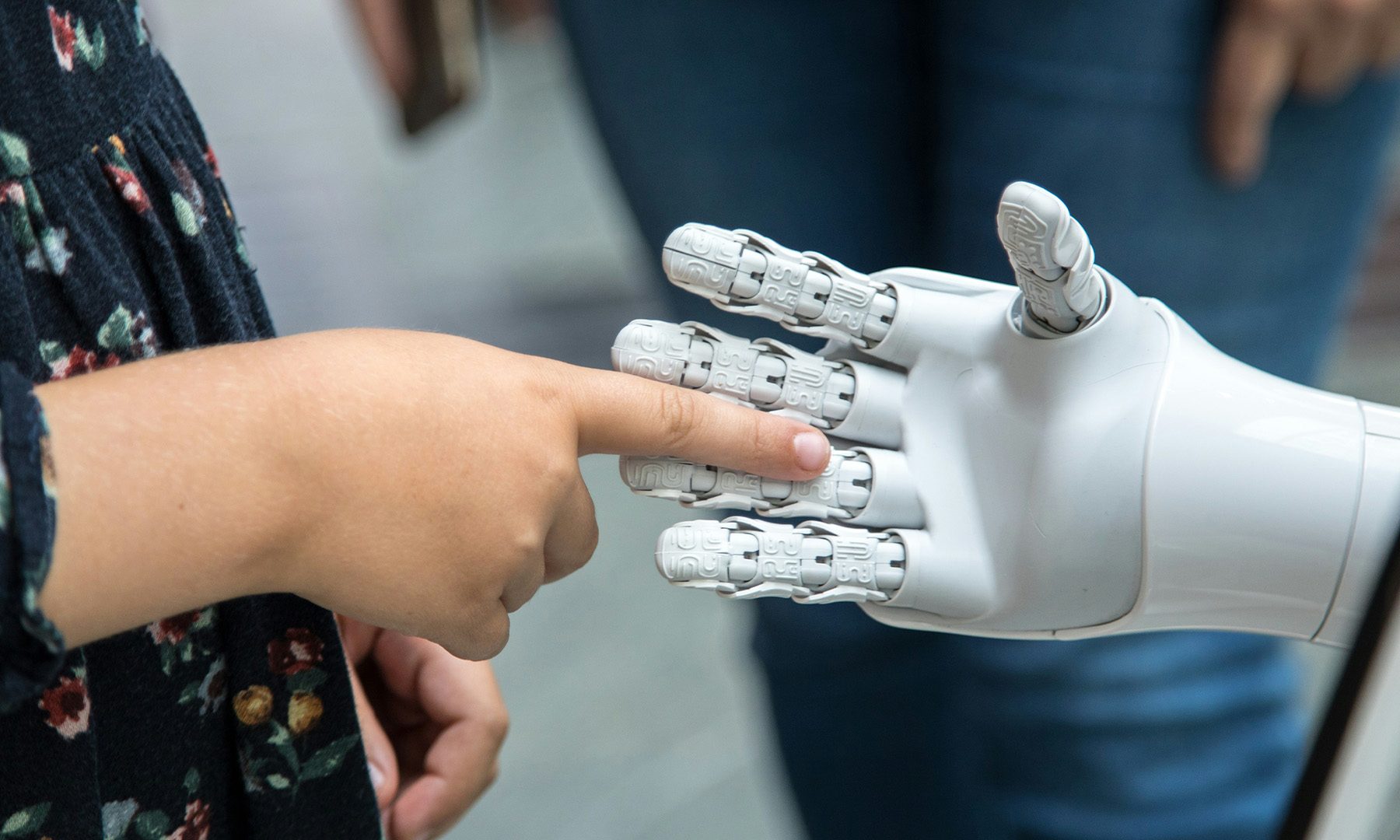
Robot Touch Human Finger

Samsung wants a place in the humanoid race, but its new robotics push begins with machines built for factories rather than homes.

The CEO-led RX robotics division will initially focus on manufacturing robots. Samsung has separately identified humanoids as a priority, although it hasn’t announced a commercial model or explained where one fits into the division’s immediate plans.

Read more
The future of AI may depend on this one behind-the-scenes change
Running Claude on Android.

Whenever a new AI model arrives, it's easy to get caught up in the bells and whistles. We talk about how much smarter it is, how quickly it answers questions, or how realistic its images have become. But here's the thing: none of that matters much if the AI can't reliably work with the apps and services people use every day.

That's why an upcoming update to the Model Context Protocol (MCP) caught my attention. It isn't a new chatbot or a fancy AI model. In fact, most people will never even know it's happening. But it could quietly make the AI ecosystem a lot healthier. If you've never heard of MCP before, don't worry. Think of it as a shared language that lets AI assistants safely talk to apps like Gmail, Slack, calendars, databases, and countless other services. Instead of every company inventing its own way to make those connections, MCP gives everyone a common rulebook.

Read more