  1. Home
  2. Phones
  3. Mobile
  4. News

Qualcomm’s settlement with BlackBerry has reached a whopping $940 million

Add as a preferred source on Google

BlackBerry just keeps on winning against Qualcomm. While the company was previously awarded $815 million in its case against Qualcomm, the settlement has now reached a hefty $940 million — a sum that Qualcomm has agreed to pay on or before May 31. BlackBerry confirmed the news in a press release.

The specifics of the refund remain unclear — Qualcomm said it is for sales of “subscriber units” — but at the core of the dispute is licensing fees BlackBerry paid in advance to Qualcomm. The smartphone maker argued that an agreed-upon caps on royalties was never applied, and Qualcomm argued that the payments were nonrefundable.

Recommended Videos

Qualcomm, unsurprisingly, said it disagreed with the court’s ruling. But it acknowledged that it was binding and that it “[had] no impact on agreements with any other licensee,” a Qualcomm spokesperson said.

It’s the latest in a string of legal blows against Qualcomm. In January, the U.S. Federal Trade Commission sued the San Diego, California-based company for anti-competitive practices, accusing it of using its dominant market position to edge out competition. The FTC alleged that Qualcomm gave its partners two choices: Pay pricey royalties for the use of its patents or limit the sale of their devices to smaller markets.

The FTC said that Qualcomm abused standards-essential patents — patents that must be licensed at fair, reasonable, and non-discriminatory rates — by refusing to license them directly to competing suppliers. The FTC characterized Qualcomm’s fees as “disproportionately high” relative to its competitors and said that consumers ultimately paid the inflated prices.

Apple later filed its own $1 billion lawsuit against Qualcomm (and subsequent suits in two other countries) over royalties for basic patents, claiming that Qualcomm forced it to pay excessive fees and withheld nearly $1 billion “as retaliation for responding truthfully to law [South Korean] enforcement agencies investigating them.”

“Despite being just one of over a dozen companies who contributed to basic cellular standards, Qualcomm insists on charging Apple at least five times more in payments than all the other cellular patent licensors we have agreements with combined,” Apple said in a statement.

Qualcomm cut Apple a discount in exchange for agreeing not to source competitors’ wireless modems for five years. That reportedly hampered silicon giants like Intel, which for years have tried to break into the smartphone chip space.

In a statement, Qualcomm general counsel Don Rosenberg said that Apple had “intentionally mischaracterized” Qualcomm’s practices and has been “actively encouraging regulatory attacks on Qualcomm’s business” around the world. “We welcome the opportunity to have these meritless claims heard in court, where we will be entitled to full discovery of Apple’s practices and a robust examination of the merits,” Rosenberg said.

Updated on 05-26-2017 by Christian de Looper: Added news that settlement has reached $940 million.

Kyle Wiggers
Kyle Wiggers is a writer, Web designer, and podcaster with an acute interest in all things tech. When not reviewing gadgets…
I’ve used foldable phones for years. Here’s how to pick the right one between the Galaxy Z Fold 8 and Flip 8
Samsung’s three new foldables solve very different problems
Galaxy foldables with its screen visible

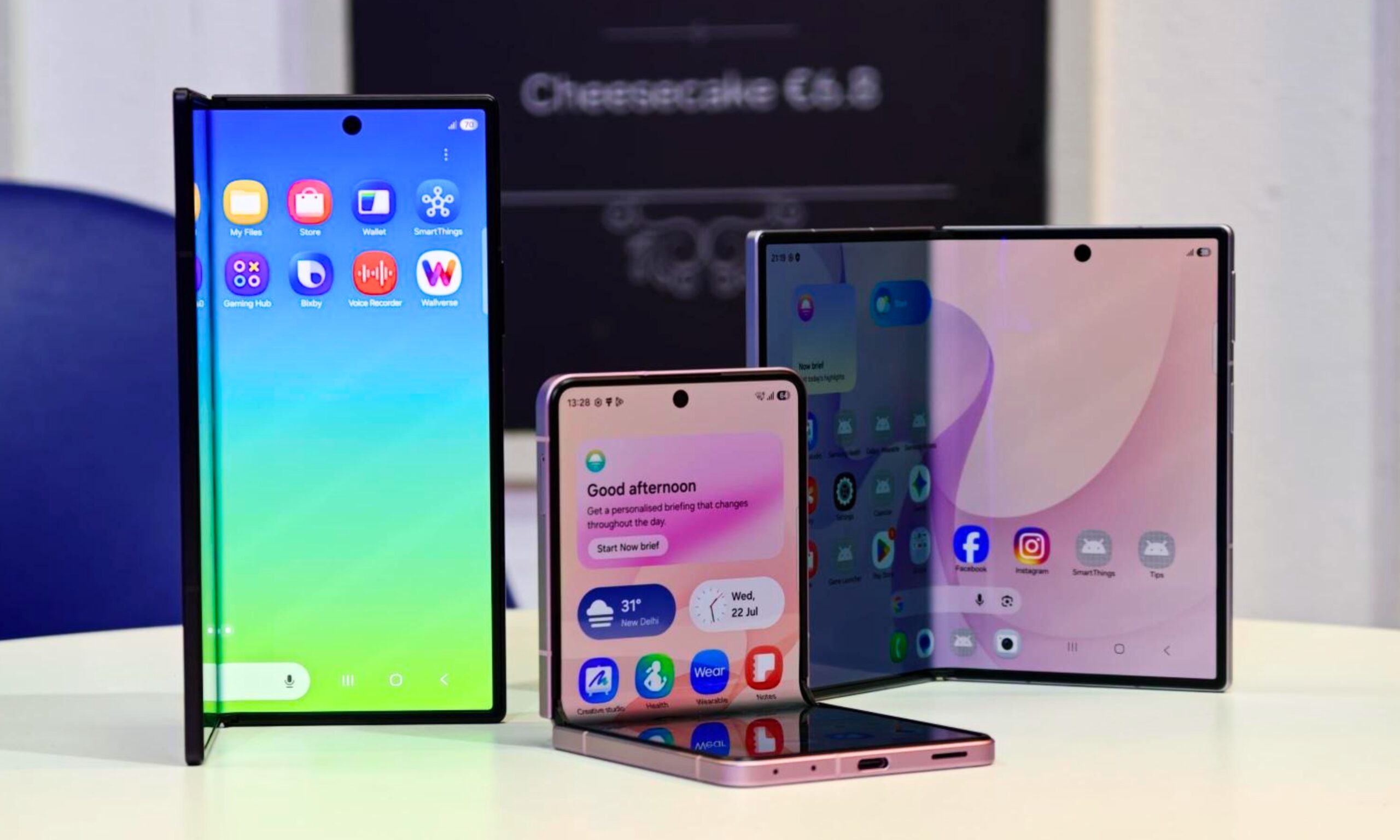
After years of reviewing foldable smartphones, I have learned that choosing one involves much more than what looks pretty or how large you want. Book-style foldables are usually sold as productivity machines, while flip phones cater to people who value portability. Samsung’s latest lineup complicates that choice by introducing two very different book-style models alongside its familiar clamshell.

Most of their shared specifications fade into the background once you start using them. Their shapes and screens have a much greater impact on daily life. So here's how I'd make a decision when choosing between the new Galaxy Z Fold 8 Ultra, Galaxy Z Fold 8, and Galaxy Z Flip 8.

Read more
How to set up selfie video sign-in for your Google account
Your face can now serve as a way to get back into your Google account. Here's how to set it up.
Google account selfie sign in tutorial featured

Losing access to a Google account is rarely a quick fix, but Google has been actively working to make things easier. Last year, the company introduced a feature called Recovery Contacts that lets you designate a trusted friend or family member to verify your identity if you ever get locked out. Now, Google has introduced a new option, one that uses your face to get you back in instead of a phone call to a friend.

Like Recovery Contacts, the new selfie video authentication feature requires some setup before you can use your face to sign into your Google account. This involves recording the reference video that Google will use to verify your identity whenever you attempt to log in this way. Here's how to set up selfie video sign-in for your Google account.

Read more
Samsung stirred the wide foldable race, but I’m more excited for an upcoming exotic rival
Samsung went bold and wide, but Xiaomi's rumored Mix Fold 5 has my attention
Computer, Electronics, Tablet Computer

Samsung’s Galaxy Z Fold 8 brought a major redesign to the company's foldable lineup. We now have a shorter, almost passport-like body that opens into a 7.6-inch display with a more media-friendly 4:3 aspect ratio. This feels like a more natural fit than Samsung's squarer last-gen foldables. It also has a more portable 201 grams heft and a decent 4,800mAh battery capacity.

All of this makes it one of Samsung's most interesting foldables yet. However, an upcoming Xiaomi device may take the same wide-screen formula and blend it with a Chinese phone's typical madness.

Read more