One way to prevent forgery of official documents could be to check the “fingerprint” of the paper it is printed on, claims a new piece of research from the U.K.’s Newcastle University.
If you did not know that each piece of paper has its own individual fingerprint, you are not alone. The insight that the texture of each piece of paper is slightly different — and therefore a unique identifier — is something discovered by the researchers on the project, which included computer scientists and security experts Dr. Siamak Shahandashti, Dr. Feng Hao, and Ehsan Toreini.
“We were inspired by the simple fact that if you hold a piece of paper against the sun you can see patterns and imperfections in the texture of the paper,” Shahandashti told Digital Trends. “These patterns, which are visible even to the naked eye and are a natural result of the manufacturing process, look different in different pieces of paper, just like our fingerprints are different. We wondered if there was a way to extract this paper ‘fingerprint.’ We explored several techniques, and finally, we developed algorithms that are similar to those used in iris recognition from a very high-level point of view.”
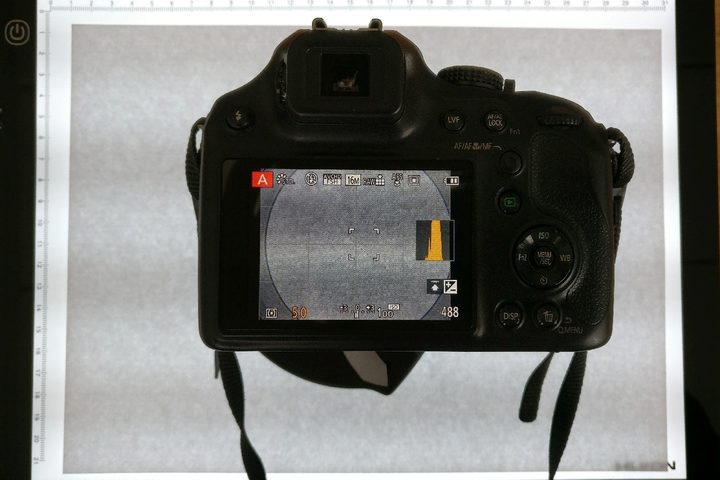
The system the team developed requires just an off-the-shelf camera and light source, such as the lightbox one might use for tracing. By putting a sheet of paper against this light source and then taking a picture, an algorithm can then be used analyze the data to find out the document’s paper fingerprint. It is accurate even when the paper has been written on, crumpled up, or soaked with liquid.
“What makes it so exciting, with our scientist hat on, is the mere realization that if you see a paper pile that looks exactly the same, our algorithm is able to distinguish every single one of them from the others,” Shahandashti. “If we put our engineer hat on, the immediate applications this method can have range from providing an easy way to establish the authenticity of documents, receipts, and certificates to enabling alternative solutions for access tokens, and even ensuring chain of custody in forensic investigations.”
The team’s work is described in a paper, published in the new issue of the academic journal ACM Transactions on Information and System Security.