1. Home
  2. Phones
  3. Apple
  4. Mobile
  5. Evergreens

Digital Trends may earn a commission when you buy through links on our site. Why trust us?

Take back control! Here’s how to turn off autocorrect on your iPhone or iPad

Add as a preferred source on Google

So you want to know how to turn off autocorrect on your iPhone or iPad? We can certainly understand why — when the iPhone was released back in 2007, there was a lot of buzz about how phones were moving away from plastic hardware keyboards towards on-screen keyboards that completely rely on touch screens. People who were used to typing into their Blackberries all day found it challenging to adjust. Apple built autocorrect into their keyboard to help users type with confidence and minimize typing mistakes. That sounds great in theory, but it doesn’t always work properly.

Autocorrect sometimes inserts a word that you didn’t mean to write or makes “corrections” you didn’t want to make. People who type in certain languages other than English find autocorrect very annoying. As a matter of fact, depending on the language, having autocorrect enabled can make it impossible to type a sentence correctly in that particular language. Let’s take a look at how to turn off autocorrect on your iPhone.

Recommended Videos

Steps to disable autocorrect

Step 1: Go to Settings > General > Keyboard.

Step 2: Make sure the Auto-Correction toggle is set to the off position.

Another issue you might encounter is that your keyboard may stop correcting a particular word and let you type it incorrectly. It may be that the keyboard has saved incorrect words in the dictionary and is looking at them as correctly spelled. Don’t worry, because you can also erase the keyboard dictionary and let it start learning again if this gets too annoying.

Steps to reset the keyboard dictionary

Step 1:  Go to Settings > General > Reset.

Step 2: Tap Reset Keyboard Dictionary.

Step 3: If you have a password set, it will ask you to enter it at this time.

Did you know that you can also train your keyboard to type certain phrases or symbols? Check out our guide on how to create keyboard shortcuts for your iPhone or iPad.

After a while, you may find that other keyboards such as the Gboard from Google or the Swiftkey keyboard work better for you. These keyboards also feature autocorrect and different typing methods such as Swype, where you can just drag your finger from letter to letter. You may find your typing experience improves as you try third-party keyboards. If you want to try other keyboards, check out our list of the 17 hottest keyboards for iPhone and iPad.

Carlos Vega
Carlos has been involved in computers since 2000, when he earned his MCSE and A+ certifications. A love for technology turned…
The Light Flip brings back the flip phone, minus the distractions
The company's first flip phone features a T9 keypad, 5G, USB-C, and LightOS instead of addictive apps.
Light Flip Phone Featured

Flip phones are having a bit of a comeback. But most modern versions either feel cheaply made or swap one set of distractions for another. That's exactly what Light says it wants to change with the Light Flip -- its first-ever flip phone and the fourth phone the company has released in the past decade. Staying true to the philosophy behind previous Light Phones, the new device combines a classic clamshell design with a minimalist software experience that helps users stay connected without constantly competing for their attention.

A classic flip phone with modern essentials

Read more
Samsung’s new AI assistant wants to explain what your health data actually means
Your Galaxy Watch collects the clues. Samsung Health Assistant connects the dots.
Samsung Health data screen.

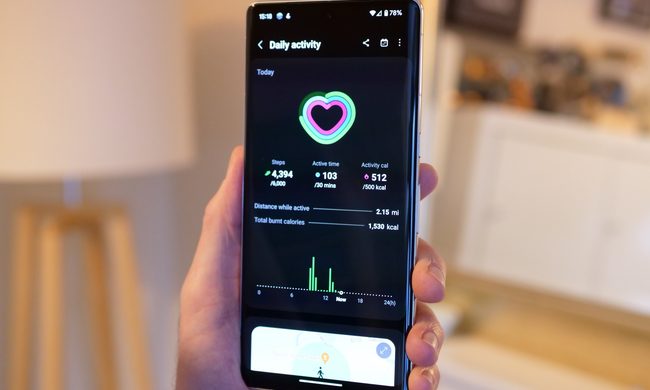
Samsung Health is getting smarter than ever before with its new AI assistant. The Samsung Health Assistant is now available in beta to eligible users in the United States. Built directly into Samsung Health, the conversational assistant can analyze information collected across the app and answer personalized questions about the user’s health and wellness.

Your health charts talk back now

Read more
Apple’s next big iPhone display experiment could be its biggest yet
The company may be testing a 6.96-inch panel for a future flagship, although one leaker’s post is currently the only source for the exact measurement
iPhone 17 Pro Max

Apple may be testing a 6.96-inch display for a future iPhone, bringing its largest handset within a whisker of the 7-inch mark.

Leaker Digital Chat Station claims the experimental panel retains the same aspect ratio as Apple’s current Pro Max display. The post mentions the iPhone 20 Pro Max as a possible destination, but doesn’t connect the screen to a finished device. Apple could be exploring the size without putting it anywhere near a production line.

Read more