Also check out 3D TV: What You Need to Start Watching in 3D.
Call us practical, jaded or simply a good, old-fashioned stick in the mud, but when it comes to consumers upgrading to 3D television anytime soon, we just don’t see the point. Much ado has been made about this new technology at CES 2010 by manufacturers such as LG, Sony, Samsung, Toshiba and Panasonic, with one in four consumers surveyed by the CEA saying they plan to buy a 3D TV within the next three years. However, while ESPN plans to roll the first official 3D sports network on June 11, and consumers are predicted to spend $17 billion on 3D TVs in 2018, per research firm DisplaySearch’s forecasts, we’re just not sold on the concept’s potential rapid consumer uptake.
Why? Among other issues:
Lack of Current Demand
Let’s try a simple exercise: Prior to the debut of these announcements, name one person (save perhaps the odd rabid fanboy or futurist) you know of who recently said, “Boy these shows are great – I sure wish they could make it look like Oprah was in my living room, however.” It wasn’t even until Avatar put the concept of 3D on most consumers’ map that there was any real mainstream excitement surrounding the category. Similarly, it’s one thing to experience 3D technology while sitting in front of a three-story screen versus one’s living room, where it’s more of an event, and your everyday living room, where the activity becomes more mundane, making it hard to justify the cost of an immediate upgrade. Besides, since when was 2D storytelling and filmmaking broken to begin with?
 Practicality
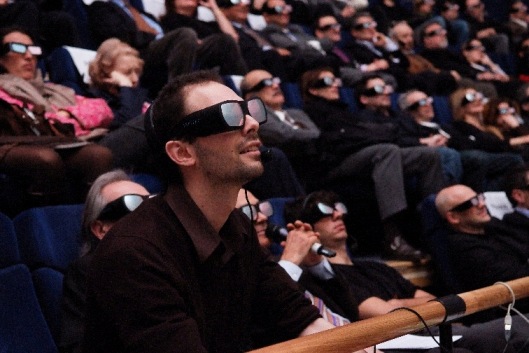
It’s bad enough having to hunt for the remote in your couch cushions. Now imagine having to do the same for 3D glasses that not only make you look goofy once located, but could also prove quite uncomfortable to wear in long-term sittings. Is this really the glorious future sci-fi novels once promised? Maybe, if you’re into migraine headaches, occasional screen flicker and, well, you know, looking a complete toolbox. Somehow it just doesn’t seem worth the trouble to watch Monsters vs. Aliens ooze forth out of your screen.
3D TV Pricing
Though manufacturers are aiming to keep costs just slightly above high-end LED/LCD models, keep in mind that this would still put them at a fair premium above other sets. This will slow overall adoption rates, and be hard to swallow for countless consumers who’ve just purchased a new set within the last 12-18 months. To get true 3D content, you’ll also need access to 3D broadcast programming and/or a 3D Blu-ray player and 3D movies, plus 3D glasses, which won’t come cheap. While some models, such as Toshiba’s Cell TV, promise 2D to 3D upscaling, which converts traditional images into three-dimensional ones, that technology is expected to cost a pretty penny. Coupled with current economic conditions, it’s sure to keep the sets out of most consumers’ comfortable buying range, which may lead to smaller prospective audiences and content providers being unwilling to quickly produce compatible premium content as a result. And fewer must-see programs means less titles that can help push more 3D TVs into the market.
Given that the consumer electronics industry is coming out of a rough year or so, we understand why there’s been so much buzz – both the media and business insiders need a noteworthy innovation to rally behind. However, it’s going to take time until we really see compelling reasons for everyday shoppers to take the plunge (e.g. killer apps, 24-hour programming, ergonomic interfaces that make it simple and pleasant to watch 3D programs, etc.). As such, we can’t help but feel that current expectations for the rapid rise to prominence of this curious new television category are overly aggressive.
Will there be an eventual market for 3D HDTV technology? Undoubtedly. However, we expect it to take longer to reach the point of true mainstream saturation, transitioning over a period of time (the same as we did from black and white sets to color). And, for that matter, predict that the category needs to evolve considerably before it becomes the retail juggernaut and technological revolution that television manufacturers hope.