1. Home
  2. Emerging Tech
  3. Health & Fitness
  4. News

Man somehow plays sax solo following brain surgery, for science

Add as a preferred source on Google

When 25-year-old Dan Fabbio was diagnosed with a brain tumor a couple of years ago, there was an added complication: The tumor was located in the part of his brain that’s responsible for music function. Fabbio’s job? Working as a music teacher in a school in New Hartford, New York. This began a cutting-edge research project involving Fabbio and a number of physicians and surgeons — with the goal of not only carrying out brain surgery to remove the tumor, but doing so in a way that was not going to negatively impact Fabbio’s musical abilities.

This meant designing a series of fMRI experiments that could be used, in the words of the investigators, “to map music in Dan’s brain.”

Recommended Videos

“Our goal in the Translational Brain Mapping Program is to carefully map each patient’s brain who comes to URMC for surgery,” Professor Bradford Mahon of the University of Rochester Medical Center told Digital Trends. “This type of personalized brain mapping is important because, while everyone’s brain is organized in more or less the same way, there is inter-individual variability in the precise location of specific functions. Furthermore, we look at the broader life of each patient who comes through our program, with the goal of preserving the humanity of each patient. If a patient is a musician, we are going to look closely at music processing; as another example, we have carried out ‘mathematics mapping’ in a math professor and in an accountant. We have mapped the ability to move the hands and use tools in a craftsman. Our goal is to provide the very best neurosurgical care to each patient while ensuring that when the patient leaves the hospital, they can go back to work, go back to their family, and go back to the things that they are passionate about.”

In the case of Fabbio, the information the team gathered was used to create a detailed 3D map of his brain — including notes on both the exact tumor location and music function. This was then used to guide the surgeons while they were operating, during which Fabbio was awake and repeating humming and language exercises he had learned before the surgery. This allowed the surgeons to know whether they were potentially disrupting a part of the brain associated with music processing.

After the operation was finished, Fabbio demonstrated its success by playing his saxophone in the operating room — causing the room to erupt in applause. He is now recovered and back to teaching music.

A paper describing the work was recently published in the journal Current Biology.

Luke Dormehl
I'm a UK-based tech writer covering Cool Tech at Digital Trends. I've also written for Fast Company, Wired, the Guardian…
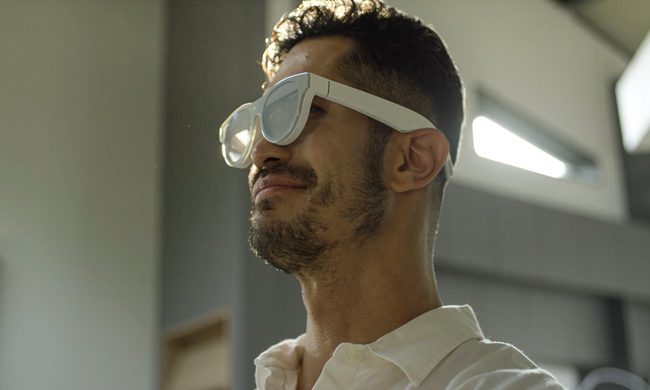
Your future AR glasses might finally stop making the real world look weird
Researchers have developed a new display technique that keeps virtual objects realistic without dimming the real world.
Samsung AR Glasses

One of the biggest promises of augmented reality is blending digital objects seamlessly into the real world. Ironically, today's AR glasses often make the real world harder to see. Researchers at the Shibaura Institute of Technology (SIT) in Japan, led by Assistant Professor Xiaodan Hu in collaboration with Dr. Yan Zhang and Professor Xubo Yang from Shanghai Jiao Tong University in China, and Professor Kiyoshi Kiyokawa from Japan's Nara Institute of Science and Technology, have developed a new AR display technique that aims to make virtual objects look realistic without reducing visibility of the real world. The study was published in IEEE Transactions on Visualization and Computer Graphics.

The biggest AR problem isn't virtual objects; it's everything around them

Read more
Anti-surveillance clothing is getting cheaper, but don’t expect an invisibility cloak
Affordable shirts now claim to confuse facial recognition, although their protection depends heavily on the camera and software watching you
Chart, Plot, Adult

Anti-surveillance clothing is starting to look less like an art-school experiment and more like something you could actually wear outside. Shirts designed to confuse facial recognition systems now cost about as much as ordinary streetwear, although buying one won’t make you disappear.

The Guardian reports that designers are using face-like prints, unusual cuts and infrared lights to interfere with computer vision. These techniques target specific weaknesses, so their success depends on what happens to be watching you.

Read more
This spinning drone hides in plain sight using a visual illusion
This drone doesn't turn invisible. It tricks your brain into thinking it has.
Phantom Twist

For decades, engineers have chased the dream of an invisible drone. The usual approaches have involved transparent materials, camouflage coatings, or complex optical systems that bend light around an object. Researchers at Northwestern University decided to take a completely different route. Instead of hiding the drone itself, they chose to fool the human eye.

The result is Phantom Twist, an experimental drone that spins so rapidly it almost disappears into the background. It's not technically invisible, but to anyone watching, it looks more like a faint blur than a flying machine.

Read more