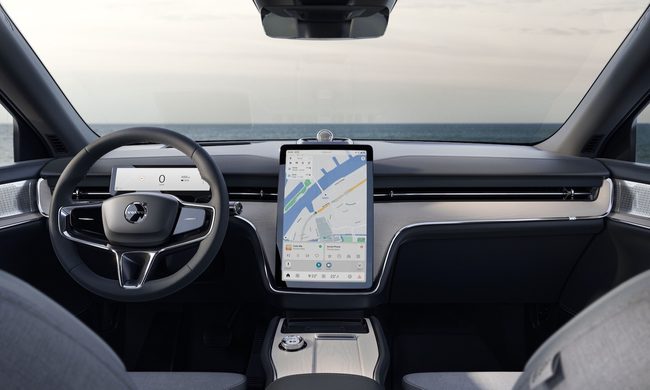
Your taxi driver may be of the cyborg variety sooner than you think. On October 10, Nvidia announced the world’s “first artificial intelligence computer designed to drive fully autonomous robotaxis.” Meet Pegasus, a new system that makes use of the Nvidia Drive PX A.I. computing platform to work alongside Level 5 driverless vehicles, which is to say, fully automated cars. Promising to deliver 320 trillion operations per second, this may just be the system we need to enter a driverless future — insofar as taxis are concerned.
As per Nvidia, Pegasus will allow for vehicles without steering wheels, pedals, or mirrors to take to the streets. But before you cringe at the thought of cars without safety features, know that Nvidia’s new system is powered by four high-performance A.I. processors that bring together two of the company’s newest system-on-chip processors. Moreover, Pegasus is said to be designed for ASIL D certification, which is the auto industry’s highest safety level. And despite all this functionality, the entire system is said to fit on a computer the size of a license plate, which could cut down significantly on energy consumption and cost.
“Millions of hours of lost time will be recaptured by drivers as they work, play, eat, or sleep on their daily commutes,” Nvidia noted in a statement. “And countless lives will be saved by vehicles that are never fatigued, impaired, or distracted — increasing road safety, reducing congestion, and freeing up valuable land currently used for parking lots.”
Nvidia is already working with 225 partners to develop the new platform, and 25 of these folks are said to be developing fully autonomous robotaxis.
“Creating a fully self-driving car is one of society’s most important endeavors — and one of the most challenging to deliver,” said Jensen Huang, Nvidia founder and CEO. “The breakthrough A.I. computing performance and efficiency of Pegasus is crucial for the industry to realize this vision. Driverless cars will enable new ride- and car-sharing services. New types of cars will be invented, resembling offices, living rooms, or hotel rooms on wheels. Travelers will simply order up the type of vehicle they want based on their destination and activities planned along the way. The future of society will be reshaped.”
Pegasus is slated to be made available to Nvidia partners in the second half of 2018.