1. Home
  2. Emerging Tech
  3. s

Indiegogo stops by DT’s booth at CES to show off some cool crowdfunding projects

Add as a preferred source on Google

Crowdfunding is hot right now, but what do creators do once they’ve got the money? That’s the question Indiegogo wants to answer, and its CEO David Mandlebrot stopped by the DT booth at CES 2018 in Las Vegas to discuss that question and show off some neat new Indiegogo projects.

The company’s current focus is on a concept-to-market approach, where the crowdfunding site provides assistance to creators before, during, and after the crowdfunding experience. One example is Travis the Translator, a successful crowdfunding campaign for a device that can translate from and to 80 languages.

Recommended Videos

Mandlebrot says that Indiegogo assisted the Travis team by connecting them with partner Arrow Electronics. Arrow, in turn, helped Travis source parts to make its innovative handheld translator a reality.

But it’s not always about tech: Mandlebrot says that there’s typically a 50/50 split between tech gadgets and other useful inventions when it comes to crowdfunding projects. He had one such invention to show off at the DT booth called the Mifold — think of it as a booster seat without the boost. Instead of the child sitting on a seat that allows the safety belt to safely restrain him or her, the Mifold instead brings the top part of the belt down to the child’s shoulder, where it can safely restrain them without causing discomfort.

Of course, we’re a tech site here at DigitalTrends, so Mandlebrot had plenty to show us, including a new type of VR system called the VR Free by SensoryX. These new type of gloves include built-in sensors to track finger movements without the need for any other tracking devices, which the company claims makes its offering more immersive, intuitive, convenient, and precise.

We were impressed with the demo they showed us at the booth, which really seemed to allow for fine movements — like playing a virtual piano — that might be more difficult to do with other platforms.

Ed Oswald
For fifteen years, Ed has written about the latest and greatest in gadgets and technology trends. At Digital Trends, he's…
I let Gemini take care of my houseplants, and they’ve never looked better
Study guide created by Gemini

I am, by every reasonable measure, a serial plant killer. I've lost count of the pothos, the peace lilies, the one very expensive fiddle-leaf fig that judged me silently for a month before giving up entirely. My problem was never a lack of love. It was that I'd either drown them out of guilt or forget they existed for a fortnight, with no middle ground. So when I started leaning on Gemini for the odd everyday question, letting it babysit my plants wasn't some grand plan. It happened almost by accident, and now my flat looks like something a person with their life together would own.

It started the way most of my plant emergencies do, with a leaf going a color it definitely shouldn't. Instead of doom-scrolling through contradictory Google searches like I usually would, I snapped a photo, handed it to Gemini, and asked what was wrong. What I got back was a proper answer, and it was the first of many.

Read more
I underestimated this NotebookLM feature until it completely changed how I study
google-adds-data-tables-feature-in-notebooklm

I'll admit it: I ignored NotebookLM's Mind Maps feature for far longer than I should have. I mostly used the app to ask questions about my documents or generate Audio Overviews and Short Video Overviews, while that little Mind Map button sat untouched. I assumed it was more of a nice-to-have than something I'd actually use. Turns out, I was completely wrong.

I stopped drowning in my own notes

Read more
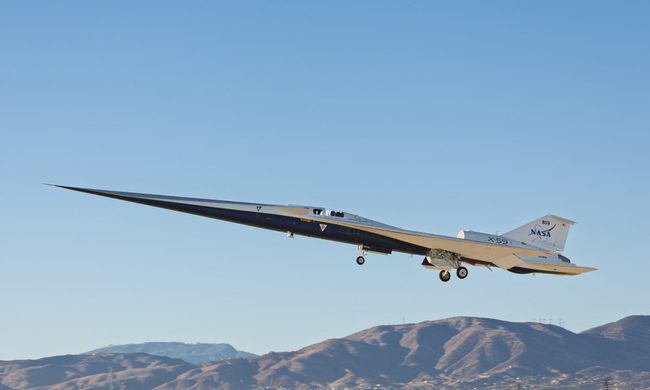
The Concorde dream is within reach. NASA X-59 just has to silence the supersonic boom
The jet built to kill the sonic boom just reached full speed
Lockheed Martin’s X-59

NASA has already proved that its needle-nosed X-59 can move seriously fast in recent test flights. Now, the next step is to find out whether it can break the sound barrier without announcing its arrival to everyone below. The experimental aircraft recently reached Mach 1.4, or about 924 mph (1,487 kph), at an altitude of 55,000 feet. Those are the target conditions NASA plans to use during future tests of the X-59’s quieter sonic signature, making the flight a major milestone for the agency’s Quesst mission.

NASA’s supersonic jet has reached full speed

Read more