1. Home
  2. Emerging Tech
  3. Health & Fitness
  4. News

Stem cell breakthrough may give people with paralysis their sense of touch back

Add as a preferred source on Google

For someone without a severe spinal cord injury (SCI), trying to wrap your head around what it would be like to experience is next to impossible. While most of us might focus on the mobility difficulties such a condition may cause, it’s easy to forget that many who experience paralysis also lose sensation in parts of their body — robbing them of their sense of touch.

In a new piece of research, investigators from University of California, Los Angeles look to have taken a big step in helping with this by coaxing stem cells to become sensory interneurons for the first time. The protocol could be a crucial advance in stem cell-based therapies able to restore sensation in paralyzed individuals who have lost feeling in parts of their body.

Recommended Videos

“Our work is exciting because we are the first to apply the right signals that tell stem cells how to become a type of spinal sensory neurons, the neurons that normally reside in the spinal cord that let you experience and react to the environment,” Samantha Butler, a UCLA associate professor of neurobiology and part of the Broad Stem Cell Research Center, told Digital Trends.

“Specifically,” Butler continued, “these are the neurons that let you feel touch, and — something more mysterious — [establish] the position of your body in space. ‘Proprioception’ is a super power you didn’t know you had. Your spinal cord knows where your body is at all times, so that your legs don’t knock into each other as you walk, for example, or you hold yourself upright without thinking about it. If you lose proprioception you can still do these things, but it is extremely difficult: you need to be consciously willing yourself to perform the right movement task at all times.”

In previous work, Butler and her colleagues discovered how signals from a family of proteins called bone morphogenetic proteins (BMPs) influence the development of sensory interneurons in chicken embryos. In their new project, they added a specific bone morphogenetic protein called BMP4, along with another signaling molecule called retinoic acid, to human embryonic stem cells. The results were a mixture of two types of sensory neurons, providing proprioception and also enabling people to feel a sense of pressure.

The group is currently implanting these new sensory interneurons into the spinal cords of mice to discover whether they will integrate into the nervous system and become fully functional. Their research was recently published in the journal Stem Cell Reports.


Luke Dormehl
I'm a UK-based tech writer covering Cool Tech at Digital Trends. I've also written for Fast Company, Wired, the Guardian…
Yet another study says AI is bad for elections, and the rabbit hole gets worse
AI may be an election bomb waiting for someone to light the fuse
Voters cast their ballots on Election Day

Another election, another study has concluded that asking an AI chatbot for political guidance is a spectacularly bad idea. Research conducted during Hungary’s 2026 parliamentary election found that ChatGPT and Google Gemini offered not just inaccurate but also inconsistent and unreliable voting advice. The chatbots misclassified voter profiles, overlooked relevant parties, recommended parties absent from the ballot, and sometimes produced materially different answers when given the same information repeatedly.

AI keeps failing the voter test

Read more
Samsung’s humanoid robot ambitions are real, but factories come first
Samsung’s new robotics division has humanoids in its sights, although its immediate business is far more practical factory automation
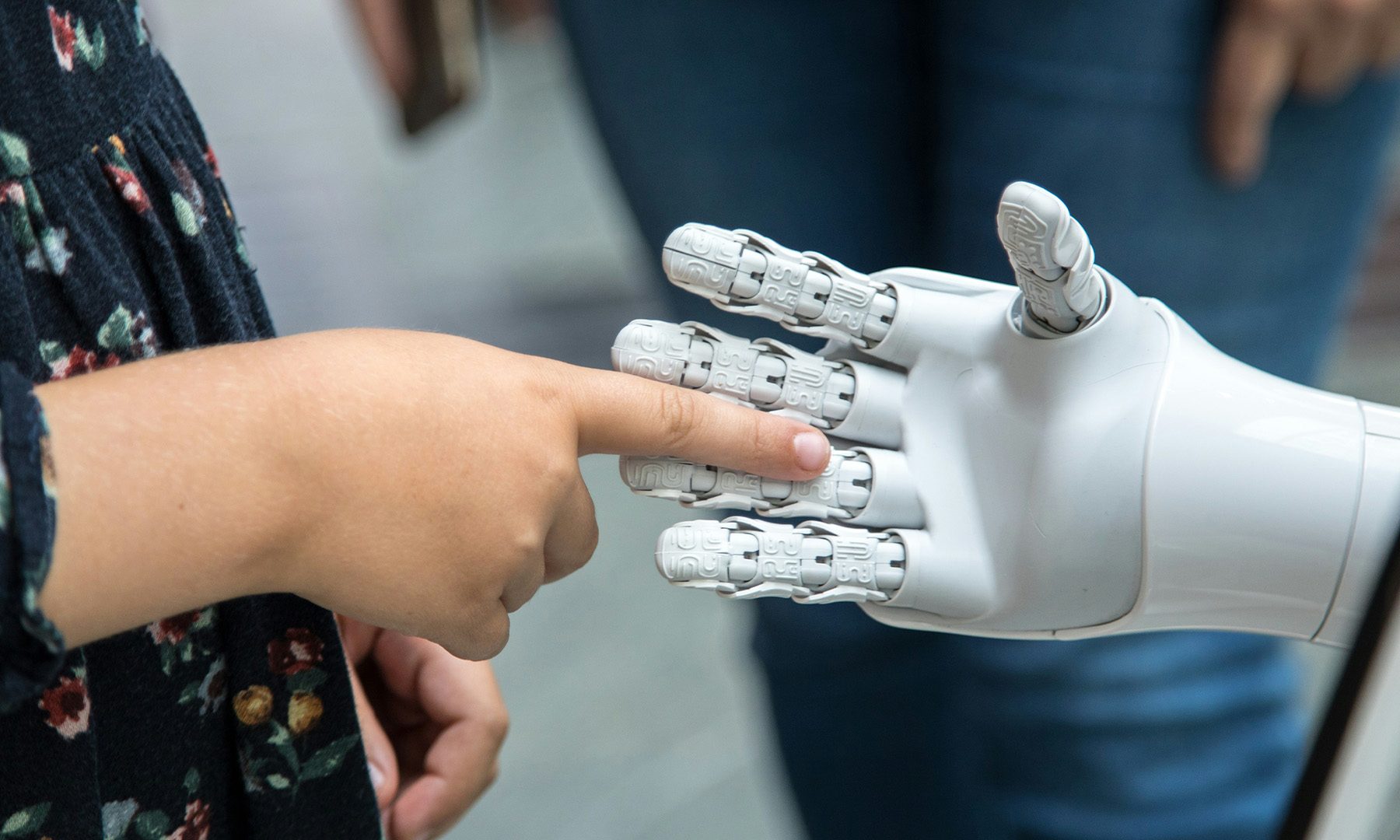
Robot Touch Human Finger

Samsung wants a place in the humanoid race, but its new robotics push begins with machines built for factories rather than homes.

The CEO-led RX robotics division will initially focus on manufacturing robots. Samsung has separately identified humanoids as a priority, although it hasn’t announced a commercial model or explained where one fits into the division’s immediate plans.

Read more
The future of AI may depend on this one behind-the-scenes change
Running Claude on Android.

Whenever a new AI model arrives, it's easy to get caught up in the bells and whistles. We talk about how much smarter it is, how quickly it answers questions, or how realistic its images have become. But here's the thing: none of that matters much if the AI can't reliably work with the apps and services people use every day.

That's why an upcoming update to the Model Context Protocol (MCP) caught my attention. It isn't a new chatbot or a fancy AI model. In fact, most people will never even know it's happening. But it could quietly make the AI ecosystem a lot healthier. If you've never heard of MCP before, don't worry. Think of it as a shared language that lets AI assistants safely talk to apps like Gmail, Slack, calendars, databases, and countless other services. Instead of every company inventing its own way to make those connections, MCP gives everyone a common rulebook.

Read more