  1. Home
  2. Emerging Tech
  3. Health & Fitness
  4. Virtual Reality
  5. News

Haptic VR surgery isn’t for the faint of heart, but it could help surgeons

Add as a preferred source on Google
Tom Atkinson, R3Digital

When surgeons are trained to perform a procedure, the old rule of thumb is “watch one, do one, teach one.” It’s a pretty unforgiving learning curve, which requires a big leap on the part of the trainee surgeon, and isn’t wholly reassuring to patients, either. I’m about to perform a sleeve gastrectomy, a weight-loss procedure in which the size of the stomach is reduced to a fraction (around 15 percent) of its original size. The problem is that I’ve never watched one. I’m diving straight into the “doing” part. Fortunately, that is not quite such an issue since the sleeve gastrectomy operation is a training simulation taking place in virtual reality.

It’s part of a new haptic VR system created by the London-based company Fundamental VR, demonstrated over the weekend as part of the Global Education and Skills Conference in Dubai, United Arab Emirates. Officially launching later this year, the tech uses cutting-edge haptic and VR technology to train the next generation of lifesaving surgeons. Or, in this case, a Digital Trends journalist.

Recommended Videos

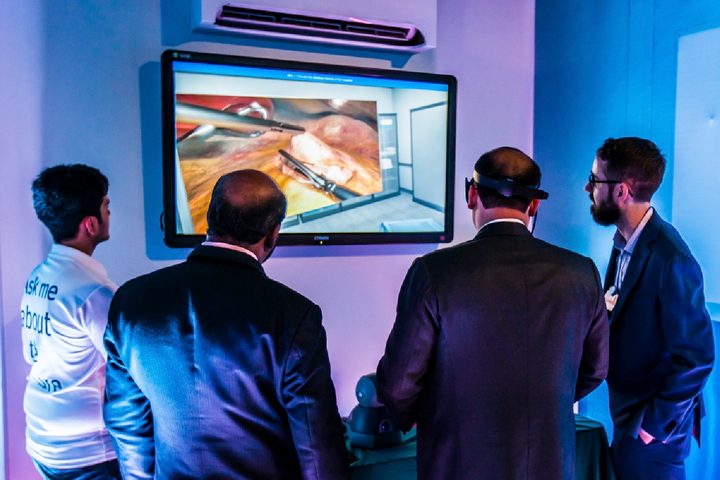
Fundamental’s “Fundamental Surgery” employs off-the-shelf hardware and software that will run on most modern computers. In the case of this demo, that translated to an Acer Windows Mixed Reality VR headset and touch controller built by the company 3D Systems, which uses three motors to provide resistance. With this technology, the team has then built multiple training scenarios which replicate not just the visuals of an operating theater setup, but also the physical sensations that go along with the operation.
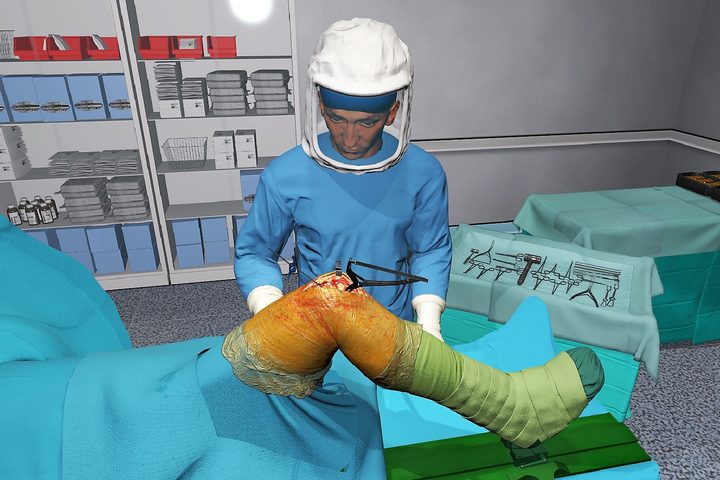
Image used with permission by copyright holder

For the sleeve gastrectomy demo, this means that as you lift the stomach and start to cut away at it, you feel both its weight and the force of the cutting action. As Fundamental CEO and co-founder Richard Vincent told Digital Trends, it allows trainee surgeons to feel what they’re doing — and to do it over if they are struggling.

“If there’s a part of the operation you have difficulty with, you can repeat that step again and again and again,” Vincent said. “It means you could practice an operation 500 times if you wanted. There’s just no other way to do that. A person will typically make consultant based on 40 procedures.”

Vincent said that the technology is currently being targeted at both industry and also training hospitals. It has already racked up some big-name support from places like the Mayo Clinic, Duke University, Stanford University, and others in the U.S., as well as Guy’s Hospital, King’s College Hospital and more in the U.K.

Let’s hope it works well as a training tool; there is even a chance the surgeon who will operate on you in the future will have trained with it.


Luke Dormehl
I'm a UK-based tech writer covering Cool Tech at Digital Trends. I've also written for Fast Company, Wired, the Guardian…
Yet another study says AI is bad for elections, and the rabbit hole gets worse
AI may be an election bomb waiting for someone to light the fuse
Voters cast their ballots on Election Day

Another election, another study has concluded that asking an AI chatbot for political guidance is a spectacularly bad idea. Research conducted during Hungary’s 2026 parliamentary election found that ChatGPT and Google Gemini offered not just inaccurate but also inconsistent and unreliable voting advice. The chatbots misclassified voter profiles, overlooked relevant parties, recommended parties absent from the ballot, and sometimes produced materially different answers when given the same information repeatedly.

AI keeps failing the voter test

Read more
Samsung’s humanoid robot ambitions are real, but factories come first
Samsung’s new robotics division has humanoids in its sights, although its immediate business is far more practical factory automation
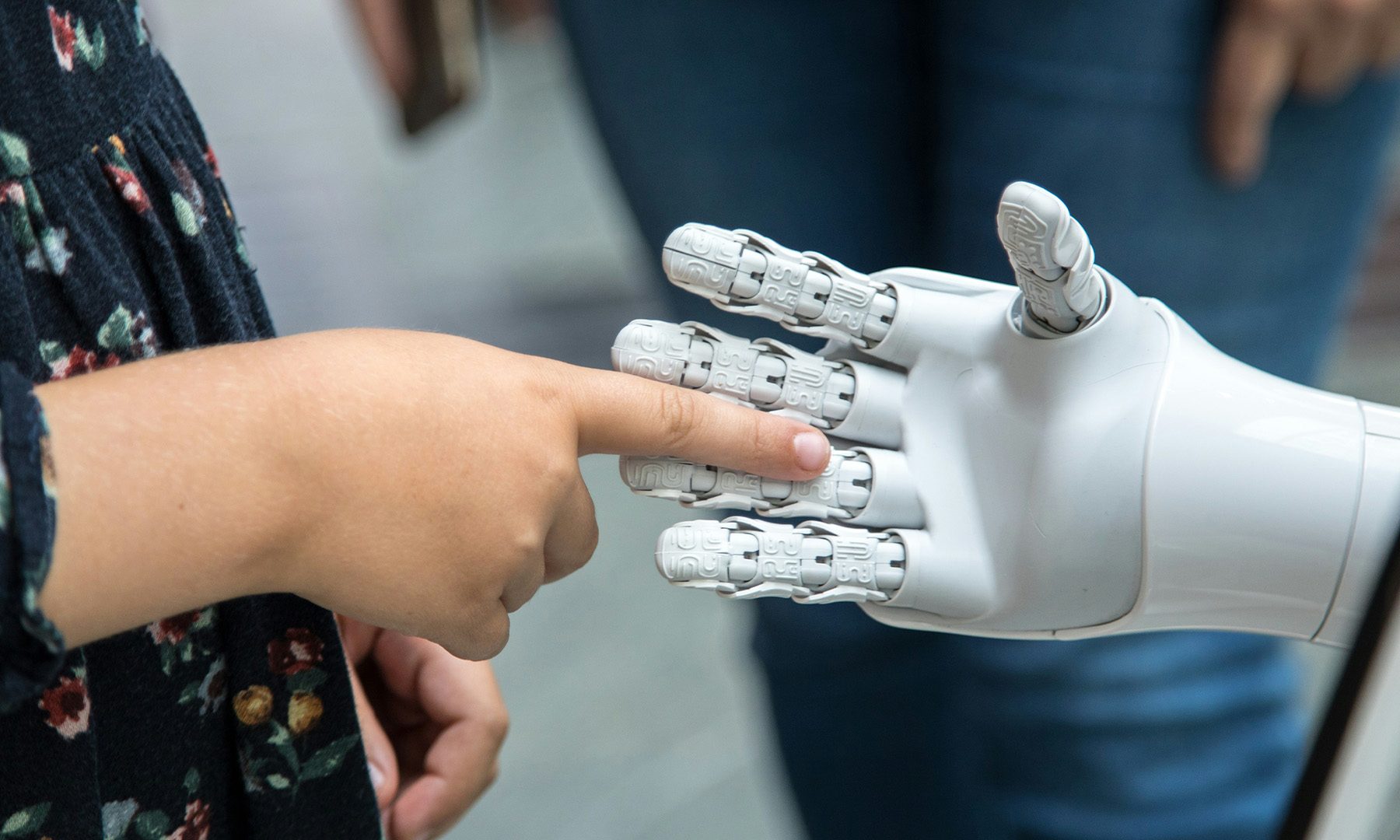
Robot Touch Human Finger

Samsung wants a place in the humanoid race, but its new robotics push begins with machines built for factories rather than homes.

The CEO-led RX robotics division will initially focus on manufacturing robots. Samsung has separately identified humanoids as a priority, although it hasn’t announced a commercial model or explained where one fits into the division’s immediate plans.

Read more
The future of AI may depend on this one behind-the-scenes change
Running Claude on Android.

Whenever a new AI model arrives, it's easy to get caught up in the bells and whistles. We talk about how much smarter it is, how quickly it answers questions, or how realistic its images have become. But here's the thing: none of that matters much if the AI can't reliably work with the apps and services people use every day.

That's why an upcoming update to the Model Context Protocol (MCP) caught my attention. It isn't a new chatbot or a fancy AI model. In fact, most people will never even know it's happening. But it could quietly make the AI ecosystem a lot healthier. If you've never heard of MCP before, don't worry. Think of it as a shared language that lets AI assistants safely talk to apps like Gmail, Slack, calendars, databases, and countless other services. Instead of every company inventing its own way to make those connections, MCP gives everyone a common rulebook.

Read more