Ford set the automotive industry on its ear by announcing plans to stop selling nearly all of its passenger cars in the United States. In a few years’ time, we’ll be left with the emblematic Mustang, a pseudo-crossover based on the newest Focus hatchback, and a wide panoply of trucks and SUVs like the F-150. Rival Volkswagen plans on adding more SUVs to its lineup, too, but it won’t throw in the towel in the sedan segment like Ford has. Here’s why.
“The question of whether electric mobility will favor sedans or SUVs hasn’t been answered yet. When you’re talking about electric cars, sedans have more advantages. The shape and the [drag coefficient] has a high effect on range. Therefore, we’ll maybe see a higher sedan share on full electric cars than with conventional cars,” Volkswagen of America boss Hinrich Woebcken told Digital Trends before Ford’s announcement.
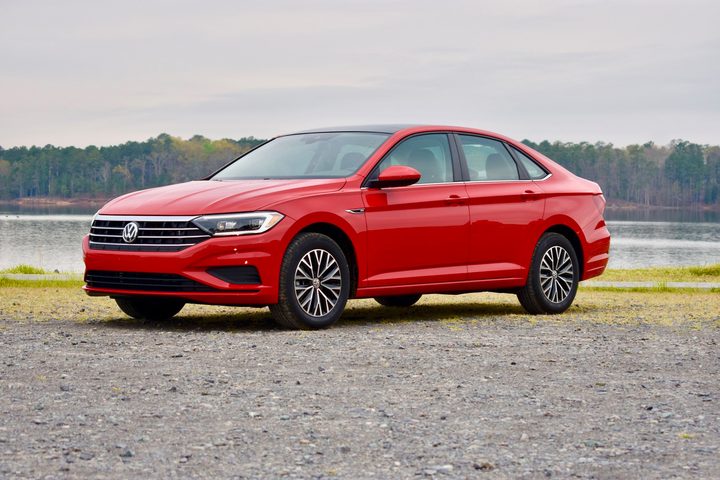
His comments explain why the battery-powered I.D. Vizzion concept, which the company envisions as its future flagship, takes the form of a sedan instead of a crossover or an SUV. Stepping outside of the electric car segment, Volkswagen believes sedans will continue to play an important role in the coming years. It recently launched the new 2019 Jetta (pictured), a model it redesigned from the ground up, and it’s preparing to replace the Passat in the coming months. “We are intending to be a full line car manufacturer,” Woebcken explained.
Even with new models in the pipeline, it’s impossible to ignore the rise of the crossover in markets like America and Europe. That’s why Volkswagen is planning on adding at least two new SUVs to its portfolio in the coming years. One will be a five-seater version of the Atlas previewed by the Atlas Cross Sport concept last month at the New York Auto Show, and another will slot beneath the three-row Tiguan as an entry-level offering. We could even see a pickup truck. The sedan isn’t dead, at least not at Volkswagen, but high-riding models will continue to reign supreme.
“The shift from sedans to SUVs is a permanent one. In former times, when gas prices went up people moved back to sedans. We believe this will not happen anymore for two reasons. First, the difference in fuel economy between SUVs and sedans is not so big anymore. Second, customers do not want to give up the high seating position. I believe that trend will not reverse,” Woebcken told us.