A smart dishwasher should sense how caked-on the crud is on your plates and rinse them accordingly. Smart air conditioners should map your room like an air-traffic controller and cool different parts to different degrees. A smart oven should know whether you’ve put in brisket or a spoon roast and cook accordingly.
Today, most appliances aren’t smart, never mind all the years of marketing claims. But they will be — and artificial intelligence is the cornerstone to improving all of those devices, said I.P. Park, president and CTO of LG Electronics.
“Currently you need to be smart to use a smartphone.”
“What AI hopefully will do is solve this problem of using complex systems, so that the devices become smart, and smart devices mean they’ll know exactly what you want,” he told Digital Trends, in an exclusive interview.
This solves the conundrum that lies at the heart of modern technology, threading its way from your phone to your dishwasher to your air conditioner: “Currently you need to be smart to use a smartphone,” he joked.
To make that happen, LG is going all in on AI, announcing Wednesday a massive investment in R&D: The company just cut the ribbon on the new LG Electronics AI Research Lab in Canada, a five-year research partnership with the University of Toronto and an extension of the newly expanded LG Silicon Valley AI Lab in Santa Clara, California, which opened in 2013. LG also has research labs working on AI around the globe, including Russia, Japan, China, Korea, Finland, and India, in addition to the North American spaces.
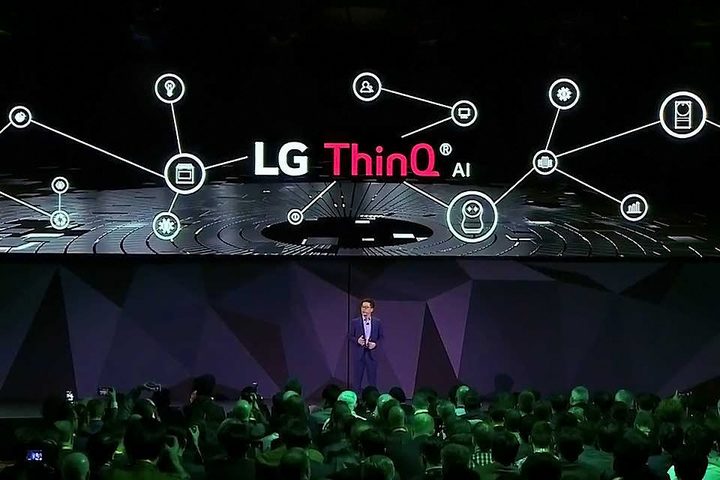
For competitive reasons, LG can’t disclose how many employees currently working in either facility, but it told Digital Trends that it is investing tens of millions of dollars in the new Toronto AI lab.
“At this stage AI is just the tip of the iceberg of what’s going to happen in the future,” Park said. “When we talk about AI many people think of voice assistants, but it’s much more than that. It’s going to be voice plus vision plus gesture recognition, plus context, plus knowledge … You need to understand what the user wants, in a seamless way. We are not there yet, obviously. But it’s a good beginning.”
Which LG products feature AI today?
“When you’re driving a modern luxury car most people are probably using only 5 percent of the entire feature set of the car, if you’re lucky,” Park said. “Because it’s too complex. A lot of features are there, but you have to be extremely smart and diligent to use them in the correct way.”
“What AI will hopefully do is solve the problem of using complex systems so that the devices become smart. And smart device will know exactly what you want,” Park added.
“At this stage AI is just the tip of the iceberg of what’s going to happen in the future.”
To see what that looks like, take a look to LG’s current lineup of AI-powered products (the company says that virtually all products are connected and will be AI enabled). Last month LG announced AI-powered air conditioners that save you money by adjusting compressor speed to suit the task at hand — a first in the space.
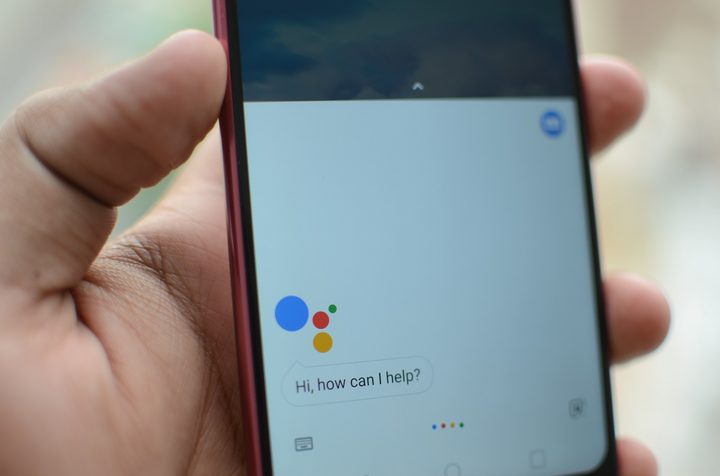
The LG G7 ThinQ is an AI powered smartphone with a button for direct access to the voice assistant — Google’s Assistant, that is. And an AI Cam mode in the camera automatically identifies the scene you’re pointing the phone at. Try to shoot a sunset and the camera will recognize that fact and compare your scene to images of sunsets to try and offer up the best-looking photo.
Look at the latest OLED TV that has an AI feature, Park suggested. “You can talk to it on the remote. It’s got our own AI platform built in. And it connects to external service providers, for example, Google Assistant. So when you talk to it you can say, ‘make the screen brighter’ or ‘find NBC for me,’ it’ll do that, using the AI. But if you say ‘what’s the best restaurant nearby’ it’ll connect to Google Assistant.”

Many technology companies roll out frequent updates to improve their products, leading many consumers weary of “patch Tuesday.” Even automobiles are currently being given new features via updates. That’s certainly handy, and prolongs the life of a product, but Park said LG’s products will improve simply by learning about the user.
“Eventually you won’t even get a user manual with a product. It just comes to you, and by interacting with it, it does work for you.”
What about Alexa, or Cortana, or Google Assistant, or Siri….?
“The world has become just too complex for any single company to insist on using their own proprietary closed solutions, no matter how big the company is, how capable their R&D is,” Park said. He won’t say it, but I will: Bixby.
“It’s a learning process. This is quite new, but it’s one of our key components for success in the future.”
In early 2017 I flew to Korea to discuss Samsung’s ambitious plans for a new voice assistant, with exclusive access to the company’s hardware and the ability to allow all of the devices it makes to talk, collaborate, and simplify your life. In the year and a half since then, the company has struggled to keep pace with the rapid advancements in voice technology, leaving many questioning the wisdom of wading into a crowded market and trying to catch up. LG has a different strategy.
“It’s a combination of competition and collaboration,” Park said. And that extends not just to the biggest companies like Google and Amazon but smaller startups with big ideas.
“I like to think of these startups from Silicon Valley or Israel or Korea or other regions in the world to be an extension of our R&D,” Park said. “Sometimes we work with them together in a joint project, sometimes we invest in them, sometimes we acquire them.”
“It’s a learning process for LG. This is quite new, but it’s one of our key components for success in the future,” he added.
Security concerns?
Privacy becomes an even bigger factor when you talk about products that know more than mere facts about us: they know who we are. How long you take to shower in the morning, what time of day do you usually arrive home, how frequently you wash your clothing. Is that information that should be shared? What about your privacy and security?
LG sets many data collection options in its product to “off” by default.
“We take those two things very seriously,” Park said. LG builds security into its products from the design phase, he said. “We call it LGSDL: LG secure software development lifestyle. Hopefully our products will be secure enough when we launch them to fight against any kind of malicious attack from outside.”
LG does not collect user specific data, he noted, though it does aggregate overall behaviors to try to improve its products. If people only wash their clothing on the weekend, perhaps LG laundry appliances could be put into low power mode during the week.
Laudably, LG sets many data collection options in its product to “off” by default — a policy other technology companies would be wise to imitate. Forcing consumers to opt out of data collection policies sets mistrust from the get-go — LG aims to circumvent that.
So the next time you go shopping for technology, be it a toaster oven or television, look to see if AI is in there — and if it is, rest assured. It’s going to help.