1. Home
  2. Emerging Tech
  3. News

Space Station on alert as crew forced to patch hole in docked spacecraft

Add as a preferred source on Google

Crew members aboard the International Space Station (ISS) have had to patch a hole in the shell of a docked spacecraft following a possible collision with a meteorite fragment.

Fortunately for the six-person crew, the situation on Thursday, August 30, never descended into scenes reminiscent of the 2013 Hollywood blockbuster Gravity in which a debris collision caused untold chaos. But with a drop in cabin pressure detected, it was vital for the incident to be dealt with as quickly as possible.

International Space Station
NASA

The latest report from NASA describes the space station’s cabin pressure as “holding steady” after the Expedition 56 crew carried out repair work on the hole, which was found on the Russian Soyuz spacecraft that docked with the ISS a couple of months ago.

Recommended Videos

NASA said that after several hours of investigations on Thursday, the crew was able to isolate the leak to a hole about two millimeters in diameter in the upper section of the spacecraft.

Flight controllers at Mission Control centers in Houston and Moscow worked together with the crew to oversee the repair, which involved Soyuz commander Sergey Prokopyev using thermo-resistant tape to plug the hole. A more robust repair is currently under consideration.

NASA insisted that the crew was never in any danger, although flight controllers are still monitoring pressure trends inside the space station to confirm the effectiveness of the repair. All station systems are reported to be stable and the crew is planning to return to its regular schedule of work on Friday.

What caused it?

Investigations are now underway to try to determine what caused the hole. There’s speculation that it may have been the result of a tiny piece of space rock or other debris colliding with the station. Its small size would have made it impossible for the space station’s systems to have detected its approach.

With the ISS traveling at speeds of around 17,500 mph, an impact can pose a serious threat to the operation of the station as well as to its crew. The main structure of the space station has so-called “orbital debris shields” in place to keep it safe from collisions with smaller particles, but the docked capsule appears to be fitted with less effective shielding, if it has any at all.

Besides rocks and other natural space matter, man-made space debris is also a problem for the ISS and other satellites orbiting Earth. NASA has a system in place to monitor larger pieces that could cause catastrophic damage in the event of a collision. The technology enables ground control to track hazardous debris, and if needed, the space station‘s thrusters can be used to take it away from danger.

Trevor Mogg
Contributing Editor
Not so many moons ago, Trevor moved from one tea-loving island nation that drives on the left (Britain) to another (Japan)…
Yet another study says AI is bad for elections, and the rabbit hole gets worse
AI may be an election bomb waiting for someone to light the fuse
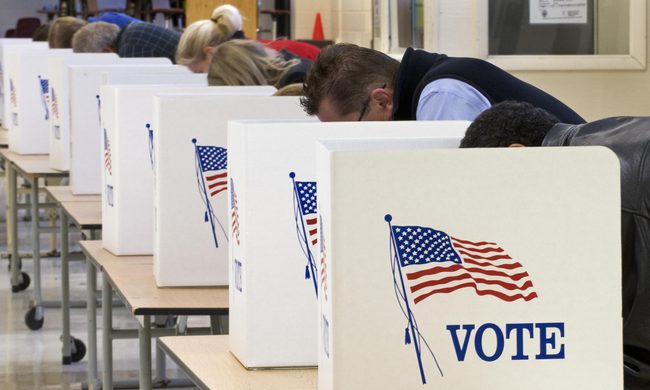
Voters cast their ballots on Election Day

Another election, another study has concluded that asking an AI chatbot for political guidance is a spectacularly bad idea. Research conducted during Hungary’s 2026 parliamentary election found that ChatGPT and Google Gemini offered not just inaccurate but also inconsistent and unreliable voting advice. The chatbots misclassified voter profiles, overlooked relevant parties, recommended parties absent from the ballot, and sometimes produced materially different answers when given the same information repeatedly.

AI keeps failing the voter test

Read more
Samsung’s humanoid robot ambitions are real, but factories come first
Samsung’s new robotics division has humanoids in its sights, although its immediate business is far more practical factory automation
Robot Touch Human Finger

Samsung wants a place in the humanoid race, but its new robotics push begins with machines built for factories rather than homes.

The CEO-led RX robotics division will initially focus on manufacturing robots. Samsung has separately identified humanoids as a priority, although it hasn’t announced a commercial model or explained where one fits into the division’s immediate plans.

Read more
The future of AI may depend on this one behind-the-scenes change
Running Claude on Android.

Whenever a new AI model arrives, it's easy to get caught up in the bells and whistles. We talk about how much smarter it is, how quickly it answers questions, or how realistic its images have become. But here's the thing: none of that matters much if the AI can't reliably work with the apps and services people use every day.

That's why an upcoming update to the Model Context Protocol (MCP) caught my attention. It isn't a new chatbot or a fancy AI model. In fact, most people will never even know it's happening. But it could quietly make the AI ecosystem a lot healthier. If you've never heard of MCP before, don't worry. Think of it as a shared language that lets AI assistants safely talk to apps like Gmail, Slack, calendars, databases, and countless other services. Instead of every company inventing its own way to make those connections, MCP gives everyone a common rulebook.

Read more