1. Home
  2. Emerging Tech
  3. Health & Fitness
  4. News

Lab-grown mini-brains will help us gain a better understanding of the real thing

Add as a preferred source on Google

Researchers at the University of California San Diego School of Medicine have developed a rapid, cost-effective method to grow organoid “mini-brains” in a lab. These miniature brains, which replicate the architecture of brains but possess no level of consciousness, are created using stem cells. The researchers hope that these mini-brains will allow us to gain a better understanding of the real brains that they replicate.

“The brain is one of the most complex tissues in the body,” Alysson Muotri, director of the Stem Cell Program at UCSD School of Medicine, told Digital Trends. “While we have a good idea of anatomy and how the adult brain work, the understanding of human brain neurodevelopment is at a very mysterious stage. This is because the intact human embryonic brain grows in utero, and, thus, it is very inaccessible. There [is little information] about how the brain develops, [and] when it starts to function, yet there are many neurological disorders that starts in utero. It is [therefore] very important to learn how the brain develops, both in healthy and disease conditions.”

Recommended Videos

The mini-brains are created by growing human pluripotent stem cells and then inducing them to form neural progenitor cells. This is achieved using small molecules added to a culture medium. These neural progenitor cells are then prompted to grow in three dimensions and expand, forming a sphere with multiple layers. Finally, the progenitor cells are turned into neurons and a type of glia cell that is also present in the brain, which then matures into a full organoid.

Researchers have been optimizing protocols for creating brain cells in a dish for decades. However, it is only more recently that researchers have learned that it is possible to induce growth in 3D in a way that allows the cells to self-organize in a structure that resembles the early stages of the human embryonic brain. This opens up the possibility of studying the early stages of human neurodevelopment in the lab. Doing so may provide new information about genetic disorders, such as autism, or the different ways in which viruses affect the brain.

To make the process of developing these mini-brains easier, the UCSD researchers have developed a protocol that makes it faster to convert somatic cells into 3D-brain organoids. “Besides cost and time, the biggest advantage is on the throughput,” Muotri continued. “We can now create hundreds of different brain organoids, from different individuals, at the same time.”

A paper describing the work was recently published in the journal Stem Cells and Development.

Luke Dormehl
I'm a UK-based tech writer covering Cool Tech at Digital Trends. I've also written for Fast Company, Wired, the Guardian…
Yet another study says AI is bad for elections, and the rabbit hole gets worse
AI may be an election bomb waiting for someone to light the fuse
Voters cast their ballots on Election Day

Another election, another study has concluded that asking an AI chatbot for political guidance is a spectacularly bad idea. Research conducted during Hungary’s 2026 parliamentary election found that ChatGPT and Google Gemini offered not just inaccurate but also inconsistent and unreliable voting advice. The chatbots misclassified voter profiles, overlooked relevant parties, recommended parties absent from the ballot, and sometimes produced materially different answers when given the same information repeatedly.

AI keeps failing the voter test

Read more
Samsung’s humanoid robot ambitions are real, but factories come first
Samsung’s new robotics division has humanoids in its sights, although its immediate business is far more practical factory automation
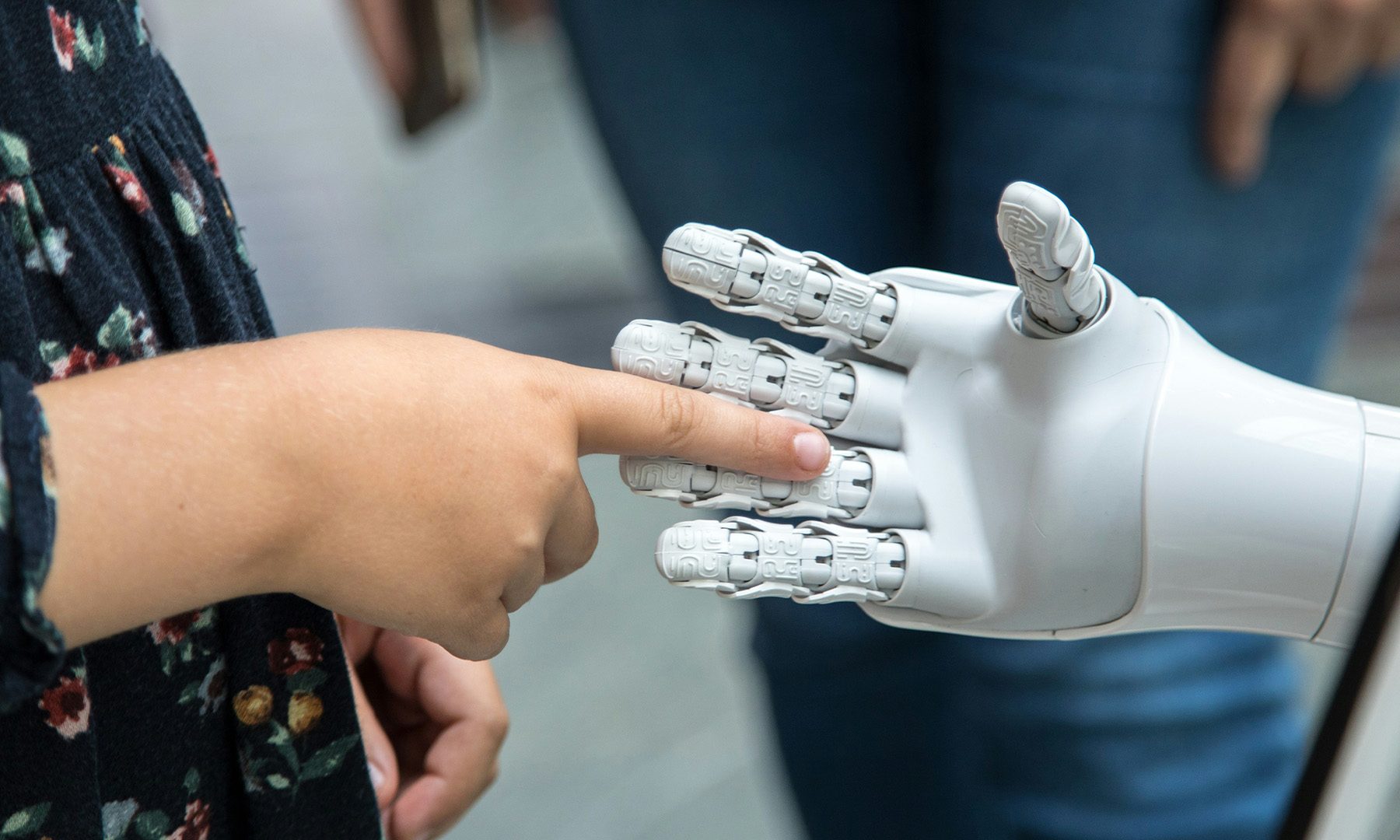
Robot Touch Human Finger

Samsung wants a place in the humanoid race, but its new robotics push begins with machines built for factories rather than homes.

The CEO-led RX robotics division will initially focus on manufacturing robots. Samsung has separately identified humanoids as a priority, although it hasn’t announced a commercial model or explained where one fits into the division’s immediate plans.

Read more
The future of AI may depend on this one behind-the-scenes change
Running Claude on Android.

Whenever a new AI model arrives, it's easy to get caught up in the bells and whistles. We talk about how much smarter it is, how quickly it answers questions, or how realistic its images have become. But here's the thing: none of that matters much if the AI can't reliably work with the apps and services people use every day.

That's why an upcoming update to the Model Context Protocol (MCP) caught my attention. It isn't a new chatbot or a fancy AI model. In fact, most people will never even know it's happening. But it could quietly make the AI ecosystem a lot healthier. If you've never heard of MCP before, don't worry. Think of it as a shared language that lets AI assistants safely talk to apps like Gmail, Slack, calendars, databases, and countless other services. Instead of every company inventing its own way to make those connections, MCP gives everyone a common rulebook.

Read more