  1. Home
  2. Computing
  3. Gaming
  4. News

Windows 10 October 2018 Update brings DirectX ray tracing to gaming PCs

Add as a preferred source on Google
This story is part of our complete Microsoft Events coverage

DirectX Raytracing Graphic Rendering
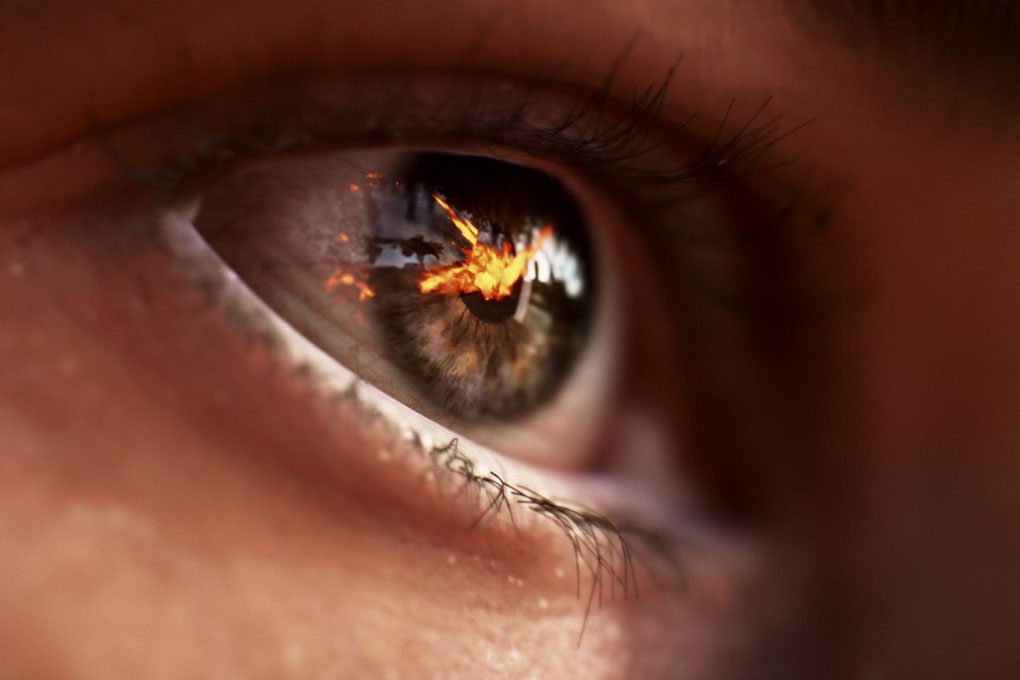
Use of ray tracing in the upcoming video game, Battlefield V. Image used with permission by copyright holder

Today, October 2, marks a milestone for gamers everywhere thanks to Microsoft’s release of the Windows 10 October 2018 Update. Along with a collection of other new features, the update brings the first public support for Microsoft’s DirectX ray tracing technology. Now, computers can take advantage of graphics hardware that supports ray tracing, such as Nvidia’s lineup of GeForce RTX cards, to render stunning in-game lighting scenarios in real time.

Recommended Videos

Ray tracing is a technology that has been used to render animations in movies and other computer graphics where the accuracy of light is critical. However, the computation needed for ray tracing has made it nearly impossible to bring the technology to games in real time. As a result, game developers and designers have estimated how light reacts in an environment, pre-shading scenes when possible.

Now, Windows 10’s latest update brings hybrid ray tracing to PCs which are equipped to handle the task. While ray tracing an entire game environment on a consumer machine in real time is still not possible, adapting the old world of rasterized graphics with aspects of ray tracing allows us to see many of the benefits that the technology offers.

Shadow of the Tomb Raider: Exclusive Ray Tracing Video

Rasterized graphics use basic geometric shapes to render scenes, such as the ones we see in our favorite video games. Ray tracing takes on a more physics-based approach, crafting what is seen by determining how different rays of light fall on objects. By still using rasterized graphics, while employing select ray tracing for enhanced light, a hybrid experience is created.

Games have already started taking advantage of the new technology coming out of companies such as Nvidia, with three blockbuster titles that will have future support: Battlefield V, Metro Exodus, and Shadow of the Tomb Raider. Those who don’t want to jump into games to test out their PC setup can benefit from 3DMarks’ upcoming benchmark for ray tracing.

The Windows 10 October 2018 Update has officially opened the floodgates for developers to begin creating games and other graphical content in a way we have never previously seen. However, if gaming isn’t your thing, be sure to check out all of the other great features now available in the Windows update.

Michael Archambault
Former Digital Trends Contributor
Michael Archambault is a technology writer and digital marketer located in Long Island, New York. For the past decade…
Apple’s M6 chip isn’t even here yet, but you’ll see M7 Macs early in 2027
Apple is reportedly already accelerating its next-generation silicon roadmap, even before the M6 has launched.
Apple MacBook

The M6 chip is still expected to debut later this year, but Apple may already be preparing for what comes next. According to Mark Gurman's latest report for Bloomberg, the company is aiming to introduce its first M7-powered devices as early as the first half of 2027, hinting at a much faster silicon refresh than many expected.

M7 could arrive alongside new Macs and iPads

Read more
The entry-level MacBook Pro could get a design refresh in 2027, and it’s about time
Five years on the same chassis, and now both tiers of the MacBook Pro are getting a new look at once.
MacBook Pro in space grey sitting on a desk.

Apple has a new MacBook Pro lined up for launch early next year, according to Bloomberg. The company will introduce a 14-inch laptop in the first half of 2027. 

The biggest surprise, however, will be a brand-new design language. The outlet describes it as "a revamped entry-level MacBook Pro, code-named K104."

Read more
Study finds humans will talk to AI ghosts of the dead as reincarnations, and it’s pretty grim
The first AI ghost study is in. The results are about as complicated as you'd expect.
VR Headset, Person, Face

A new study from the University of Colorado Boulder confirms something that sounds both impressive and concerning. People find interacting with AI simulations of their dead loved ones deeply meaningful, and most will come away wanting to do it again.

The researchers call it a "generative ghost," which is a clear reference to generative AI, but I’d still prefer to call it unsettling.

Read more